FLYING INTO FALL
By Gwen Mathis, Education Development Coordinator
gwenm@modelaircraft.org

TEACHERS, PARENTS, and educators are busy year-round, and the fall season is no exception. As educational programs settle into new routines and the temperatures begin to drop, there is often a need for flexible, engaging activities that deliver meaningful learning experiences that can be done indoors. The AMA Education team supports this need through a wide range of hands-on resources and activities on our AMA Flight School webpage, which is linked in “Sources.”
Among these various resources, the AMA Quick Projects series stands out as an accessible and flexible collection of meaningful hands-on STEM activities that are designed for easy implementation within classrooms, after-school programs, and informal learning environments.
AMA Quick Projects are free Next-Generation Science Standards (NGSS)-aligned lessons that utilize easily accessible materials to teach youth about the joys of model aviation in a quick and fun way. Each Quick Project includes downloadable instructions and links to an instructional video that demonstrates the project’s steps. These projects include, but are not limited to, balloon rockets, jet cups, walkalong gliders, foam-plate gliders, paper airplanes, and even a paper airplane launcher!
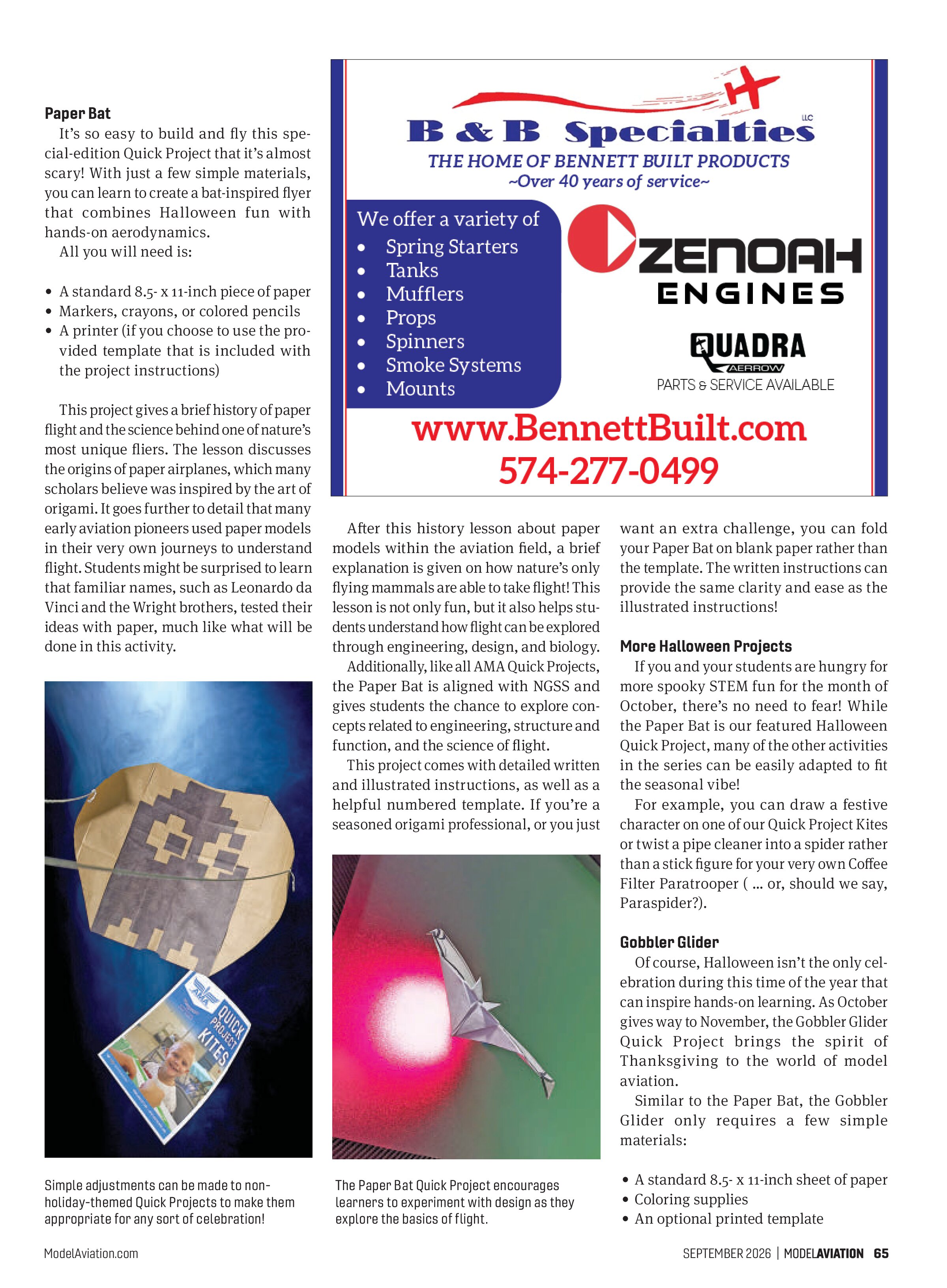
While each and every project offers an opportunity to explore STEM concepts through hands-on learning, some are especially well-suited to the current season. As Halloween approaches, the Paper Bats Quick Project provides educators with a fun way to blend festive creativity with a lesson in flight!
Paper Bat
It’s so easy to build and fly this special-edition Quick Project that it’s almost scary! With just a few simple materials, you can learn to create a bat-inspired flyer that combines Halloween fun with hands-on aerodynamics.
All you will need is:
- A standard 8.5- x 11-inch piece of paper
- Markers, crayons, or colored pencils
- A printer (if you choose to use the provided template that is included with the project instructions)
This project gives a brief history of paper flight and the science behind one of nature’s most unique fliers. The lesson discusses the origins of paper airplanes, which many scholars believe was inspired by the art of origami. It goes further to detail that many early aviation pioneers used paper models in their very own journeys to understand flight. Students might be surprised to learn that familiar names, such as Leonardo da Vinci and the Wright brothers, tested their ideas with paper, much like what will be done in this activity.

After this history lesson about paper models within the aviation field, a brief explanation is given on how nature’s only flying mammals are able to take flight! This lesson is not only fun, but it also helps students understand how flight can be explored through engineering, design, and biology.
Additionally, like all AMA Quick Projects, the Paper Bat is aligned with NGSS and gives students the chance to explore concepts related to engineering, structure and function, and the science of flight.
This project comes with detailed written and illustrated instructions, as well as a helpful numbered template. If you’re a seasoned origami professional, or you just want an extra challenge, you can fold your Paper Bat on blank paper rather than the template. The written instructions can provide the same clarity and ease as the illustrated instructions!

More Halloween Projects
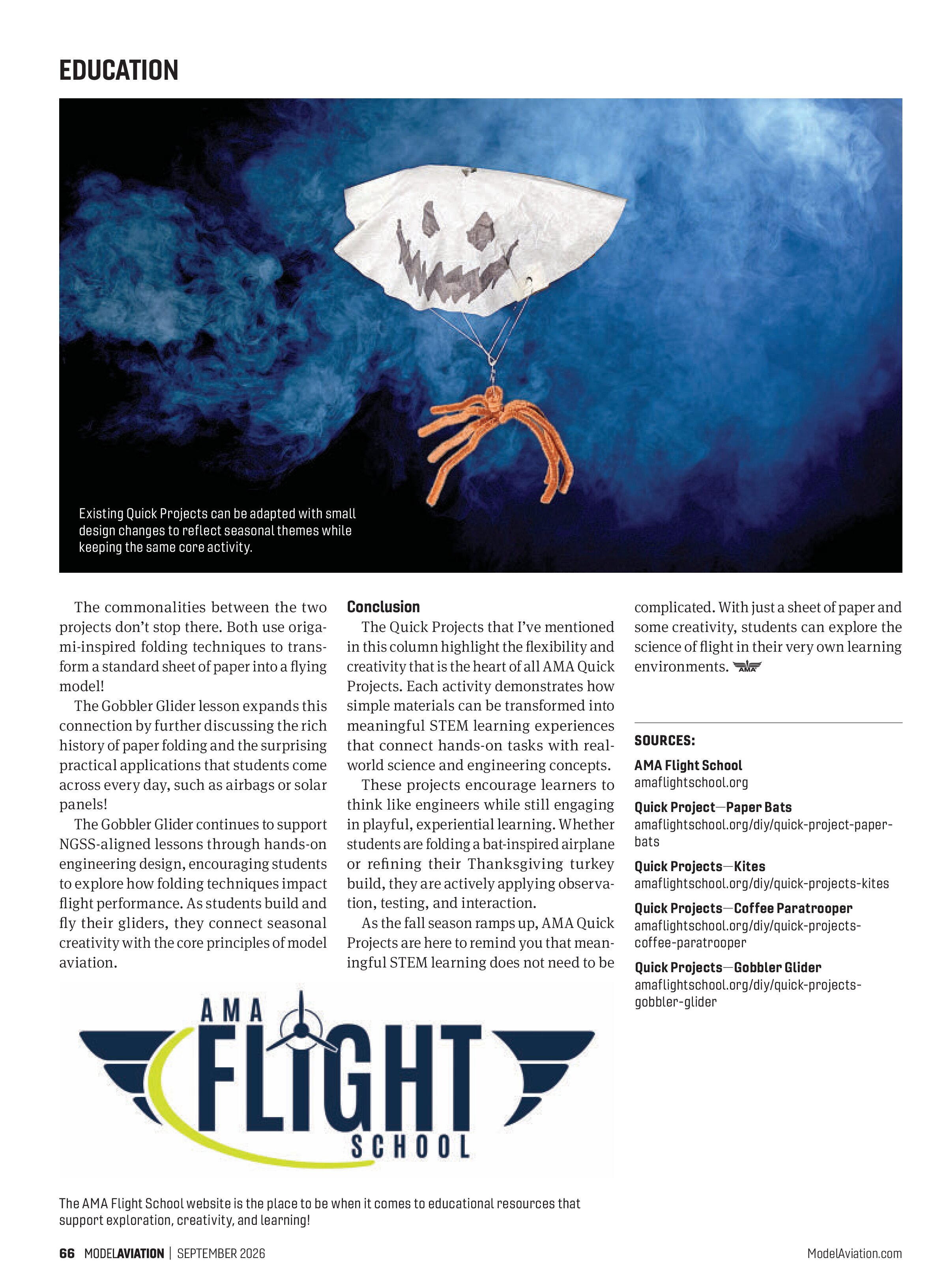
If you and your students are hungry for more spooky STEM fun for the month of October, there’s no need to fear! While the Paper Bat is our featured Halloween Quick Project, many of the other activities in the series can be easily adapted to fit the seasonal vibe!
For example, you can draw a festive character on one of our Quick Project Kites or twist a pipe cleaner into a spider rather than a stick figure for your very own Coffee Filter Paratrooper (... or, should we say, Paraspider?).
Gobbler Glider
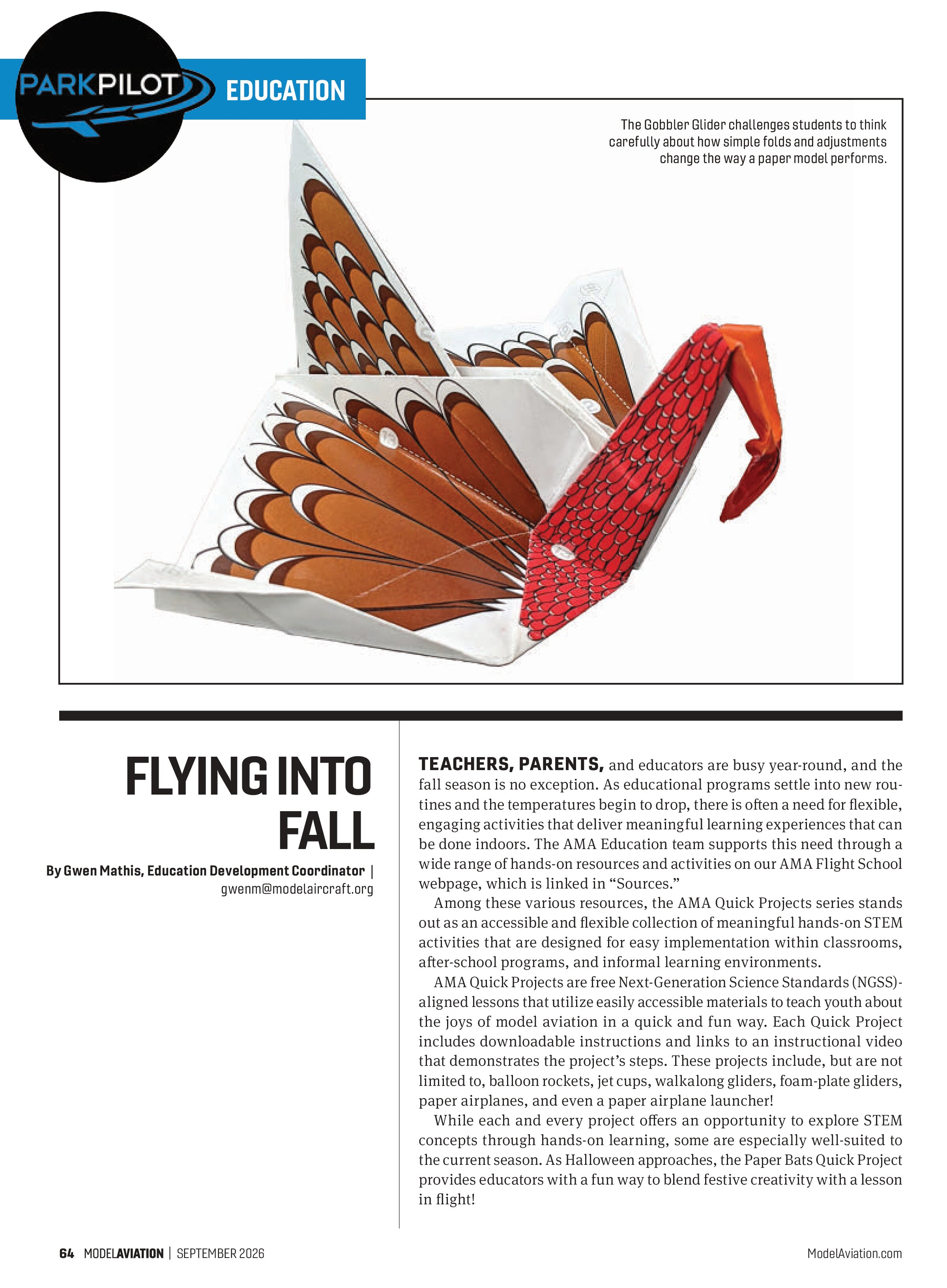
Of course, Halloween isn’t the only celebration during this time of the year that can inspire hands-on learning. As October gives way to November, the Gobbler Glider Quick Project brings the spirit of Thanksgiving to the world of model aviation.
Similar to the Paper Bat, the Gobbler Glider only requires a few simple materials:
- A standard 8.5- x 11-inch sheet of paper
- Coloring supplies
- An optional printed template

The commonalities between the two projects don’t stop there. Both use origami-inspired folding techniques to transform a standard sheet of paper into a flying model!
The Gobbler Glider lesson expands this connection by further discussing the rich history of paper folding and the surprising practical applications that students come across every day, such as airbags or solar panels!
The Gobbler Glider continues to support NGSS-aligned lessons through hands-on engineering design, encouraging students to explore how folding techniques impact flight performance. As students build and fly their gliders, they connect seasonal creativity with the core principles of model aviation.
Conclusion
The Quick Projects that I’ve mentioned in this column highlight the flexibility and creativity that is the heart of all AMA Quick Projects. Each activity demonstrates how simple materials can be transformed into meaningful STEM learning experiences that connect hands-on tasks with real-world science and engineering concepts.
These projects encourage learners to think like engineers while still engaging in playful, experiential learning. Whether students are folding a bat-inspired airplane or refining their Thanksgiving turkey build, they are actively applying observation, testing, and interaction.
As the fall season ramps up, AMA Quick Projects are here to remind you that meaningful STEM learning does not need to be complicated. With just a sheet of paper and some creativity, students can explore the science of flight in their very own learning environments.
Sources:
AMA Flight School
amaflightschool.org
Quick Project—Paper Bats
amaflightschool.org/diy/quick-project-paper-bats
Quick Projects—Kites
amaflightschool.org/diy/quick-projects-kites
Quick Projects—Coffee Paratrooper
amaflightschool.org/diy/quick-projects-coffee-paratrooper
Quick Projects—Gobbler Glider
amaflightschool.org/diy/quick-projects-gobbler-glider
The AMA Flight School website is the place to be when it comes to educational resources that support exploration, creativity, and learning!