RC HELICOPTERS

ROBAN EC-130, PART TWO
By Tim DiPeri | timdiperi@caseco-inc.com
THIS IS THE SECOND part of my Roban EC-130 helicopter article that appeared in the December 2025 issue and covers everything outside of the mechanics.
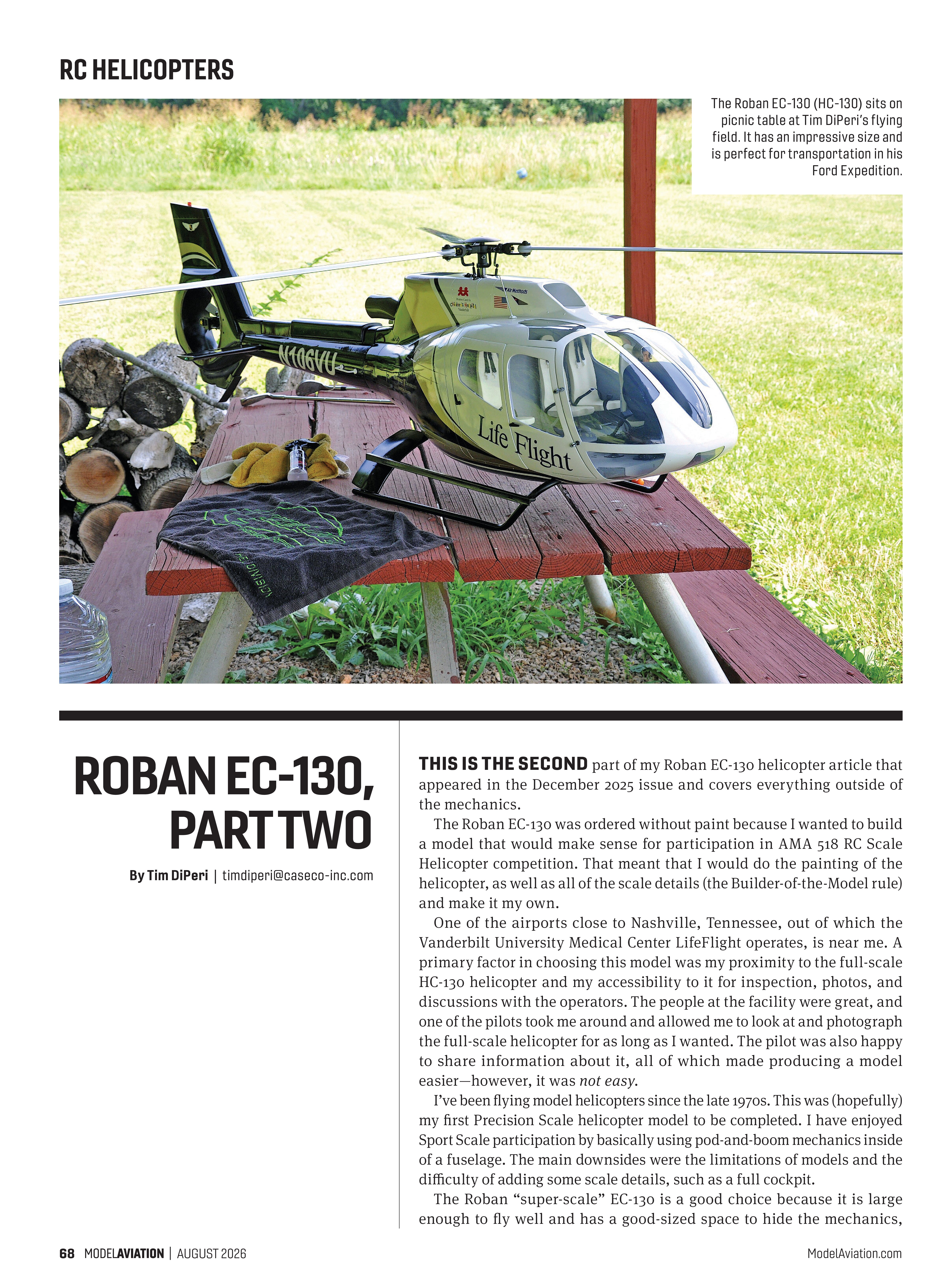
The Roban EC-130 was ordered without paint because I wanted to build a model that would make sense for participation in AMA 518 RC Scale Helicopter competition. That meant that I would do the painting of the helicopter, as well as all of the scale details (the Builder-of-the-Model rule) and make it my own.
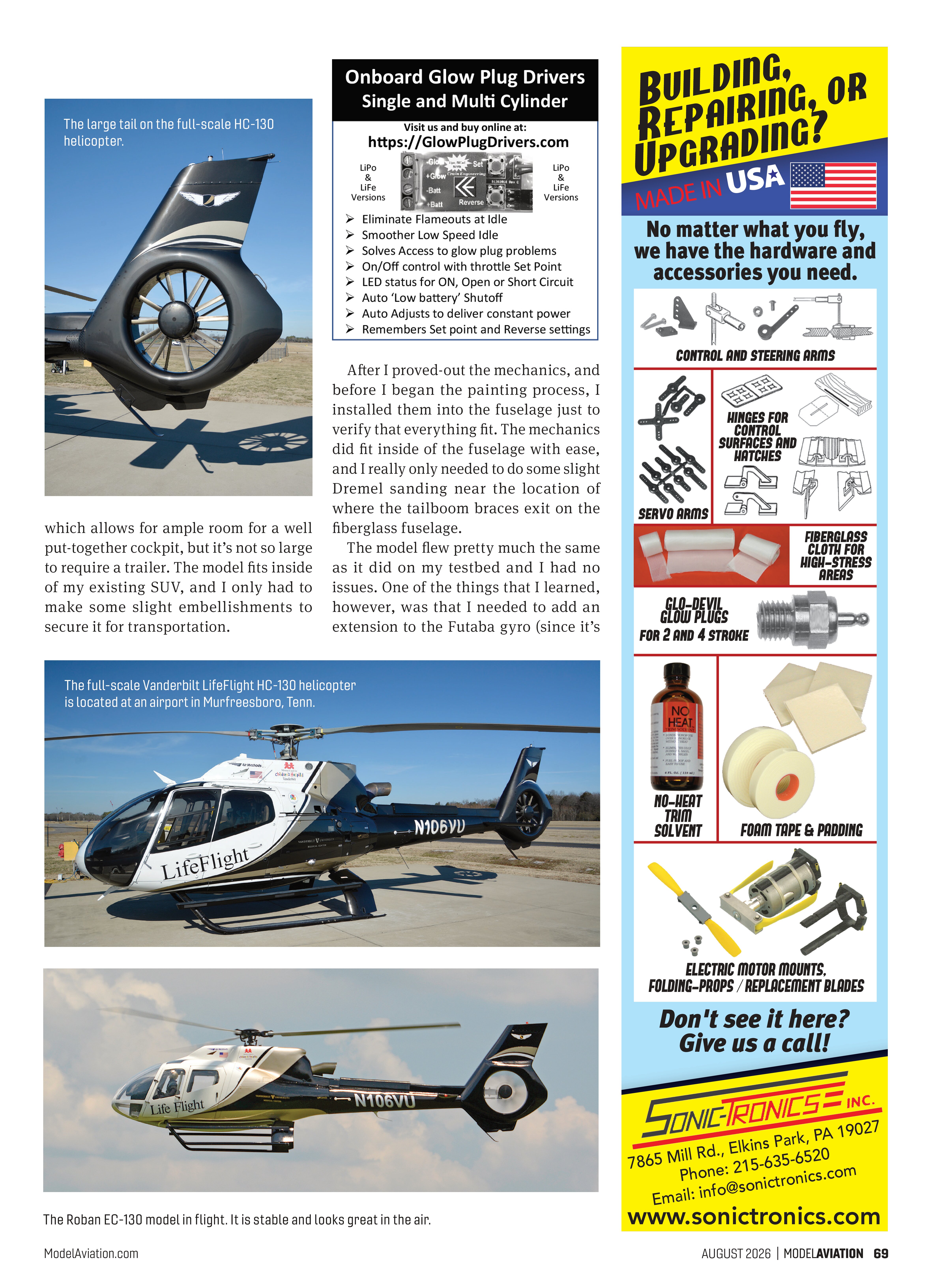
One of the airports close to Nashville, Tennessee, out of which the Vanderbilt University Medical Center LifeFlight operates, is near me. A primary factor in choosing this model was my proximity to the full-scale HC-130 helicopter and my accessibility to it for inspection, photos, and discussions with the operators. The people at the facility were great, and one of the pilots took me around and allowed me to look at and photograph the full-scale helicopter for as long as I wanted. The pilot was also happy to share information about it, all of which made producing a model easier—however, it was not easy.
I've been flying model helicopters since the late 1970s. This was (hopefully) my first Precision Scale helicopter model to be completed. I have enjoyed Sport Scale participation by basically using pod-and-boom mechanics inside of a fuselage. The main downsides were the limitations of models and the difficulty of adding some scale details, such as a full cockpit.


After I proved-out the mechanics, and before I began the painting process, I installed them into the fuselage just to verify that everything fit. The mechanics did fit inside of the fuselage with ease, and I really only needed to do some slight Dremel sanding near the location of where the tailboom braces exit on the fiberglass fuselage.
The model flew pretty much the same as it did on my testbed and I had no issues. One of the things that I learned, however, was that I needed to add an extension to the Futaba gyro (since it’s


in the rear of the model) to have full access to its programming in a “wired” manner.
I pulled the mechanics, rubbed down the model with alcohol, and made some “makeshift” paint stands that I clamped onto a ladder outside. I do not have a paint booth, so I used Dupli-Color automotive touchup paints and Spray Max two-part clearcoat. The paint and clearcoat worked well and produced a good, finished product. Matching the gold was a bit of a challenge, but I found that it was what I needed.
I started with white, then gold, and finally black. Masking the color separations took far more time than any other aspect of the build. I certainly have a new appreciation for modelers who paint all of their own models—it takes an artist!
Prior to shooting the model with the clearcoat, I applied the decals. Callie Graphics has been making scale detail decals for some time. This is the second time that I have used the company, and I have been impressed each time.
Once the model was completely dry, I carefully installed the mechanics and tidied up anything that needed it. I glued the scale antenna on and added other details that came with the kit. It finally looked like what I had envisioned.
Lastly, before the test flight, I put the seats and cockpit accessories that came with the Roban kit together and plugged in the included lights for the cockpit and the outside of the heli. The only other item that I added was a model pilot from Warbird Pilots, of which I had to paint the helmet gold. The company produces nice pilot figures and has very fast shipping.
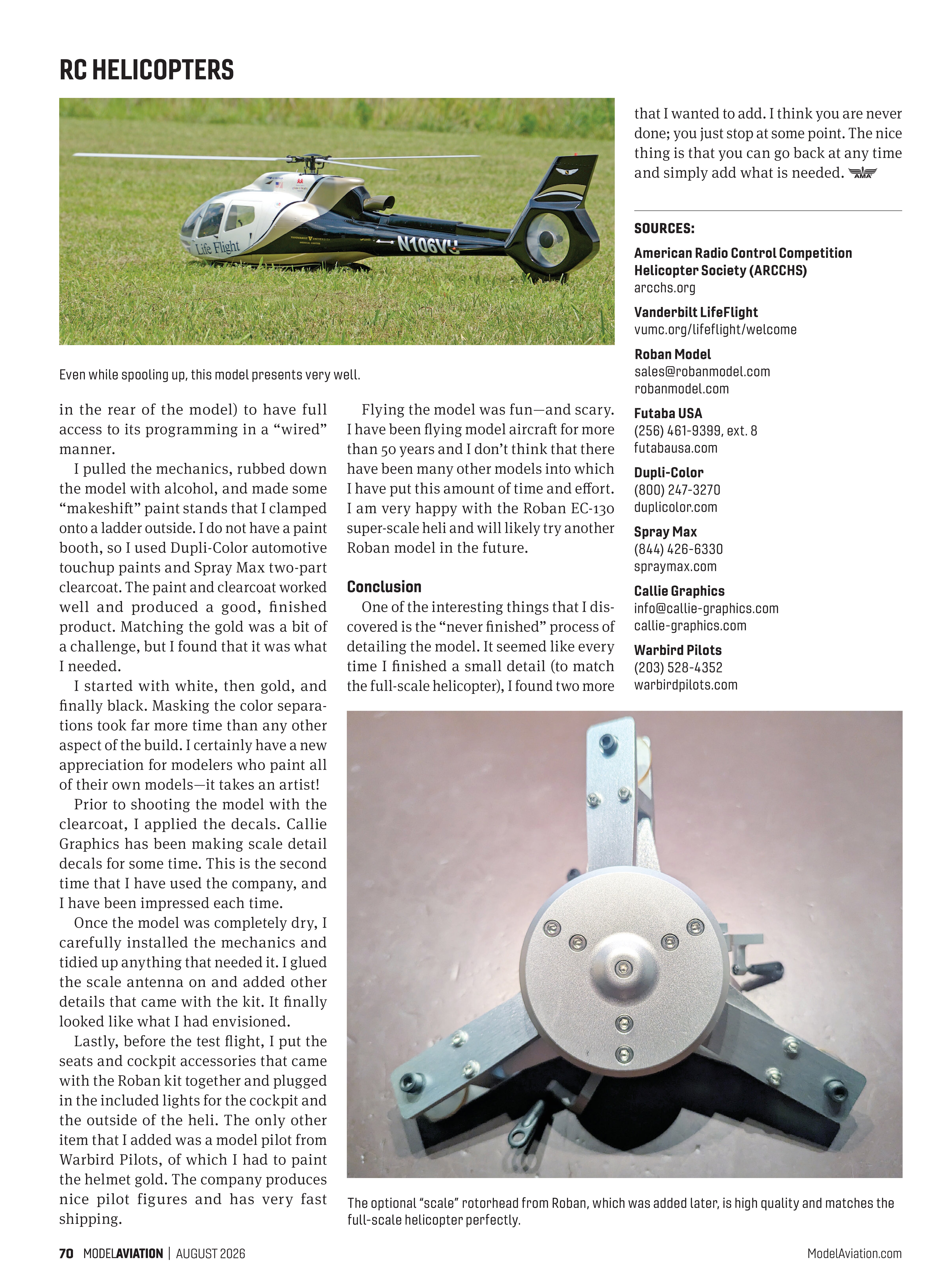
Flying the model was fun—and scary. I have been flying model aircraft for more than 50 years and I don’t think that there have been many other models into which I have put this amount of time and effort. I am very happy with the Roban EC-130 super-scale heli and will likely try another Roban model in the future.
Conclusion
One of the interesting things that I discovered is the “never finished” process of detailing the model. It seemed like every time I finished a small detail (to match the full-scale helicopter), I found two more that I wanted to add. I think you are never done; you just stop at some point. The nice thing is that you can go back at any time and simply add what is needed.