FLIGHT SCHOOL

MASTERING THE HAMMERHEAD, PART 1
By Dave Scott | 1usrcfs@gmail.com
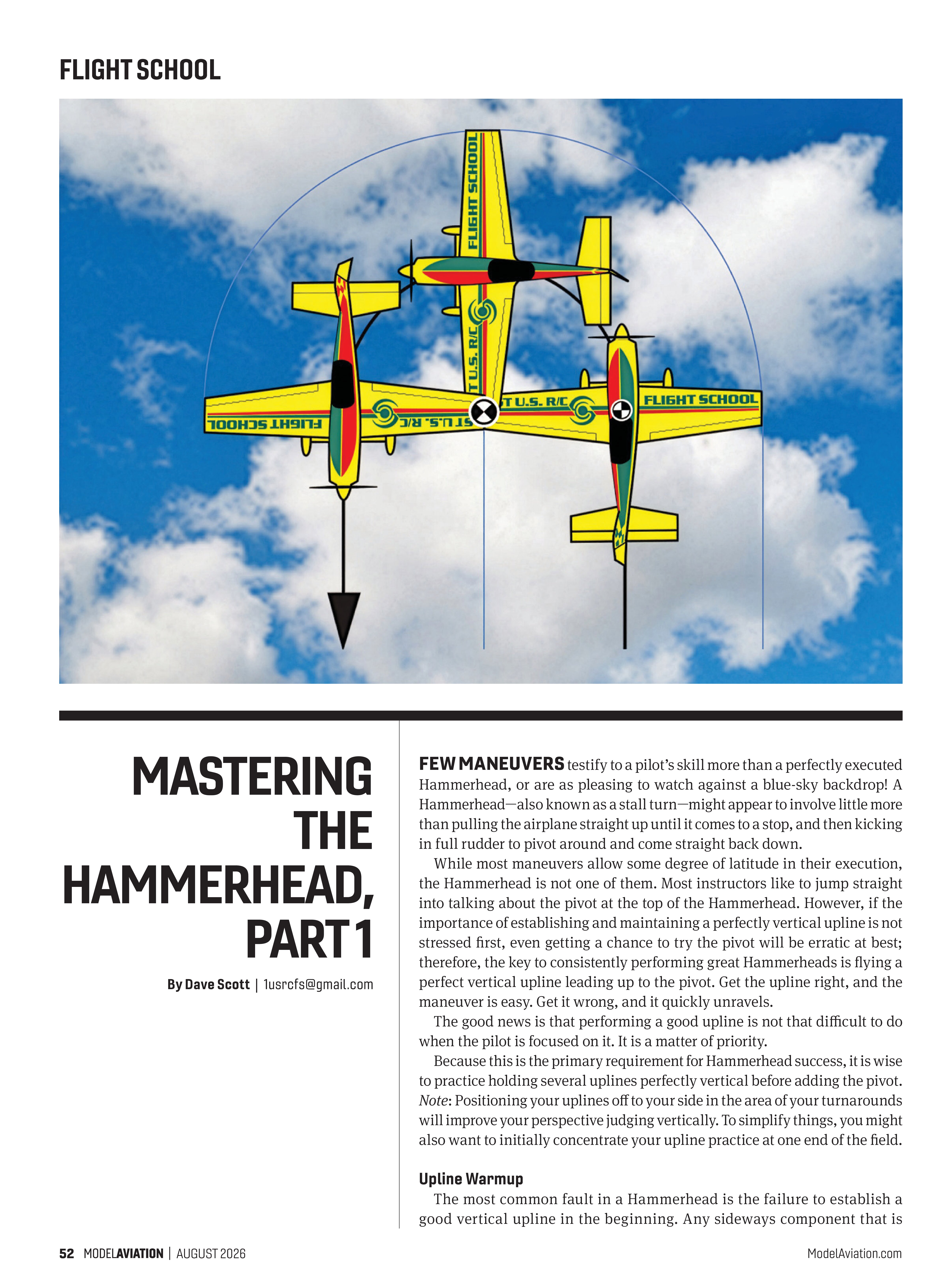
FEW MANEUVERS testify to a pilot’s skill more than a perfectly executed Hammerhead, or are as pleasing to watch against a blue-sky backdrop! A Hammerhead—also known as a stall turn—might appear to involve little more than pulling the airplane straight up until it comes to a stop, and then kicking in full rudder to pivot around and come straight back down.
While most maneuvers allow some degree of latitude in their execution, the Hammerhead is not one of them. Most instructors like to jump straight into talking about the pivot at the top of the Hammerhead. However, if the importance of establishing and maintaining a perfectly vertical upline is not stressed first, even getting a chance to try the pivot will be erratic at best; therefore, the key to consistently performing great Hammerheads is flying a perfect vertical upline leading up to the pivot. Get the upline right, and the maneuver is easy. Get it wrong, and it quickly unravels.
The good news is that performing a good upline is not that difficult to do when the pilot is focused on it. It is a matter of priority.
Because this is the primary requirement for Hammerhead success, it is wise to practice holding several uplines perfectly vertical before adding the pivot. Note: Positioning your uplines off to your side in the area of your turnarounds will improve your perspective judging vertically. To simplify things, you might also want to initially concentrate your upline practice at one end of the field.

Upline Warmup
The most common fault in a Hammerhead is the failure to establish a good vertical upline in the beginning. Any sideways component that is present at the start of the upline—even if you attempt to correct it—will make a good pivot extremely difficult to pull off. You must therefore initiate the pull-up to vertical with the wing perfectly level to have a chance at performing a nice pivot. It won’t take long before you learn that the only effective way to deal with an early deviation on the upline is to next time concentrate on pulling to vertical with the wing level!

some propeller blast over the tail to keep the controls effective throughout.
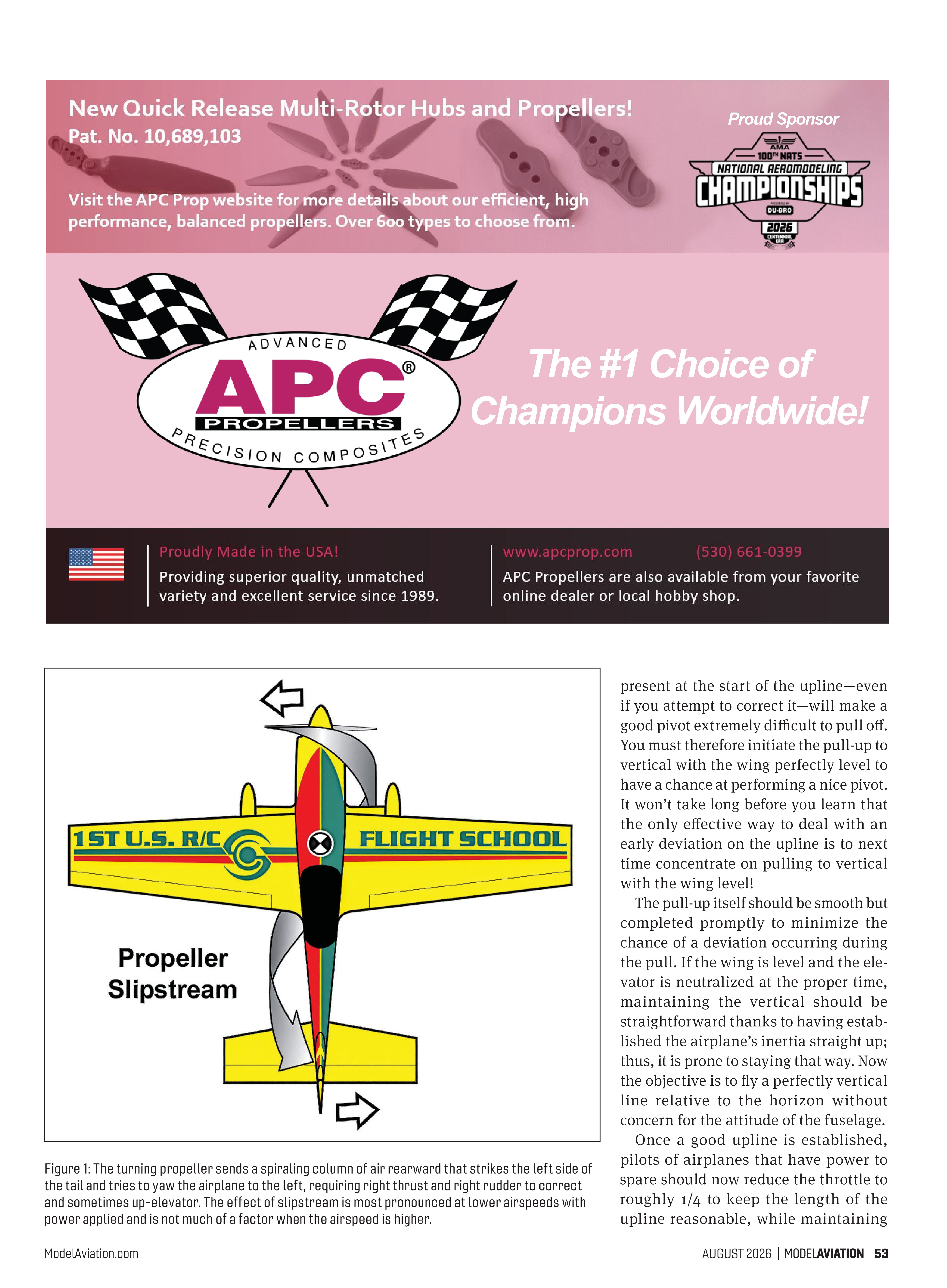
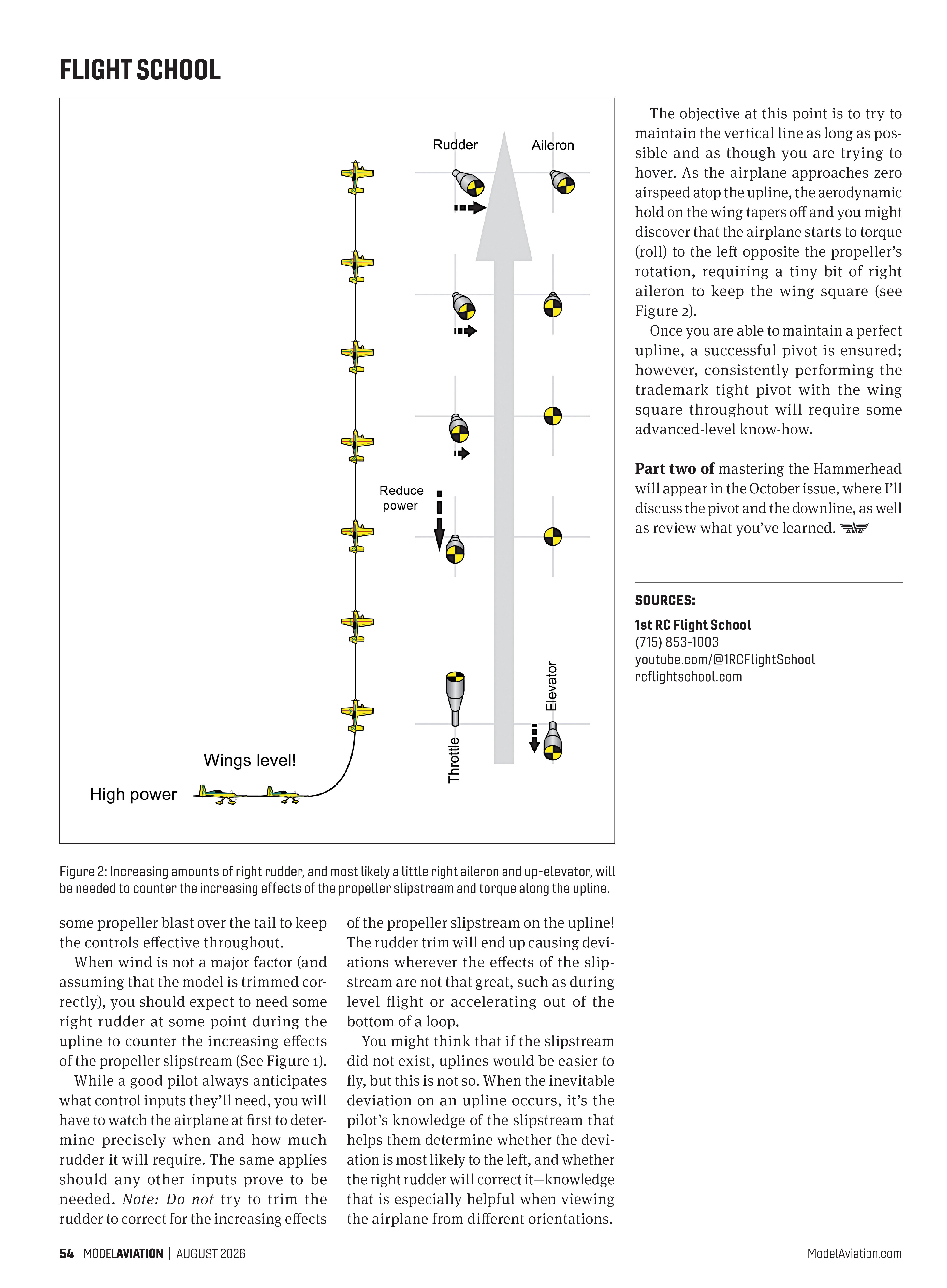
When wind is not a major factor (and assuming that the model is trimmed correctly), you should expect to need some right rudder at some point during the upline to counter the increasing effects of the propeller slipstream (See Figure 1).
While a good pilot always anticipates what control inputs they'll need, you will have to watch the airplane at first to determine precisely when and how much rudder it will require. The same applies should any other inputs prove to be needed. Note: Do not try to trim the rudder to correct for the increasing effects
The objective at this point is to try to maintain the vertical line as long as possible and as though you are trying to hover. As the airplane approaches zero airspeed atop the upline, the aerodynamic hold on the wing tapers off and you might discover that the airplane starts to torque (roll) to the left opposite the propeller's rotation, requiring a tiny bit of right aileron to keep the wing square (see Figure 2).
Once you are able to maintain a perfect upline, a successful pivot is ensured; however, consistently performing the trademark tight pivot with the wing square throughout will require some advanced-level know-how.
Part two of mastering the Hammerhead will appear in the October issue, where I'll discuss the pivot and the downline, as well as review what you've learned.
SOURCES:
1st RC Flight School
(715) 853-1003
youtube.com/@1RCFlightSchool
rcflightschool.com