
Getting Started in Slope Soaring
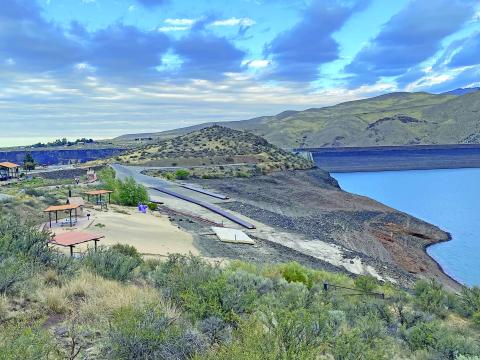
Lucky Peak Dam in Idaho has a small-to-medium hill that is only available to fly when the water is low.
Do you want to try Slope Soaring? Where should you start? What type of airplane do you use? What conditions are needed and where do you fly? These questions should be addressed before getting into Slope Soaring. Here are some tips for understanding how to fly on slopes.
What Airplane Do I Use?
To get into Slope Soaring, you need to first know how to fly an RC airplane. Learning to fly on the slope has its advantages. When you slope soar, the airplane is almost always facing away from you during flight. This helps new pilots o that they don’t get the controls backward. Another advantage of Slope Soaring is the absence of a motor. When you crash, you don’t have those pricey electronic parts to fix or replace. The motor, propeller, speed controller, and lithium batteries are not there. This also means that you don’t have to have the extra chargers and battery investment to get into Slope flying. While there are flight-control electronics, such as the receiver, servos, and batteries, these parts are usually inside of the airplane and have some decent protection.
Most beginner Slope airplanes are made from foam, so they are robust with crash-resistant properties. If you are going straight into Slope flying, I recommend starting with a Combat wing. Combat wings are designed to be easy to fly and are very robust to survive air-to-air combat. They are also easy to build and repair, and their control recovery is simple and forgiving.
There are multiple foam airplanes that can be used for both powered RC airplane flying and for Slope Soaring. The E-flite Conscendo or a powered wing from Crash Test Hobby are good options. You can slope them when the wind is blowing and fly them under power when it isn’t blowing. These airplanes are also helpful when you’re first trying out a new slope or when the wind is marginal. If you cannot maintain flight with the slope’s lift, you can just power up and keep flying until you figure out what conditions it takes to slope without power. You will become comfortable flying these airplanes in a very wide range of weather conditions, even at your local RC field when the wind is strong.
There are multiple places to order Slope Soaring airplanes, as well as numerous free plans on the internet for downloading and building them. The first Slope airplane that I bought and built from the internet was the Pibros, but there are many different ones out there. They range from being hot-wired out of a block of foam to being made from foam boards or sheets. You can cover them with colored packing tape or paint the foam body and cover them with clear packing tape and iron-on coverings, such as laminate or the standard RC airplane iron-on coverings.
If you are building, remember to put some type of contrast on the top or bottom of the airplane. This will help with orientation while flying. Things can happen fast when the wind is blowing 20 mph or more. When you start building your own airplanes, you can make them as fancy or as basic as you wish.
I can build a foam wing in four to five hours. The cost is also reduced per airplane. You would be surprised at how many Combat-style wings you can build out of a piece of 2-inch-thick blue foam from your local hardware store. With a basic hot-wire system, you will have a fleet in no time.
You can find many plans to build a hot-wire system, as well as those that are already made, on the internet. Learn the skill of hot-wiring and you will never run out of airplanes to build.
Where Do I Fly?
Let’s talk about the places you need to find for flying. If you have small hills where you live, building a large, heavy Slope model would just lead you to frustration and disappointment. I recommend getting an airplane to fit your local conditions. The small flying wing kits from Crash Test Hobby, Fancy Foam, and Dream-Flight are all good options.
Find a slope that is at least 50 feet high and 100 to 150 feet long. The cleaner the area in front, the smoother the air will be, so try to find a slope that doesn’t have a lot of obstacles to hit. My airplanes seem to find these obstacles when they are flying, even if they are small.
The wind needs to be blowing in as straight as possible to the face of the hill, which creates the best lift area. Wind blowing up the hill creates a lift band area in front of you. When it’s blowing 15 to 25 mph, you will have the best results. These conditions are ideal, but depending on your airplane’s size and weight, as well as wind consistency and other weather factors, it will vary. This is why I recommend starting with a Conscendo or a powered airplane. The margin for error is greatly reduced.
The larger the hill, the larger the lift band, and the easier it is to fly; the larger the hill, the larger the model should be. You should also be aware that some places you fly are potentially on private land. Be respectful of those spots. For a more detailed explanation about slope hill mechanics, I would recommend visiting the FatLion website, which has a lot of useful information. The link can be found in “Sources.”

Prepare Your Mind
The last thing I want to talk about is mindset. This is probably the biggest aspect of Slope Soaring and why pilots don’t do it. Sloping requires you to drive to places where you’re sometimes not guaranteed to be able to fly. These places can be hours away. The wind might be blowing at your house but not necessarily at the hill; however, if you don’t drive to the hill, you’re not going to fly.
There is also the hiking factor. If you’re standing on the hill and you’re ready to launch, just remember: If you launch, you will have to retrieve. I have flown at most of the places many times and know what conditions it takes to have a good flight. If you have a successful flight, you have a good day, and you will want to do it again.
If you don’t feel the wind trying to pull the airplane from your hand, you will probably scratch, which means that there will be marginal control and that the airplane will eventually go down the slope. The farther you fly down the slope, the less lift there will be, and you will have to land it somewhere you didn’t want to. The only option you will then have will be to go hiking. This means that you’ll be walking down a steep hill that can be slick, uneven, and rocky, and you might encounter some local wildlife. Snakes are the most common. If you don’t want to do that, I would not launch. If you’re not sure, flying a power-assisted airplane would be your best option.
You can slope soar in many areas. I have a good time looking for places to try and fly and have been to many where I have watched the birds fly. With a small Slope airplane, you can make those dreams come true. You will also become a better pilot.
Once the Slope Soaring bug bites, you will be praying for the wind. If it doesn’t blow, you can always go fly those goofy powered airplanes.
Fly safe!

SOURCES
- League of Silent Flight (LSF)
- silentflight.org
- FatLion
fatlion99@yahoo.com - fatlion.com
- Fancy Foam
- fancyfoam.com
- Crash Test Hobby
crashtesthobby@gmail.com - crashtesthobby.com
- Dream-Flight
(805) 845-1803 - dream-flight.com
- E-flite
- horizonhobby.com/e-flite/
- Cannuck Engineering
(970) 518-7492 - canuckengineering.com
- Magnum Model Performance Aircraft
Facebook - facebook.com/magnumrcmodels


