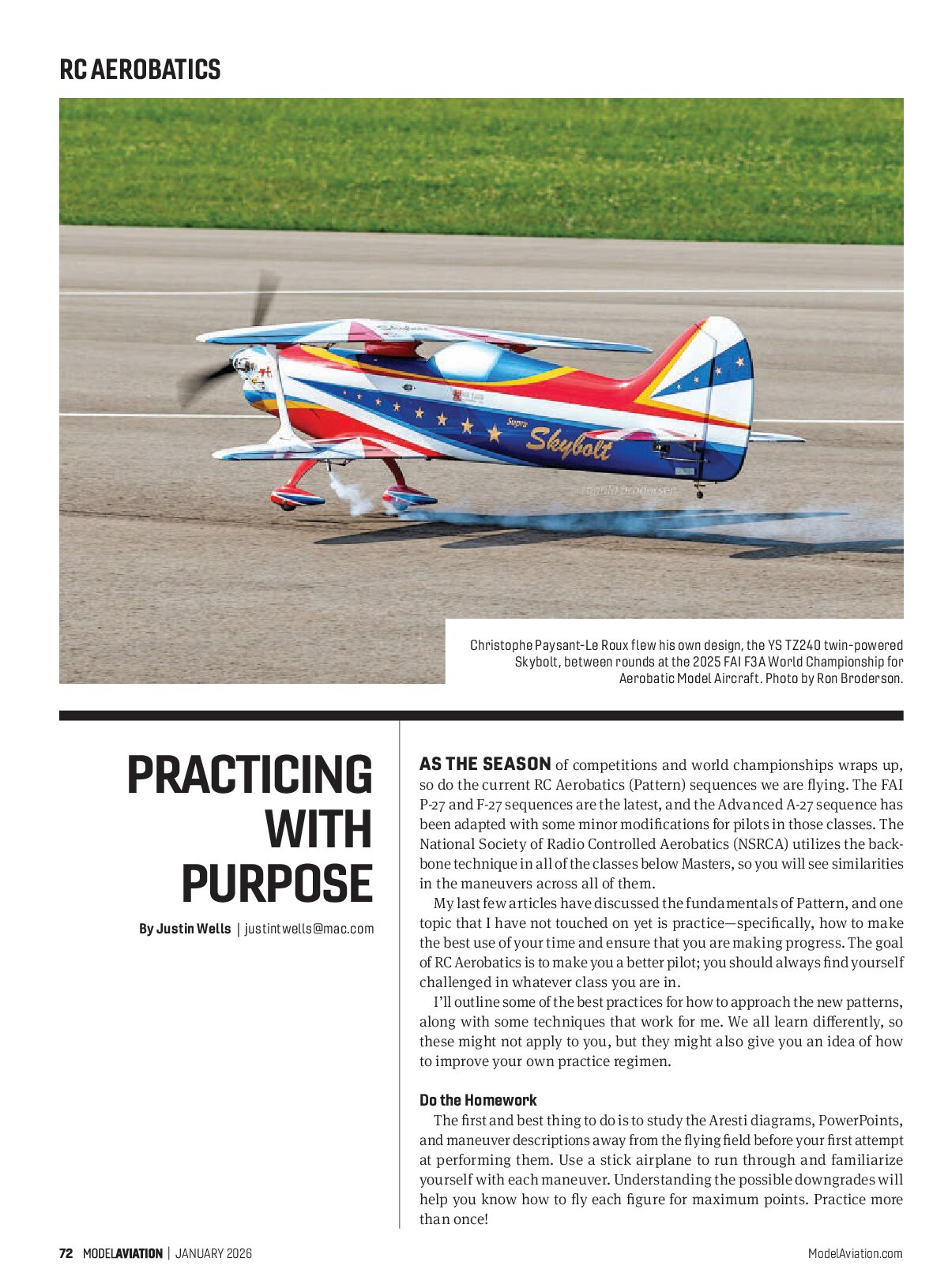
RC AEROBATICS

PRACTICING
WITH
PURPOSE
By Justin Wells | justinwells@mac.com
AS THE SEASON of competitions and world championships wraps up, so do the current RC Aerobatics (Pattern) sequences we are flying. The FAI P-27 and F-27 sequences are the latest, and the Advanced A-27 sequence has been adapted with some minor modifications for pilots in those classes. The National Society of Radio Controlled Aerobatics (NSRCA) utilizes the backbone technique in all of the classes below Masters, so you will see similarities in the maneuvers across all of them.
My last few articles have discussed the fundamentals of Pattern, and one topic that I have not touched on yet is practice—specifically, how to make the best use of your time and ensure that you are making progress. The goal of RC Aerobatics is to make you a better pilot; you should always find yourself challenged in whatever class you are in.
I’ll outline some of the best practices for how to approach the new patterns, along with some techniques that work for me. We all learn differently, so these might not apply to you, but they might also give you an idea of how to improve your own practice regimen.
Do the Homework
The first and best thing to do is to study the Aresti diagrams, PowerPoints, and maneuver descriptions away from the flying field before your first attempt at performing them. Use a stick airplane to run through and familiarize yourself with each maneuver. Understanding the possible downgrades will help you know how to fly each figure for maximum points. Practice more than once!
Utilize Your Memory
Use this time to try to memorize the pattern. A caller is very helpful, but you ideally only want them to confirm for you what maneuver is coming next.
If you have your pattern memorized, you can utilize a strategy approach for each maneuver and really fly to your strengths and be ready for any conditions that might occur during a contest.
Take It to the Field
Your first and second pattern attempts should be rough run-throughs of the entire sequence. I try to find a calm day for this activity, but sometimes that can be difficult. The purpose of this exercise is to identify some early pinch points that might need further work. Maybe a turnaround needs to be flown farther out, or a centered maneuver needs to be tighter to avoid conflicting with the turnaround or pushing you out of the box.
You should be able to shake these out in the first few flights during your rough run-throughs. This helps you to get a sense of the pace, spacing, and pinch points that might occur.
Break It Down into Sections
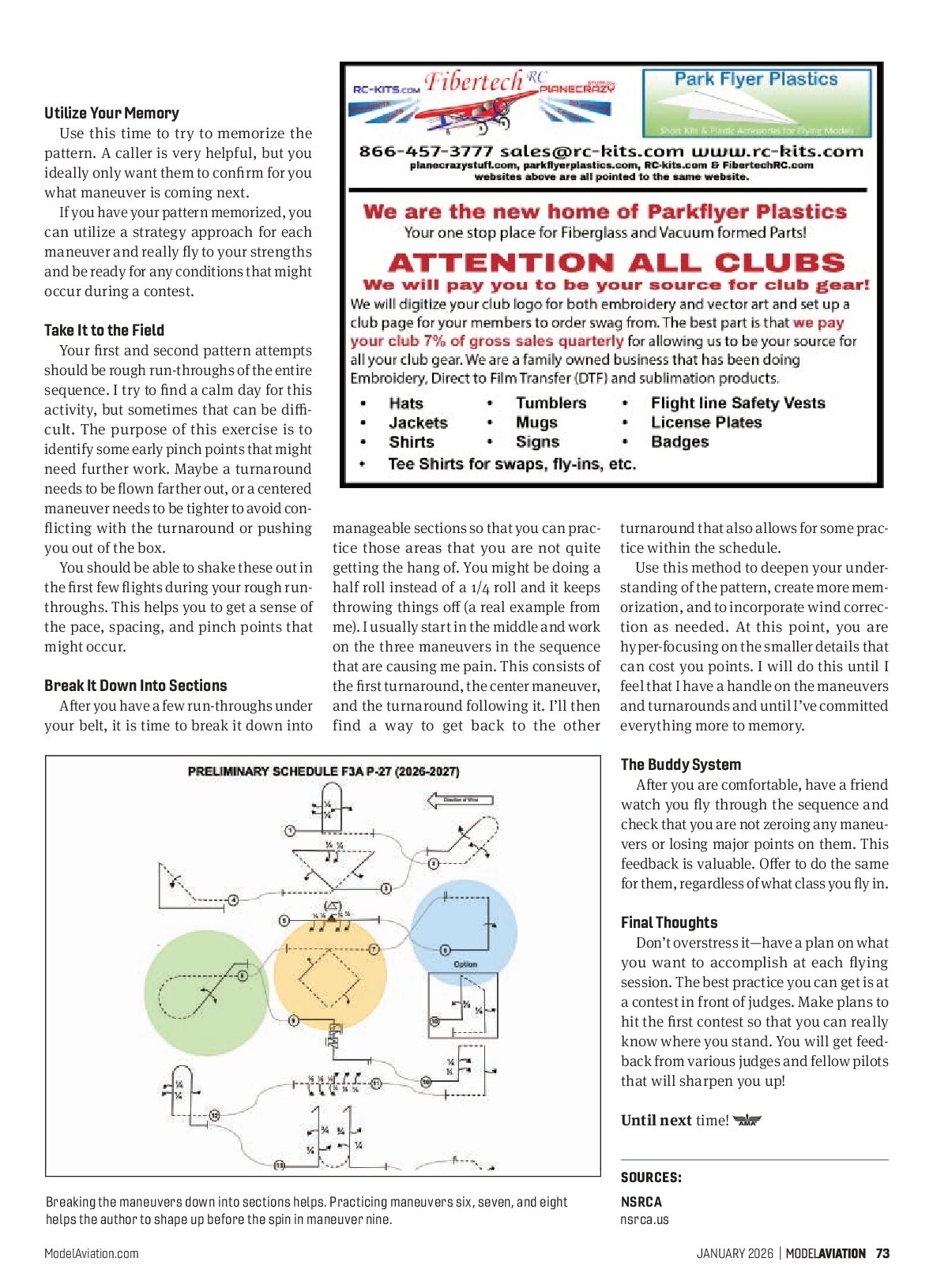
After you have a few run-throughs under your belt, it is time to break it down into manageable sections so that you can practice those areas that you are not quite getting the hang of. You might be doing a half roll instead of a 1/4 roll and it keeps throwing things off (a real example from me). I usually start in the middle and work on the three maneuvers in the sequence that are causing me pain. This consists of the first turnaround, the center maneuver, and the turnaround following it. I’ll then find a way to get back to the other turnaround that also allows for some practice within the schedule.

Use this method to deepen your understanding of the pattern, create more memorization, and to incorporate wind correction as needed. At this point, you are hyper-focusing on the smaller details that can cost you points. I will do this until I feel that I have a handle on the maneuvers and turnarounds and until I’ve committed everything more to memory.
The Buddy System
After you are comfortable, have a friend watch you fly through the sequence and check that you are not zeroing any maneuvers or losing major points on them. This feedback is valuable. Offer to do the same for them, regardless of what class you fly in.
Final Thoughts
Don’t overstress it—have a plan on what you want to accomplish at each flying session. The best practice you can get is at a contest in front of judges. Make plans to hit the first contest so that you can really know where you stand. You will get feedback from various judges and fellow pilots that will sharpen you up!
Until next time!
SOURCES:
NSRCA
nsrca.us