AROUND THE PATCH

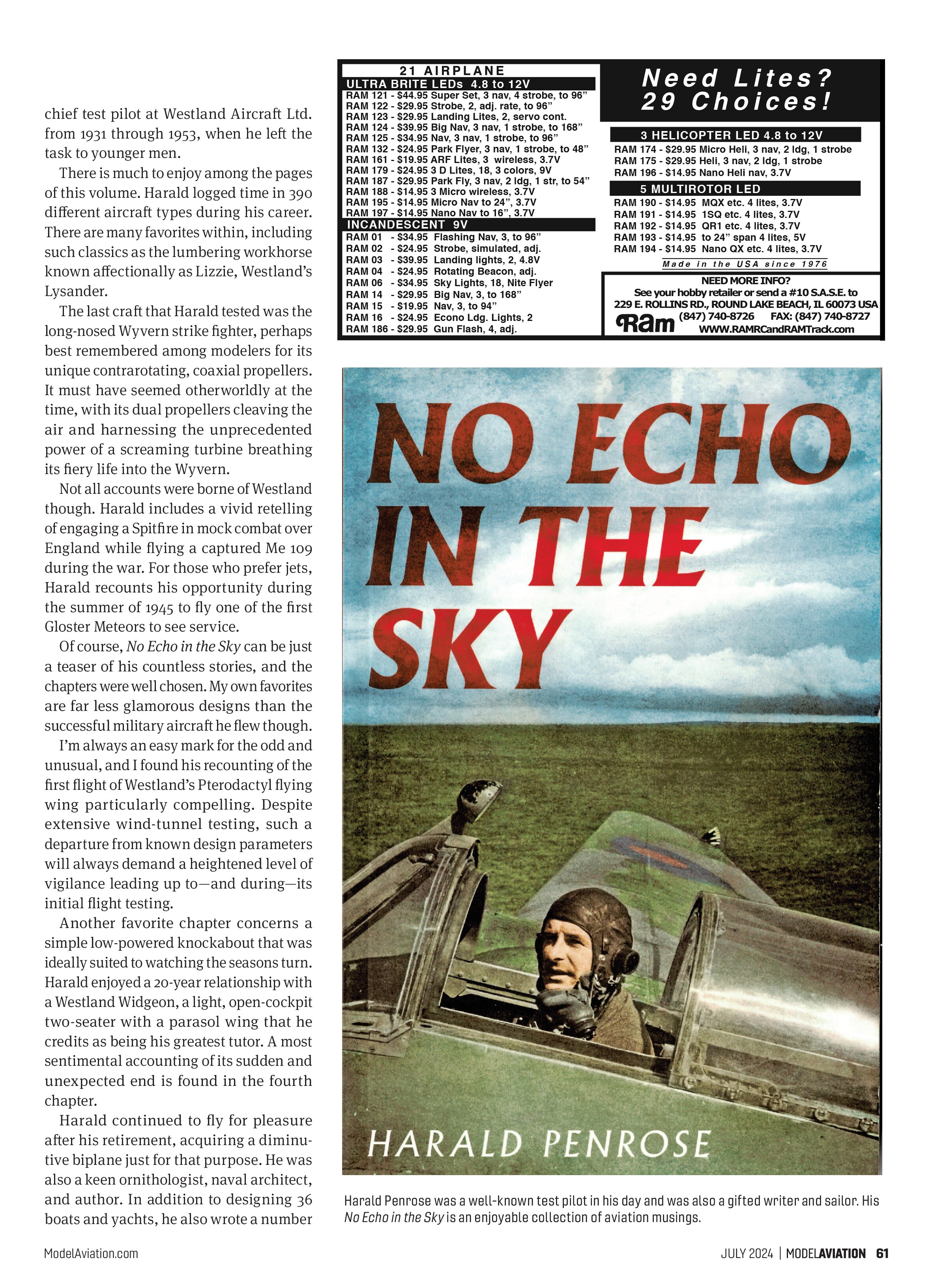
HARALD PENROSE’S NO ECHO IN THE SKY
By Thayer Syme | thayer@flying-models.com
SOME OF YOU might recall that I wrote a bit about Harald Penrose in the July 2020 “Around the Patch” column. Harald was an English test pilot, sailor, and author. At the end of that column, I briefly touched on a pair of his books that I had read at that time. I have a few more on my shelf now and have recently been savoring my stroll through another of his works, with great continued admiration of his modest manner, poetic phrasing, and keen senses of observation and reflection.
No Echo in the Sky is a collection of 15 essays, each a retelling of an instrumental building block from his bond with flight, as filtered through his experience with a specific aircraft. For example, Harald begins the book as a schoolboy in his mid-teens, recounting the classic Avro 504 in which he enjoyed his first-ever flight. Not surprisingly, his overwhelming sense and immediate conviction at the time was that he had found his life’s calling.
I have to imagine that most 15-year-old boys who were lucky enough to experience flight right after The Great War would have felt similarly. Much of his generation had spent the war years reading about the romanticized knightly exploits of such names as Guynemer, McCudden, Mannock, Ball, Immelmann, Boelcke, Voss, and Richthofen, who were often just a few years their senior.
No doubt, most boys his age would have done just about anything they could to join the ranks of such legendary fliers, but, of course, countless practicalities prevented all but a handful from living that dream. Despite all odds, though, Harald did indeed make his life in the air, serving as the chief test pilot at Westland Aircraft Ltd. from 1931 through 1953, when he left the task to younger men.
There is much to enjoy among the pages of this volume. Harald logged time in 390 different aircraft types during his career. There are many favorites within, including such classics as the lumbering workhorse known affectionally as Lizzie, Westland’s Lysander.
The last craft that Harald tested was the long-nosed Wyvern strike fighter, perhaps best remembered among modelers for its unique contrarotating, coaxial propellers. It must have seemed otherworldly at the time, with its dual propellers cleaving the air and harnessing the unprecedented power of a screaming turbine breathing its fiery life into the Wyvern.
Not all accounts were borne of Westland though. Harald includes a vivid retelling of engaging a Spitfire in mock combat over England while flying a captured Me 109 during the war. For those who prefer jets, Harald recounts his opportunity during the summer of 1945 to fly one of the first Gloster Meteors to see service.
Of course, No Echo in the Sky can be just a teaser of his countless stories, and the chapters were well chosen. My own favorites are far less glamorous designs than the successful military aircraft he flew though.
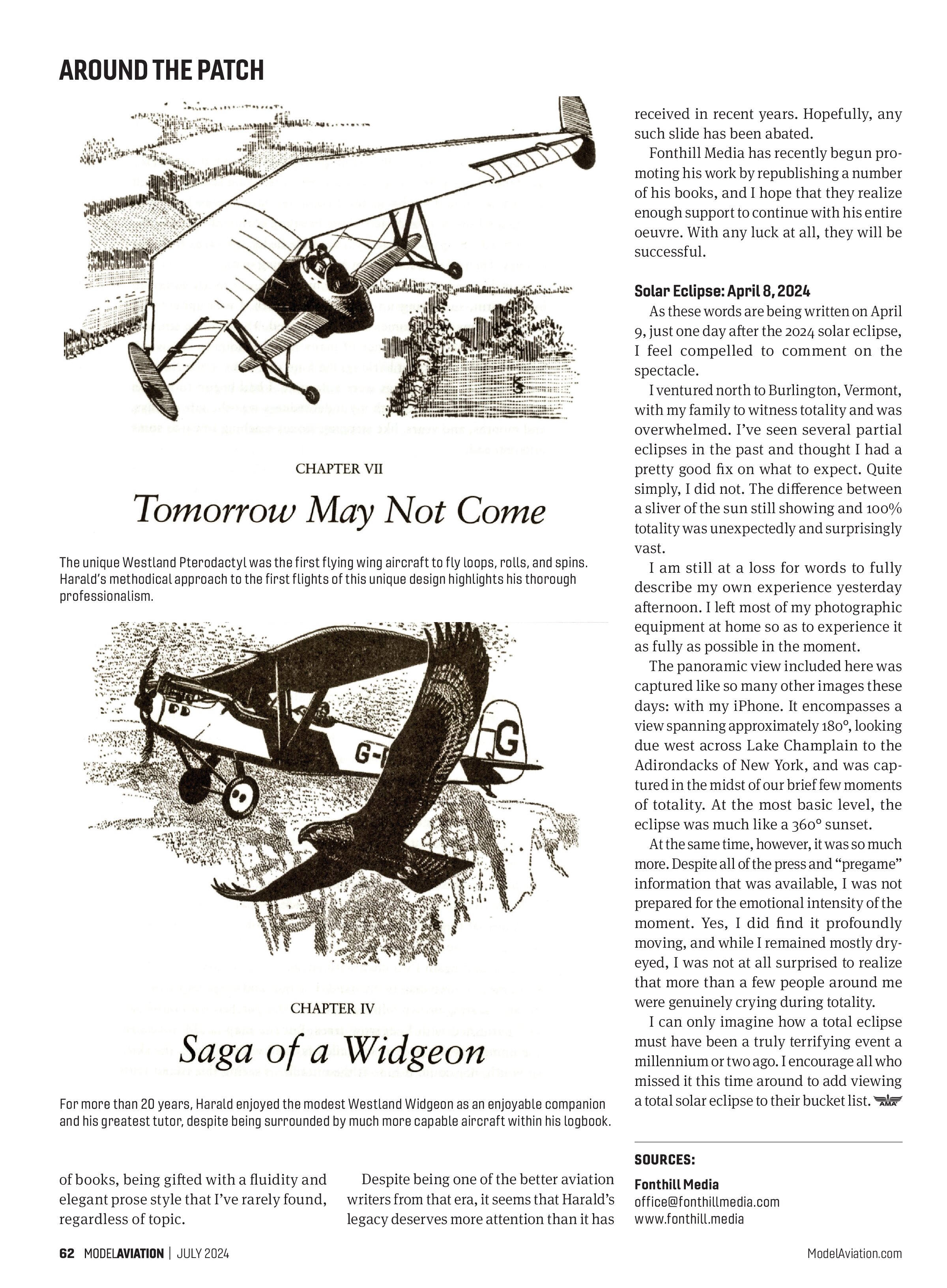
I’m always an easy mark for the odd and unusual, and I found his recounting of the first flight of Westland’s Pterodactyl flying wing particularly compelling. Despite extensive wind-tunnel testing, such a departure from known design parameters will always demand a heightened level of vigilance leading up to—and during—its initial flight testing.
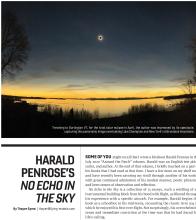
Another favorite chapter concerns a simple low-powered knockabout that was ideally suited to watching the seasons turn. Harald enjoyed a 20-year relationship with a Westland Widgeon, a light, open-cockpit two-seater with a parasol wing that he credits as being his greatest tutor. A most sentimental accounting of its sudden and unexpected end is found in the fourth chapter.
Harald continued to fly for pleasure after his retirement, acquiring a diminutive biplane just for that purpose. He was also a keen ornithologist, naval architect, and author. In addition to designing 36 boats and yachts, he also wrote a number


CHAPTER VII
Tomorrow May Not Come
The unique Westland Pterodactyl was the first flying wing aircraft to fly loops, rolls, and spins. Harald’s methodical approach to the first flights of this unique design highlights his thorough professionalism.

CHAPTER IV
Saga of a Widgeon
For more than 20 years, Harald enjoyed the modest Westland Widgeon as an enjoyable companion and his greatest tutor, despite being surrounded by much more capable aircraft within his logbook.
of books, being gifted with a fluidity and elegant prose style that I’ve rarely found, regardless of topic.
Despite being one of the better aviation writers from that era, it seems that Harald’s legacy deserves more attention than it has received in recent years. Hopefully, any such slide has been abated.
Fonthill Media has recently begun promoting his work by republishing a number of his books, and I hope that they realize enough support to continue with his entire oeuvre. With any luck at all, they will be successful.
Solar Eclipse: April 8, 2024
As these words are being written on April 9, just one day after the 2024 solar eclipse, I feel compelled to comment on the spectacle.
I ventured north to Burlington, Vermont, with my family to witness totality and was overwhelmed. I’ve seen several partial eclipses in the past and thought I had a pretty good fix on what to expect. Quite simply, I did not. The difference between a sliver of the sun still showing and 100% totality was unexpectedly and surprisingly vast.
I am still at a loss for words to fully describe my own experience yesterday afternoon. I left most of my photographic equipment at home so as to experience it as fully as possible in the moment.
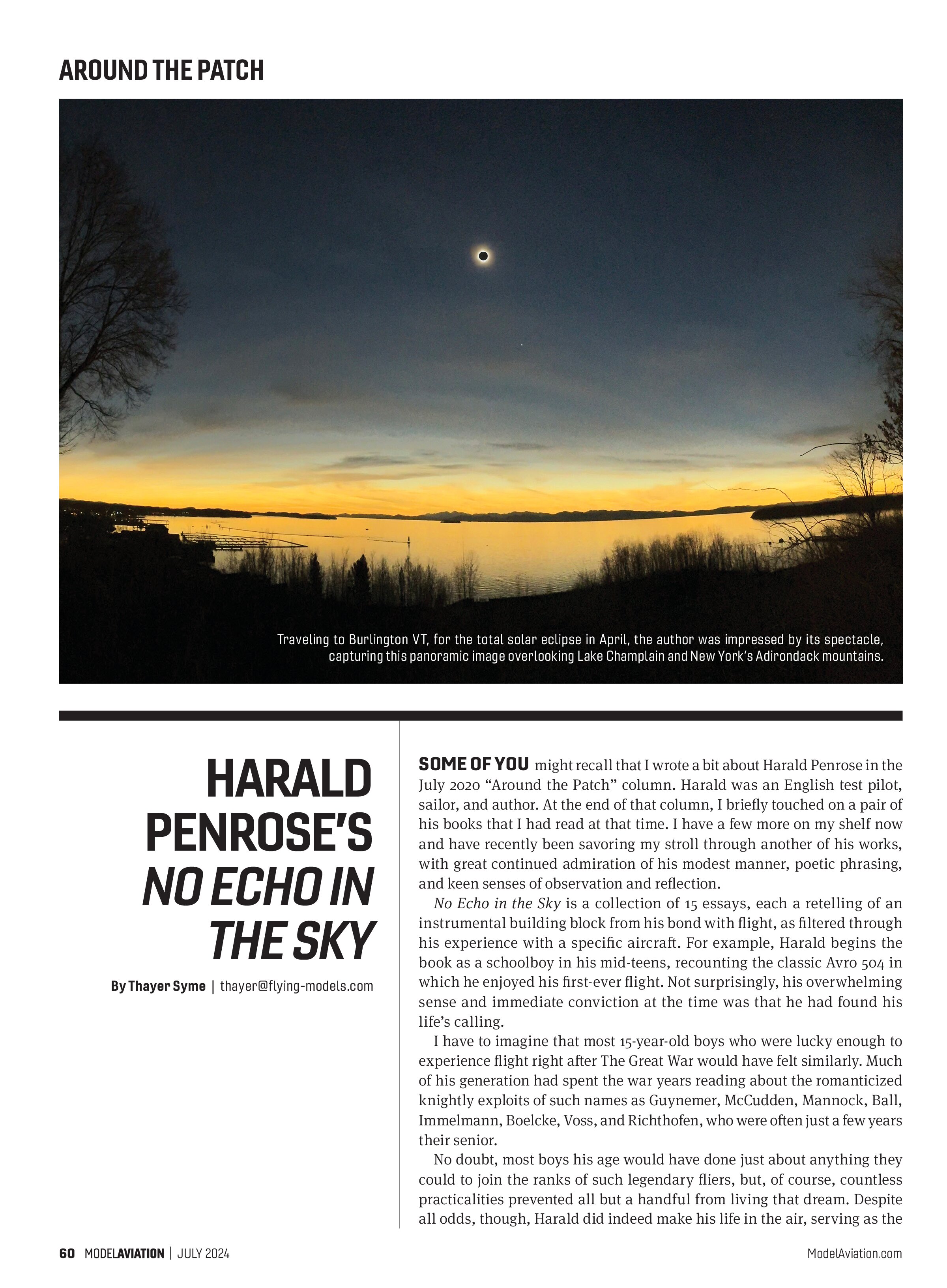
The panoramic view included here was captured like so many other images these days: with my iPhone. It encompasses a view spanning approximately 180°, looking due west across Lake Champlain to the Adirondacks of New York, and was captured in the midst of our brief few moments of totality. At the most basic level, the eclipse was much like a 360° sunset.
At the same time, however, it was so much more. Despite all of the press and “pregame” information that was available, I was not prepared for the emotional intensity of the moment. Yes, I did find it profoundly moving, and while I remained mostly dry-eyed, I was not at all surprised to realize that more than a few people around me were genuinely crying during totality.
I can only imagine how a total eclipse must have been a truly terrifying event a millennium or two ago. I encourage all who missed it this time around to add viewing a total solar eclipse to their bucket list.
SOURCES:
Fonthill Media
office@fonthillmedia.com
www.fonthill.media