in the instructions and software.)
Following is some of the information, as published from the website’s home page:
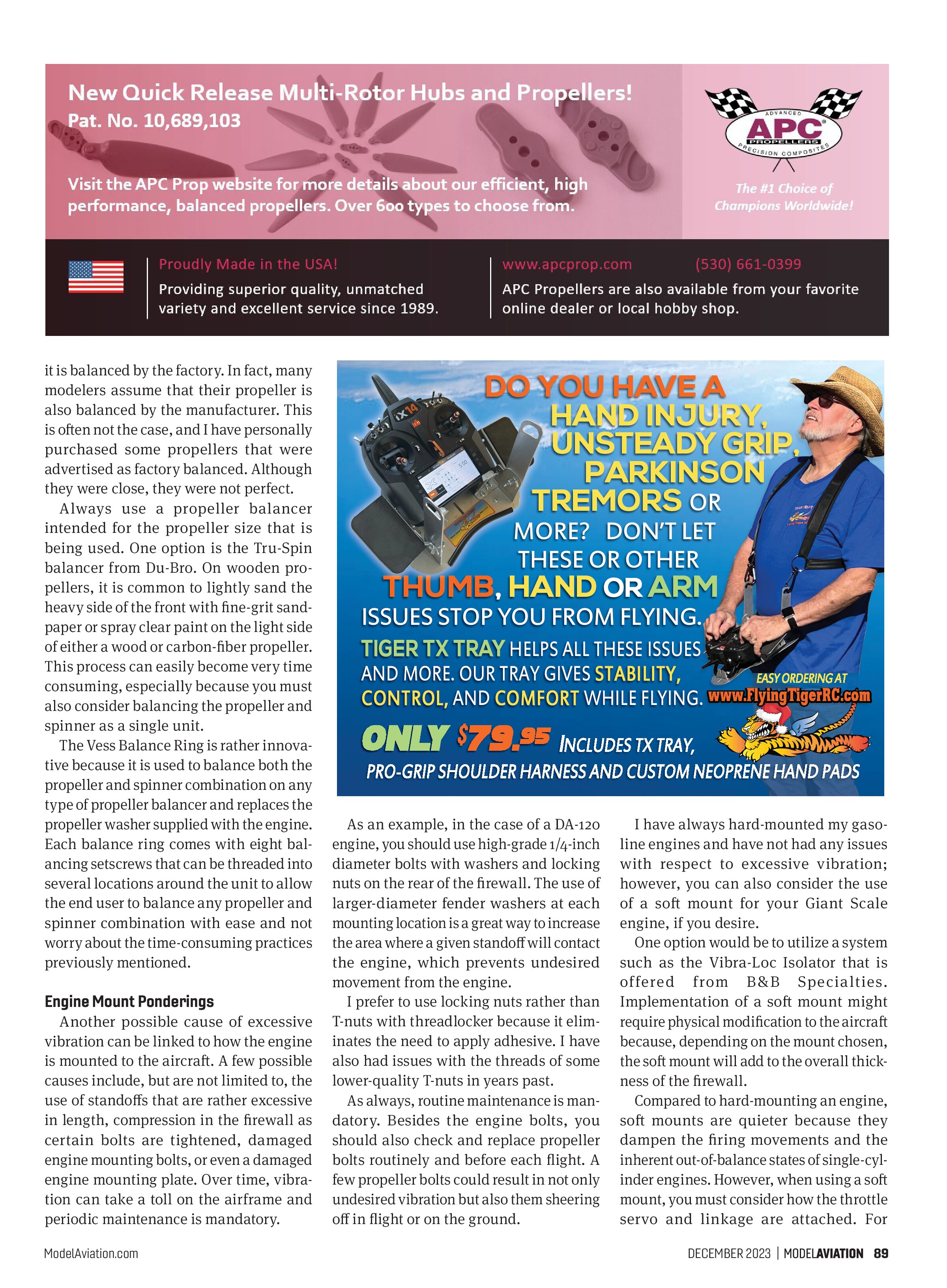
The Plotter: The key output of the Flight Coach project is the Plotter, which displays a 3D-interactive visualization of the recorded data tailored to the needs of an aerobatic pilot.
The Map: Flight Coach Map (FCM) is an add-on that will assist pilots in locating a competition box at a site.
The Judge: Flight Coach Judge (FCJudge) is an add-on that will assist pilots in judging recorded flights. It animates the recorded

flight with realistic graphics with minimal computer prompts and allows the operator to enter a score for each maneuver.
The Flight Coach Geo: (FCGeo) is an add-on that draws the prerecorded flight ribbon within the geospatial environment that includes terrain information. It has been designed to orientate the pilot within the visual surroundings of the site.
Overall, I am appreciative regarding the volunteering of time and talent to produce this “free” interface with great details and support functions within the website.
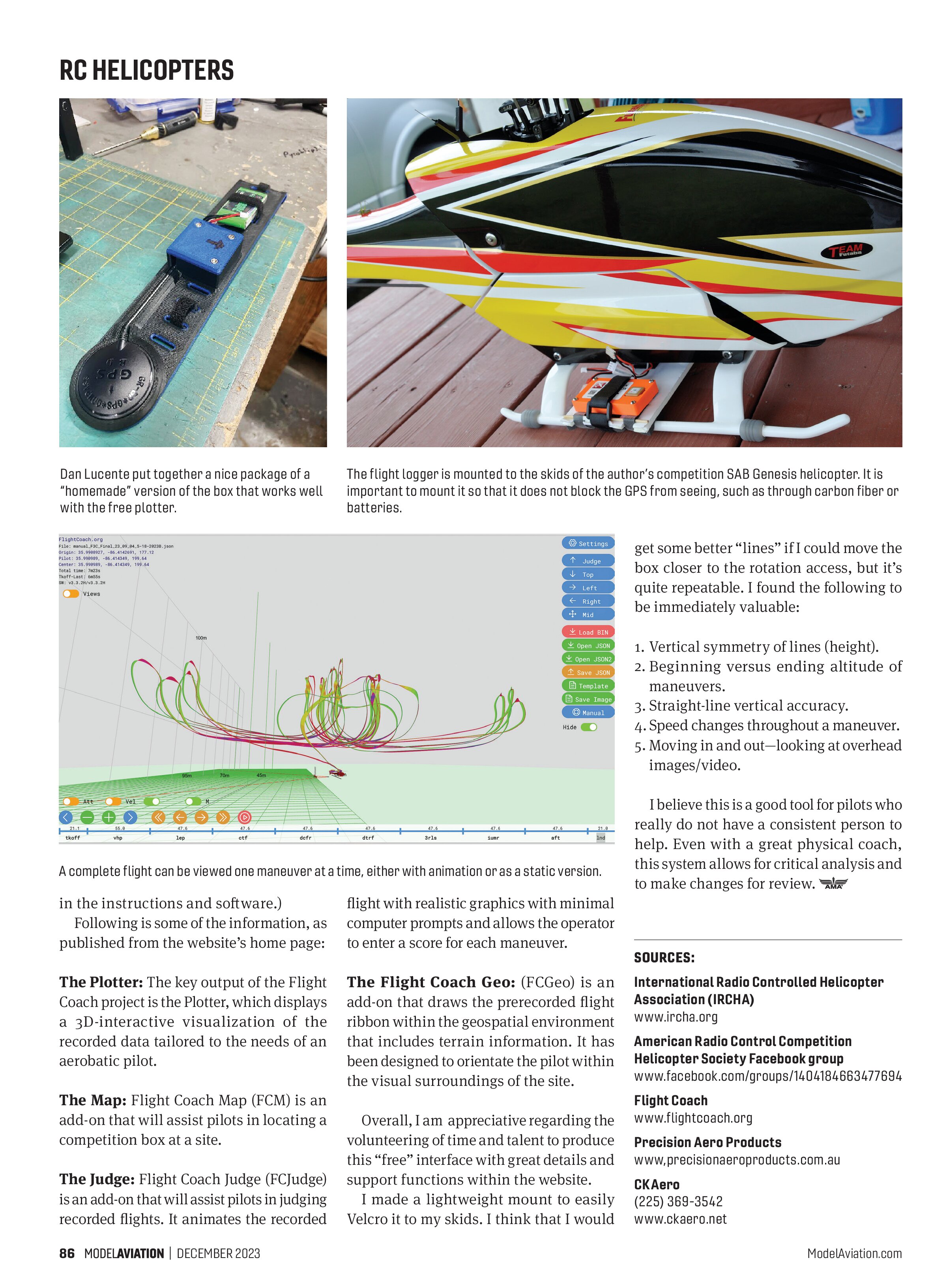
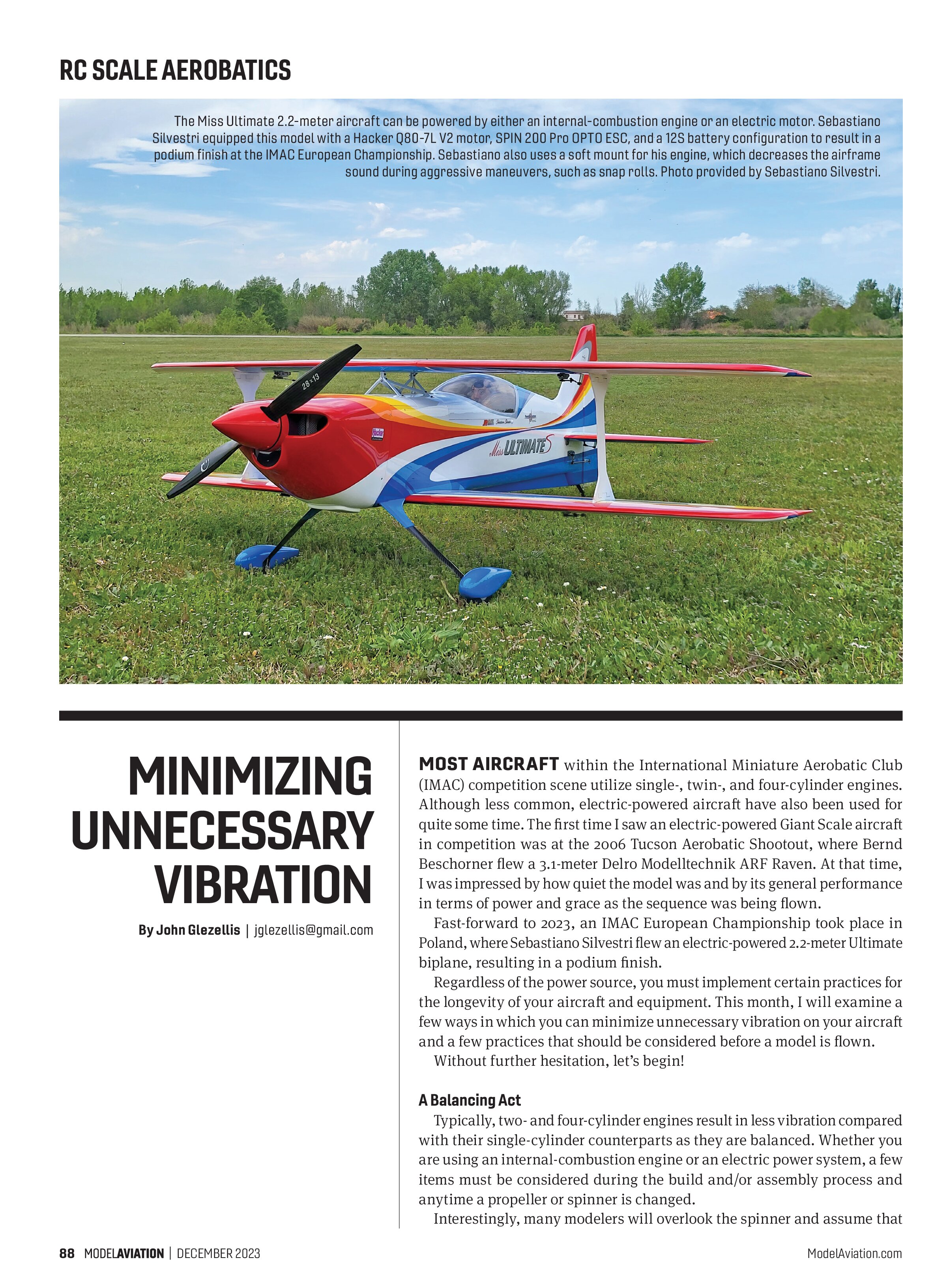
I made a lightweight mount to easily Velcro it to my skids. I think that I would
get some better “lines” if I could move the box closer to the rotation access, but it’s quite repeatable. I found the following to be immediately valuable:
- Vertical symmetry of lines (height).
- Beginning versus ending altitude of maneuvers.
- Straight-line vertical accuracy.
- Speed changes throughout a maneuver.
- Moving in and out—looking at overhead images/video.
I believe this is a good tool for pilots who really do not have a consistent person to help. Even with a great physical coach, this system allows for critical analysis and to make changes for review.
SOURCES:
International Radio Controlled Helicopter Association (IRCHA)
www.ircha.org
American Radio Control Competition Helicopter Society Facebook group
www.facebook.com/groups/1404184663477694
Flight Coach
www.flightcoach.org
Precision Aero Products
www.precisionaeroproducts.com.au
CK Aero
(225) 369-3542
www.ckaero.net


MOST AIRCRAFT within the International Miniature Aerobatic Club (IMAC) competition scene utilize single-, twin-, and four-cylinder engines. Although less common, electric-powered aircraft have also been used for quite some time. The first time I saw an electric-powered Giant Scale aircraft in competition was at the 2006 Tucson Aerobatic Shootout, where Bernd Beschorner flew a 3.1-meter Delro Modelltechnik ARF Raven. At that time, I was impressed by how quiet the model was and by its general performance in terms of power and grace as the sequence was being flown.
Fast-forward to 2023, an IMAC European Championship took place in Poland, where Sebastiano Silvestri flew an electric-powered 2.2-meter Ultimate biplane, resulting in a podium finish.
Regardless of the power source, you must implement certain practices for the longevity of your aircraft and equipment. This month, I will examine a few ways in which you can minimize unnecessary vibration on your aircraft and a few practices that should be considered before a model is flown.
Without further hesitation, let’s begin!
A Balancing Act
Typically, two- and four-cylinder engines result in less vibration compared with their single-cylinder counterparts as they are balanced. Whether you are using an internal-combustion engine or an electric power system, a few items must be considered during the build and/or assembly process and anytime a propeller or spinner is changed.
Interestingly, many modelers will overlook the spinner and assume that it is balanced by the factory. In fact, many modelers assume that their propeller is also balanced by the manufacturer. This is often not the case, and I have personally purchased some propellers that were advertised as factory balanced. Although they were close, they were not perfect.
Always use a propeller balancer intended for the propeller size that is being used. One option is the Tru-Spin balancer from Du-Bro. On wooden propellers, it is common to lightly sand the heavy side of the front with fine-grit sandpaper or spray clear paint on the light side of either a wood or carbon-fiber propeller. This process can easily become very time consuming, especially because you must also consider balancing the propeller and spinner as a single unit.
The Vess Balance Ring is rather innovative because it is used to balance both the propeller and spinner combination on any type of propeller balancer and replaces the propeller washer supplied with the engine. Each balance ring comes with eight balancing setscrews that can be threaded into several locations around the unit to allow the end user to balance any propeller and spinner combination with ease and not worry about the time-consuming practices previously mentioned.
Engine Mount Ponderings
Another possible cause of excessive vibration can be linked to how the engine is mounted to the aircraft. A few possible causes include, but are not limited to, the use of standoffs that are rather excessive in length, compression in the firewall as certain bolts are tightened, damaged engine mounting bolts, or even a damaged engine mounting plate. Over time, vibration can take a toll on the airframe and periodic maintenance is mandatory.
As an example, in the case of a DA-120 engine, you should use high-grade 1/4-inch diameter bolts with washers and locking nuts on the rear of the firewall. The use of larger-diameter fender washers at each mounting location is a great way to increase the area where a given standoff will contact the engine, which prevents undesired movement from the engine.
I prefer to use locking nuts rather than T-nuts with threadlocker because it eliminates the need to apply adhesive. I have also had issues with the threads of some lower-quality T-nuts in years past.
As always, routine maintenance is mandatory. Besides the engine bolts, you should also check and replace propeller bolts routinely and before each flight. A few propeller bolts could result in not only undesired vibration but also them sheering off in flight or on the ground.
I have always hard-mounted my gasoline engines and have not had any issues with respect to excessive vibration; however, you can also consider the use of a soft mount for your Giant Scale engine, if you desire.
One option would be to utilize a system such as the Vibra-Loc Isolator that is offered from B&B Specialties. Implementation of a soft mount might require physical modification to the aircraft because, depending on the mount chosen, the soft mount will add to the overall thickness of the firewall.
Compared to hard-mounting an engine, soft mounts are quieter because they dampen the firing movements and the inherent out-of-balance states of single-cylinder engines. However, when using a soft mount, you must consider how the throttle servo and linkage are attached. For