VACATIONING WITH RC MODELS
By Terry Dunn | terrydunn74@gmail.com

IN MY JUNE 2021 COLUMN, I wrote about using a wattmeter to tune the performance of an electric-powered model. My specific example focused on a Tower Hobbies P-51 Mustang ARF. First, I upgraded from a three-cell LiPo battery to a four-cell. I then tested the setup with a variety of propellers, using a wattmeter to ensure that I did not exceed the ESC’s 30-amp limit.
Several astute readers emailed to remind me that I should have been monitoring other data as well. Those people are 100% correct. Thanks for keeping me honest. When configuring a reliable electric power system, it is essential to verify that the voltage, current, and power output are within the specifications of every component (motor, battery, and ESC). In my effort to convey how I managed the amperage limit of the ESC, I neglected to explain how I evaluated the motor and battery as well.
Let’s look at the battery first. Our only real concern here is to ensure that the system does not try to pull more current than what the battery is rated to deliver. I used a FlightPower four-cell 2,450 mAh (2.45 Ah) battery with a 30C discharge rate. This battery can deliver up to 73.5 amps continuously. This is well above the 30-amp maximum that I had to heed for the ESC, so I was confident that the battery would not be stressed at all.
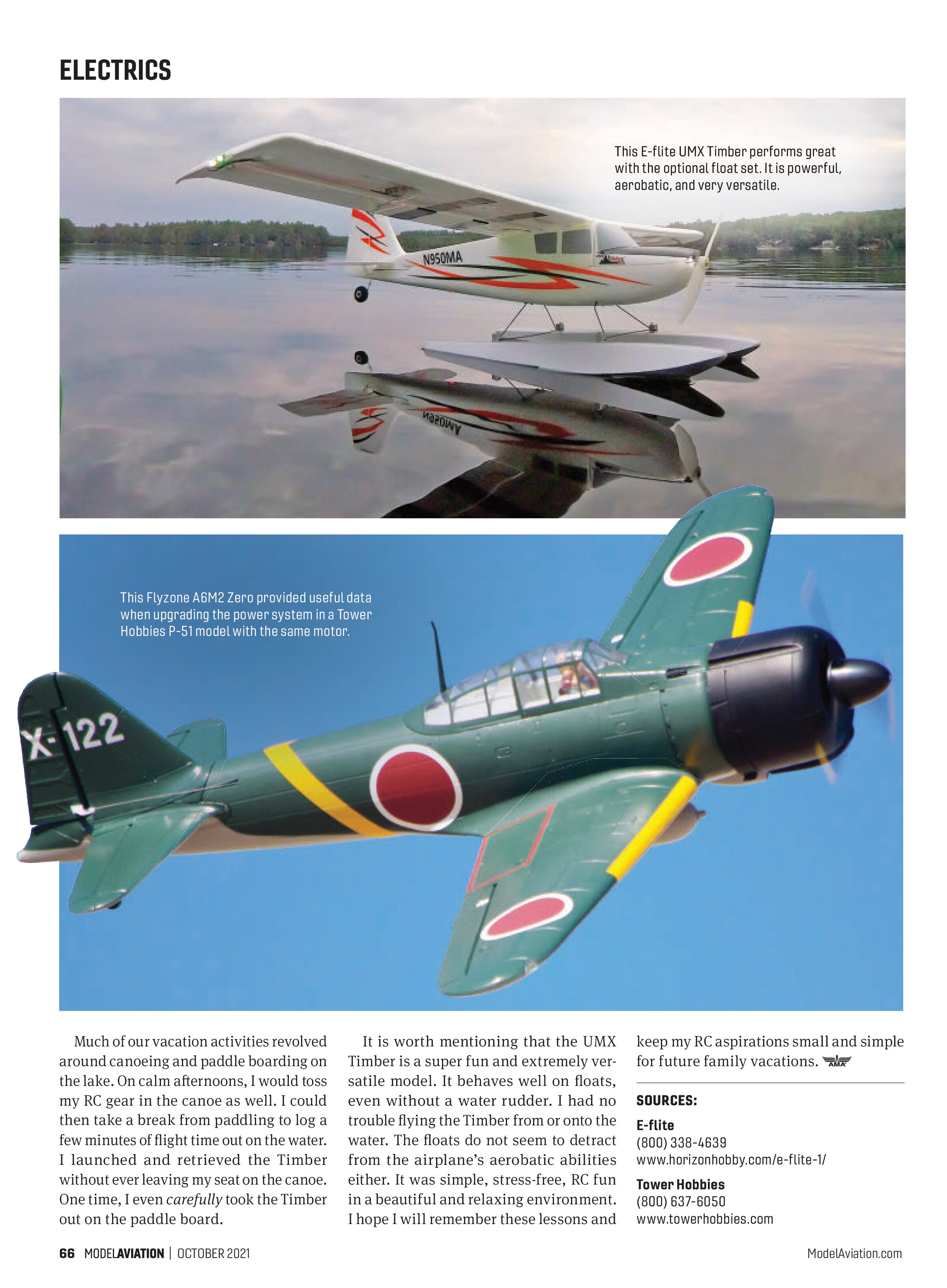
Things were not so cut-and-dried with the motor. As with many electric powerplants that are included with ARF models, the 35-30-1000 brushless motor in the Mustang did not include any listed specifications. Although no longer available, the same motor was standard equipment in several other models that were previously offered by Tower Hobbies, including the Flyzone A6M2 Zero. The Zero was advertised to be compatible with three-cell or four-cell LiPo batteries. That fact assured me that voltage would not be an issue for the Mustang’s motor when using a four-cell battery.
I used to own a Flyzone Zero and I still had wattmeter data in my files. With a four-cell battery, the Zero’s power system pulled 32.4 amps (the aircraft included a 40-amp ESC) and produced 491 watts of power. Both of those values are higher than my most powerful setup with the Mustang (31.7 amps/476 watts). This informed me that my “hot-rodded” Mustang would not push the motor any harder than a stock Zero. If I provided adequate cooling air, I was confident that it would be fine—and it has been. My data from the Zero provided a useful and reassuring reference point.
To reiterate, the point here is to ensure that your power system stays within the limits of all of the individual components. A wattmeter is the best tool to read the voltage, current, and power of the system. The motor, ESC, and battery are all critical items. Failure of any single item will end a flight, and maybe cause a crash, so treat them well and keep them happy.
Have Airplane, Will Travel
I recently returned from a nice family vacation. Any time that I travel, I always look for ways to sneak in a little RC flying in new locations. Throughout the years, I have stubbornly learned that the logistics of RC aviation do not always mesh with the realities of road-tripping with a wife and kids.
First of all, cargo space in the car is always at a premium. It seems that we always bring more stuff than we plan for. Fragile RC gear does not typically make the cut. The bigger challenge, however, is justifying the time for RC activities during limited vacation windows. I am the only active RC pilot in my household, so breaking away for a solo flying session never sounds as appealing when I am immersed in much-needed family time.
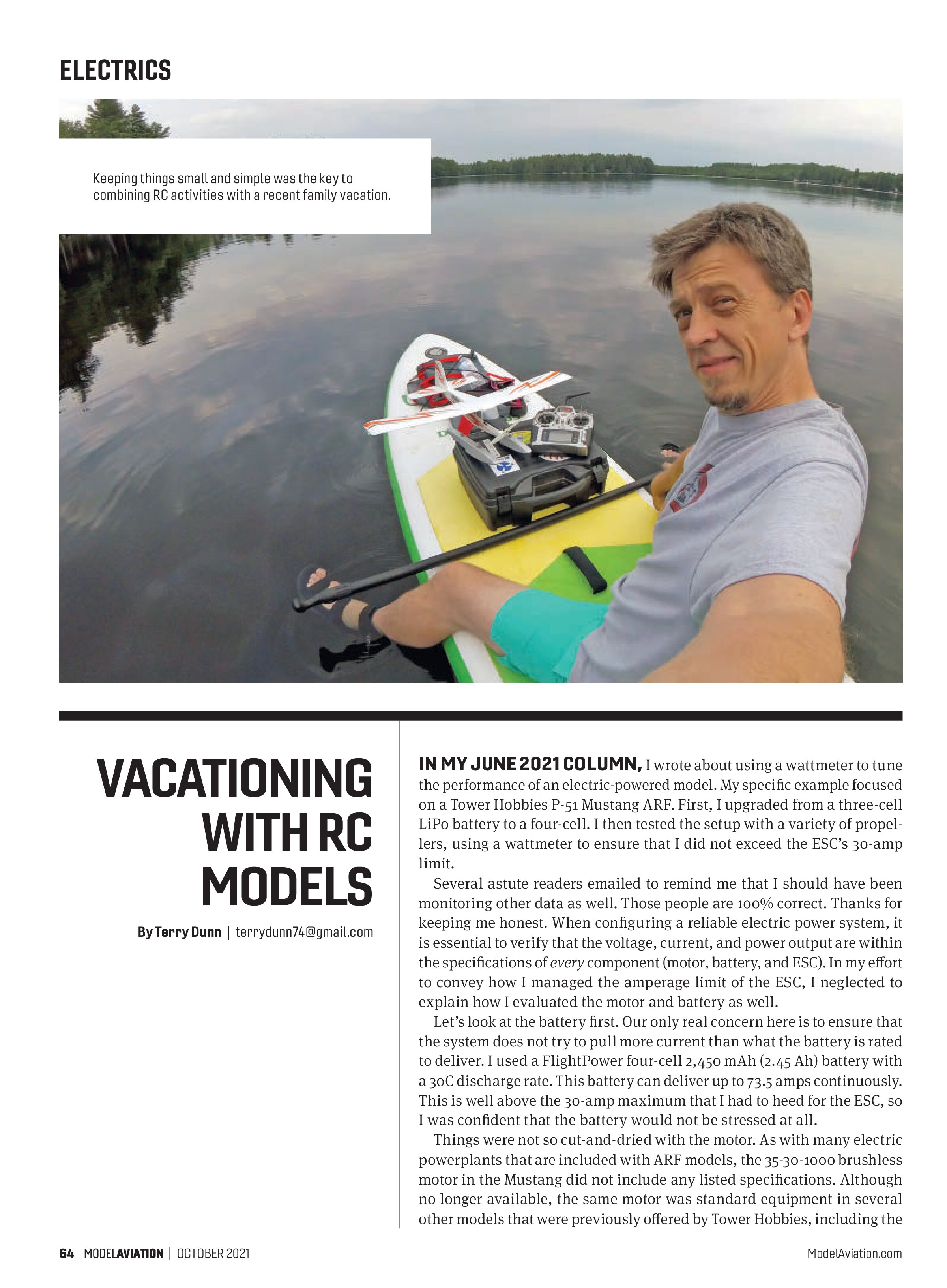
Despite my spotty history with vacation-time RC flying, hope springs eternal. Things panned out well for me with this recent trip. I was able to work in some great flying sessions without having to sacrifice much car storage or family time. Much of this success was because of my conscious choice to keep things small and simple.
Whenever I prepare for an RC event or even just a day at the flying field, I usually pack a lot of airplanes, a lot of batteries, and a lot of equipment—just in case. And why not?
I usually have plenty of room for it all, and it’s no big deal if something doesn’t get used. I had to adopt a different mindset for vacation RC flying. I packed only one airplane and the bare minimum of support equipment.
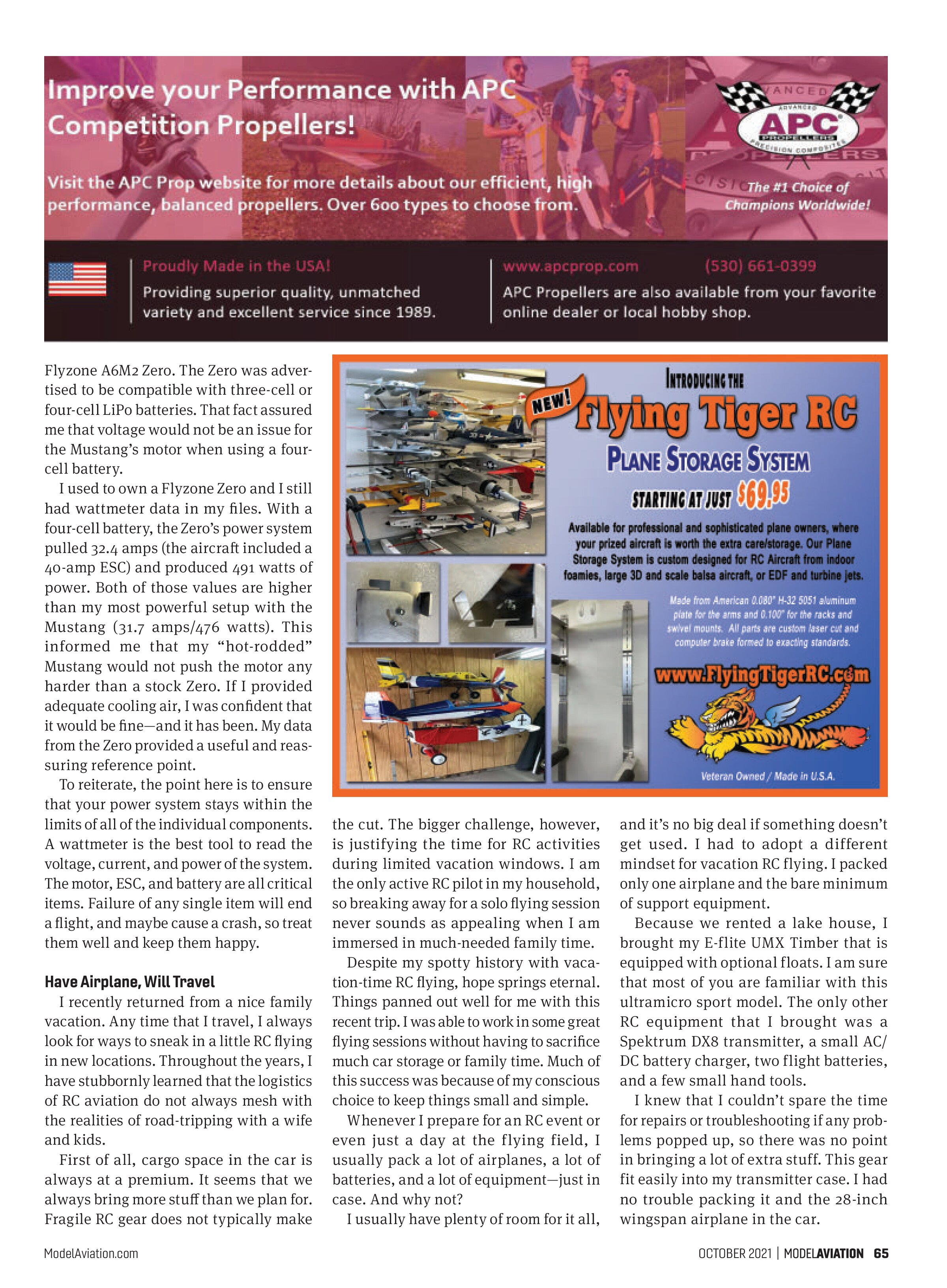
Because we rented a lake house, I brought my E-flite UMX Timber that is equipped with optional floats. I am sure that most of you are familiar with this ultramicro sport model. The only other RC equipment that I brought was a Spektrum DX8 transmitter, a small AC/DC battery charger, two flight batteries, and a few small hand tools.
I knew that I couldn’t spare the time for repairs or troubleshooting if any problems popped up, so there was no point in bringing a lot of extra stuff. This gear fit easily into my transmitter case. I had no trouble packing it and the 28-inch wingspan airplane in the car.


Much of our vacation activities revolved around canoeing and paddle boarding on the lake. On calm afternoons, I would toss my RC gear in the canoe as well. I could then take a break from paddling to log a few minutes of flight time out on the water. I launched and retrieved the Timber without ever leaving my seat on the canoe. One time, I even carefully took the Timber out on the paddle board.
It is worth mentioning that the UMX Timber is a super fun and extremely versatile model. It behaves well on floats, even without a water rudder. I had no trouble flying the Timber from or onto the water. The floats do not seem to detract from the airplane’s aerobatic abilities either. It was simple, stress-free, RC fun in a beautiful and relaxing environment. I hope I will remember these lessons and keep my RC aspirations small and simple for future family vacations.
SOURCES:
E-flite
(800) 338-4639
www.horizonhobby.com/e-flite-1/
Tower Hobbies
(800) 637-6050
www.towerhobbies.com