As Clubs Mature
Keeping your club active and inclusive can lead to longevity
by Larry Kruse
Model clubs, like all other organizations, have definitive stages of development and subscribe to commonly accepted life-cycle patterns. Those patterns are typically evolutionary and usually include initial existence, growth, maturity, renewal, and decline. The first two stages, initial existence and growth, are obviously necessary before the latter stages can become evident.
However, the decisions made during the middle stages—maturity and renewal—either stave off or mark the beginning of an organization’s decline. Recognizing where a club is in its life span becomes crucial to its continuation or dissolution.
The case in point here is the Lawton Area Fun Flyers Society (LAFFS) club of Lawton, Oklahoma. The club’s existence is based on its history with its own organizational life cycle. Roughly 30 years ago, there was a LAFFS club in Lawton that was fairly active, even sponsoring some fun-flys and contests. Unfortunately, because of age, a mobile population base, and a pervasive dissonance within the club, the group disbanded and nothing took its place for more than a decade.
Flying continued in a random manner by individuals on the Ft. Sill military post landing strip, but it was declared off limits in 2007 when Congress passed the Base Realignment and Closure Act. The loss of the site appeared to be the death knell for model flying in the area.
At that time, Ken Isaac, one of the more active modelers in the original LAFFS club, took it upon himself to contact as many area modelers as he could and invite them to a meeting to discuss what could be done. Many of the 20 modelers who showed up at that initial meeting had been members of the dissolved club. They let their feelings be heard about all of the things that had gone wrong and were adamant that they only needed a field, but did not want a club, particularly if it came with the same problems as the old one.
As discussion commenced during the next month or so, it was decided that the advantages of having a flying site and an AMA chartered club with insurance outweighed the potential repeat of another bad experience, particularly because securing and maintaining a new flying site would be the new club’s responsibility. Knowing what the problems had been in the dissolved club, the old LAFFS constitution and bylaws were revised to be less cumbersome, with wording modified to make the club more inclusive and less authoritarian.
Armed with foreknowledge and direct experience of what could go wrong, the members of the newly established LAFFS moved forward by securing the lease of property to establish a flying field. After a 5-year lease was agreed upon, thanks to the generosity of a neighboring club’s gift of used Petromat runway material, a 450 x 45-foot runway was laid down entirely by volunteer labor. The club moved from its existence stage into its growth mode.
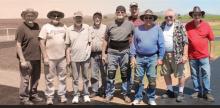
Now, a decade later, the club has gone from its initial 20 members to a constant 30 to 35 members each year and has maintained those numbers by making the club a welcoming presence for transient military members, families, and youth to join under the sponsorship of their parents.
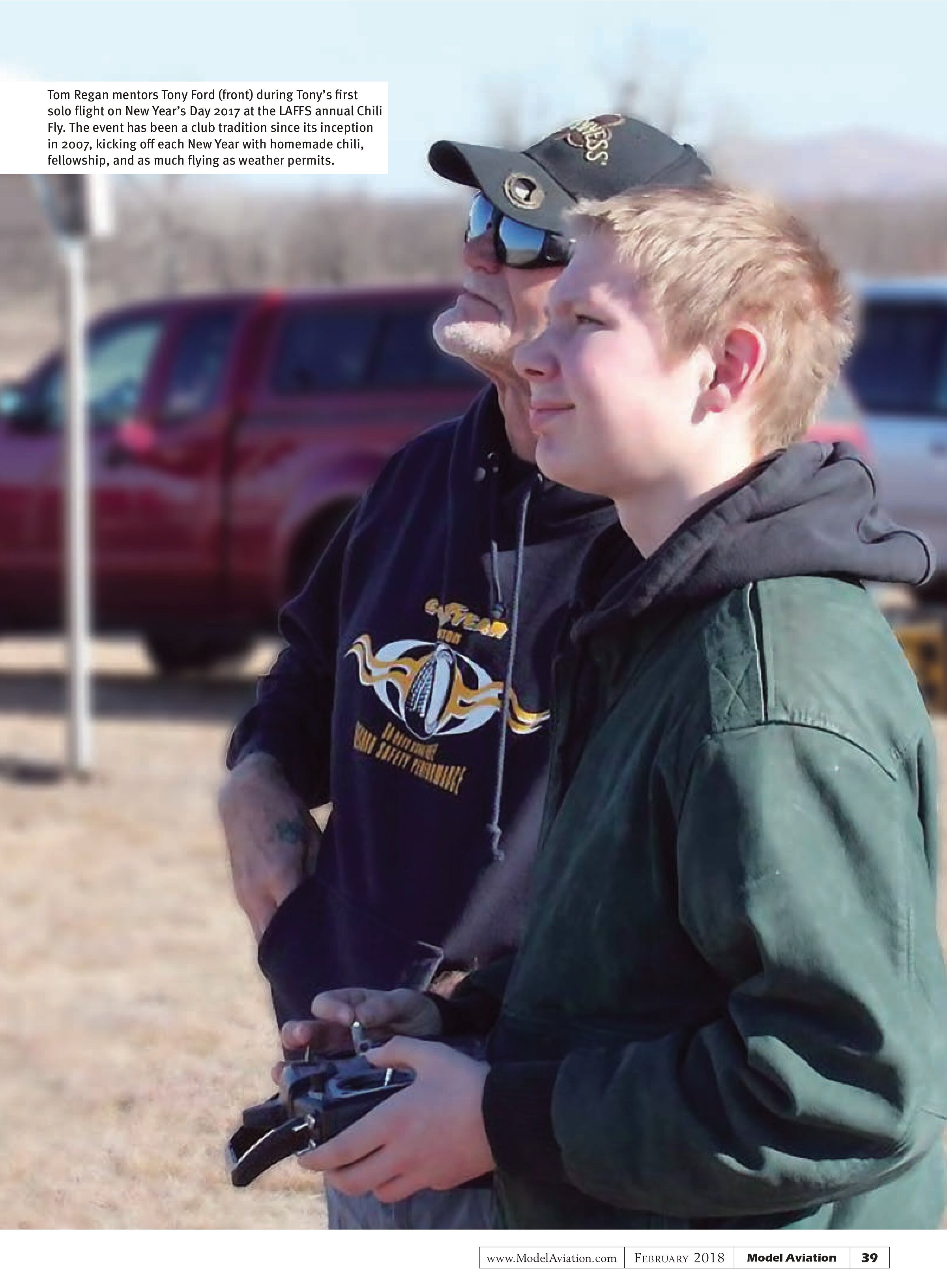
For those just getting into flying, the club has two certified instructors and an active buddy-box system using either the novice’s airplane or a club trainer donated for that purpose.
Several other things have been consciously done under the banner of “creative maintenance” as the club has matured, in order to maintain interest and foster activity. Having been through the demise of the first LAFFS club, members were acutely aware of the adage that there are three types of club members: those who make things happen; those who watch things happen; and those who ask what happened.
Wanting to avoid the last category, members initiated a proactive agenda that included expansion of existing flying sites, cooperation with local and regional agencies, planning and renewal initiatives, and volunteerism for the benefit of the club and community.

Expansion of Existing Flying Sites
An annual contract was initiated with the local university, Cameron University, to use its large, high-ceiling recreational center as a flying site once a month, both for LAFFS members and non-club AMA members.
Individuals come from as far as 60 miles away to fly on scheduled Saturday evenings. All-inclusive activities, such as Delta Dart contests, paper airplane contests, and building contests, have broadened the use of the site and increased the volume of laughter and good fellowship.
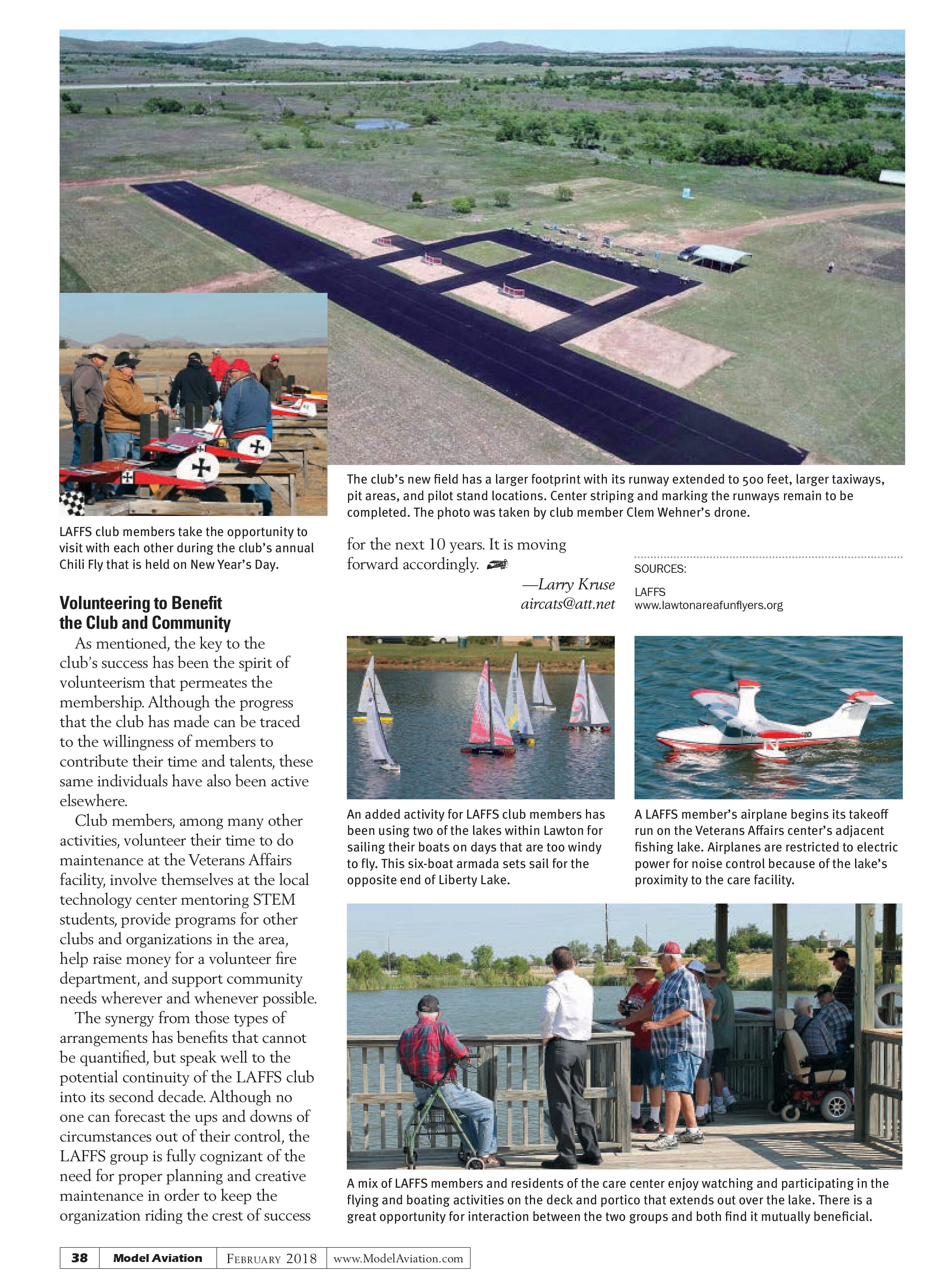
An agreement was reached with the local Veterans Affairs center to use its adjacent lake for float-flying and for model boating activities. That agreement prompted club members, who had never flown off of water or who had a model boat, to expand their horizons.
Because of the configuration of the site, residents of the facility can come view the activities up close by way of a portico and a shelter that extend out over the lake and can interact with club members.
Cooperation With Local and Regional Agencies
As an offshoot of the use of the lake, the city permits LAFFS to use city-owned lakes for the club’s latest popular activity: model sailboating on days that are too windy to fly. The Lawton Public Library allows the club to hold monthly meetings in its facilities at no cost. When special interest programs are presented at club meetings, the public is invited to attend in the library’s meeting rooms.
The county was recently instrumental in improving access to the club flying site, Elkins Field, by providing the labor and equipment to install a drainage culvert and dirt work across the ditch on the county right-of-way. In turn, the club has sponsored fundraising activities that increased the profile of the club, including contributions to Wounded Warrior Project and to families that lost everything in the Moore, Oklahoma, tornado disaster.
Planning and Renewal Activities
Knowing that constant attention needs to be paid to any organization in order to keep it on track, club leaders were able to anticipate the cost of renewing the flying field lease every 5 years, while also preparing to replace the existing Petromat runway, which was already 7 years old when it was laid down.
Recognizing several years in advance that the third renewal of the field contract and the need to replace the runway would occur nearly simultaneously, the club established a runway replacement line item in each annual budget. Club raffles, fundraising activities, estate contributions, individual gifts, and any miscellaneous funds not earmarked for other uses were placed in that fund based on a detailed cost estimate for the necessary dirt work and the cost of new Petromat. The upshot of the planning process was that before the work began, the money to do it was in place and available.
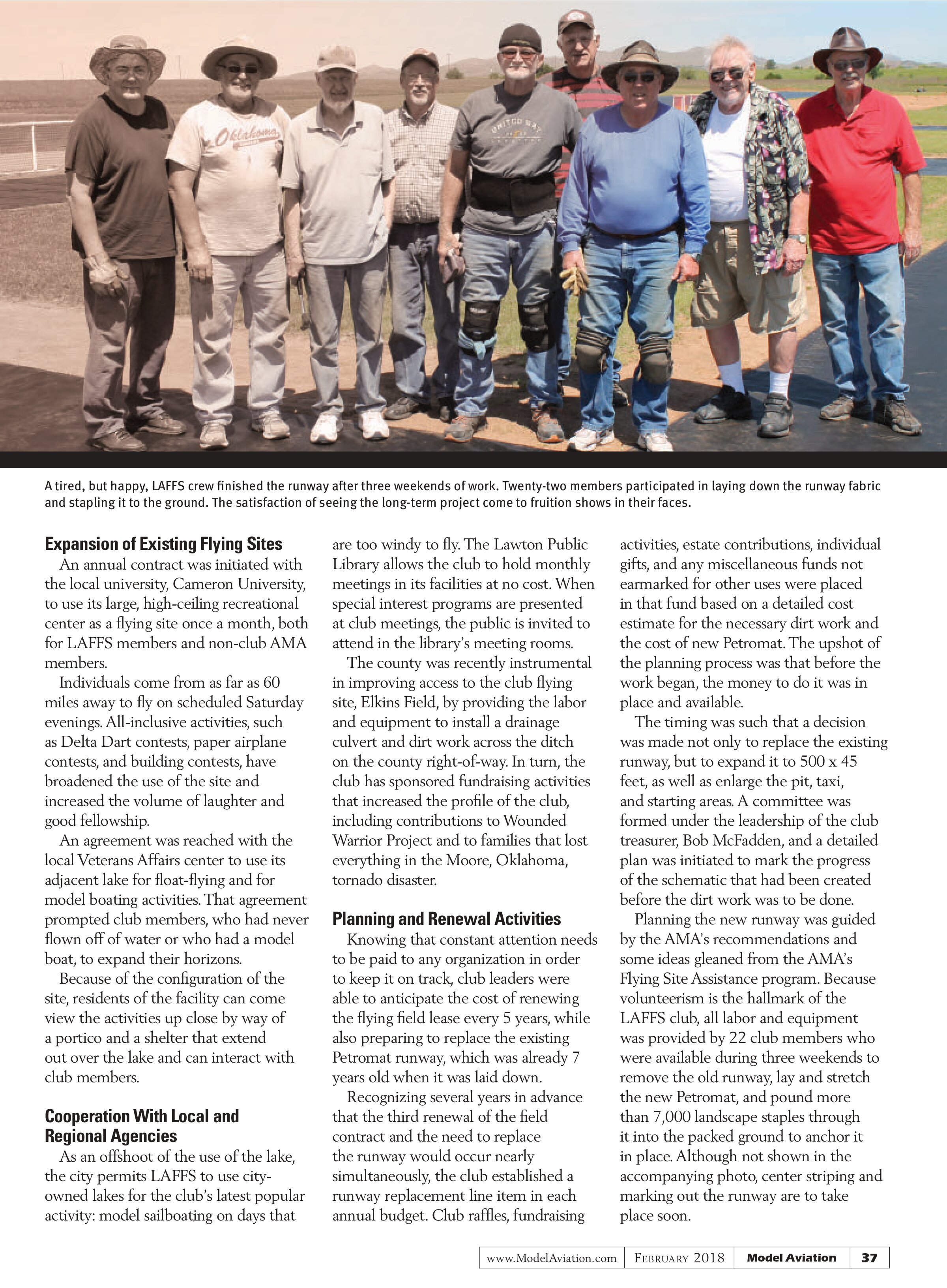
The timing was such that a decision was made not only to replace the existing runway, but to expand it to 500 x 45 feet, as well as enlarge the pit, taxi, and starting areas. A committee was formed under the leadership of the club treasurer, Bob McFadden, and a detailed plan was initiated to mark the progress of the schematic that had been created before the dirt work was to be done.
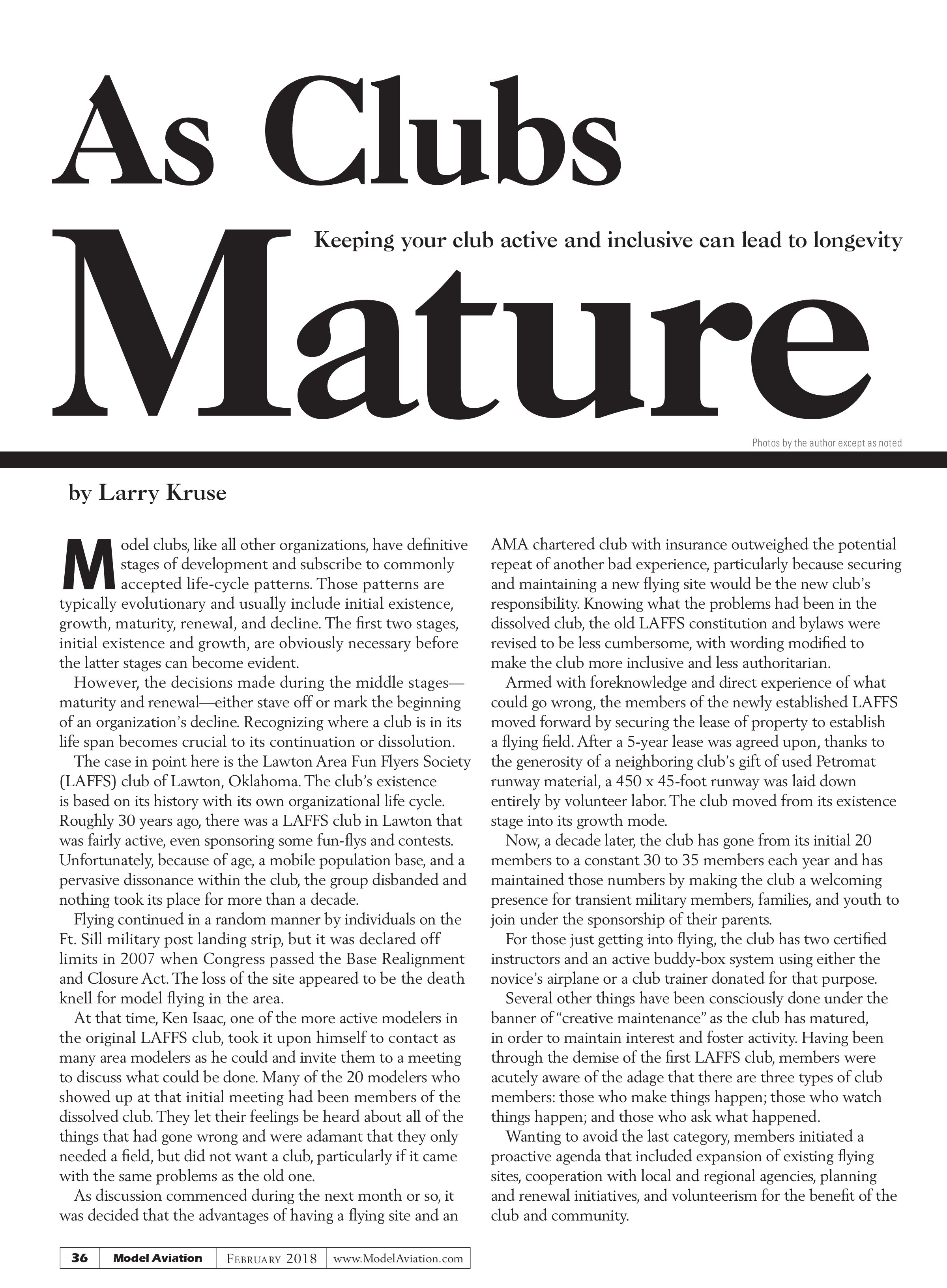
Planning the new runway was guided by the AMA’s recommendations and some ideas gleaned from the AMA’s Flying Site Assistance program. Because volunteerism is the hallmark of the LAFFS club, all labor and equipment was provided by 22 club members who were available during three weekends to remove the old runway, lay and stretch the new Petromat, and pound more than 7,000 landscape staples through it into the packed ground to anchor it in place. Although not shown in the accompanying photo, center striping and marking out the runway are to take place soon.


Volunteering to Benefit the Club and Community
As mentioned, the key to the club’s success has been the spirit of volunteerism that permeates the membership. Although the progress that the club has made can be traced to the willingness of members to contribute their time and talents, these same individuals have also been active elsewhere.
Club members, among many other activities, volunteer their time to do maintenance at the Veterans Affairs facility, involve themselves at the local technology center mentoring STEM students, provide programs for other clubs and organizations in the area, help raise money for a volunteer fire department, and support community needs wherever and whenever possible.
The synergy from those types of arrangements has benefits that cannot be quantified, but speak well to the potential continuity of the LAFFS club into its second decade. Although no one can forecast the ups and downs of circumstances out of their control, the LAFFS group is fully cognizant of the need for proper planning and creative maintenance in order to keep the organization riding the crest of success
for the next 10 years. It is moving forward accordingly.
—Larry Kruse
aircats@att.net
SOURCES:
LAFFS
www.lawtonareafunflyers.org