Steps to competing in IMAC
by John Glezellis
jglezellis@gmail.com
In recent years, Giant Scale Aerobatics models have become a common site at many flying fields in the US. Interestingly, many of the pilots who build and fly these models have never attended an official International Miniature Aerobatic Club (IMAC) competition—often because of a lack of knowledge about how to approach the subject of competition. Others are hesitant about attending a competition. This brings me to my topic of discussion.
Throughout the course of this column, I will examine a few ways that a pilot can approach and transition into the competition scene. Not only will I look at the first steps you should take to find an event to attend, but I will also discuss which schedule is right for you and touch on a few of the items that are and are not allowed in RC Aerobatics competition.
Enough said—let’s get down to business and help you prepare for your first event!


In the Beginning
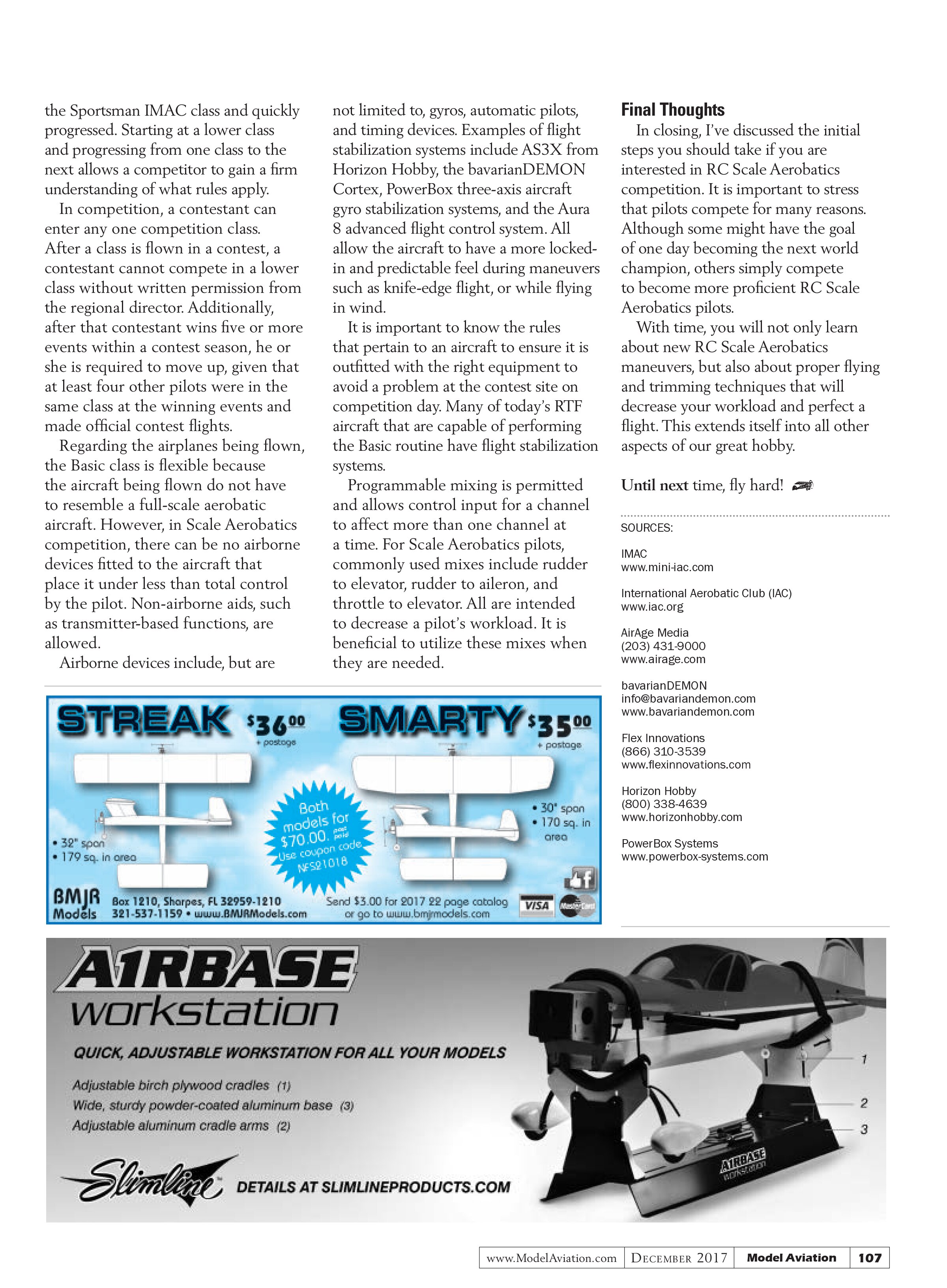
Before I competed in my first contest, I attended a judging seminar to better understand the routines being flown at the time and the criteria that all competitors would be judged against. Introductory events that combine a seminar about judging criteria and various aircraft setup techniques are sometimes offered, and can be followed by an actual competition.
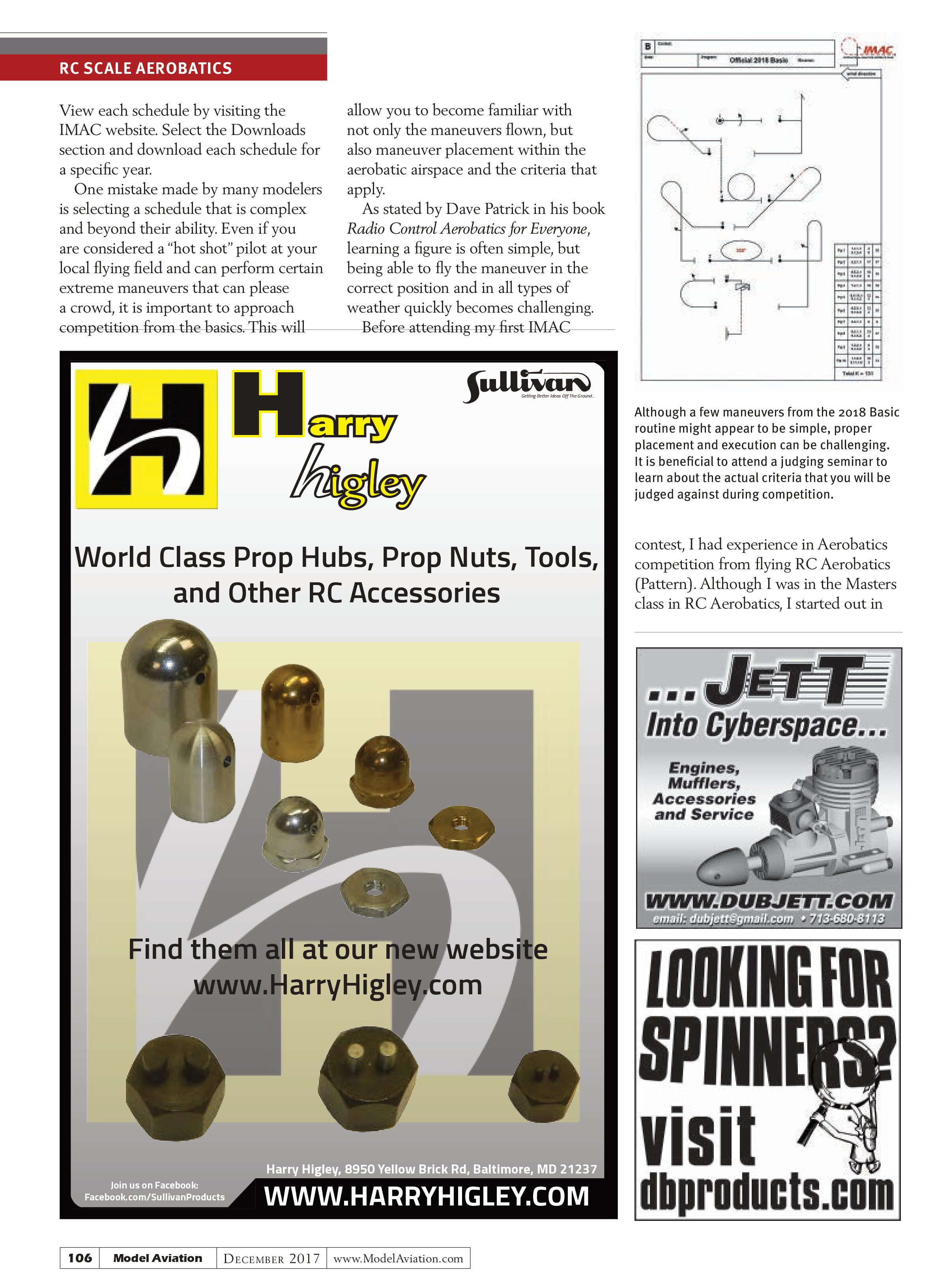
Other times, a seminar features a live demonstration of the Basic sequence that is flown by an experienced pilot. This allows other pilots to see the correct way to perform all maneuvers within that routine. To find an event near you, visit the IMAC website (listed in “Sources”), select “Regions,” then the geographic region where you are located.
Even if you do not fly at the first competition that you attend, you should at least become a volunteer. Contact the contest director and state that you would like to become a scribe. Each judge typically has what is called a “scribe”—a person who simply writes down the score for each maneuver being flown as the judge sees it.
Being active at an event is a great way to not only learn a certain routine and how to interpret the maneuvers that are being flown, but also to increase your overall understanding of how an event is organized so that you are familiar with it when you decide to compete. Talk with other contestants about any questions that you might have. In this sport, I have found that those involved are extremely helpful.
Class Selection
Now that you are interested in attending an event, you will need to select a schedule of maneuvers to practice. There are five classes that increase in difficulty: Basic, Sportsman, Intermediate, Advanced, and Unlimited.
View each schedule by visiting the IMAC website. Select the Downloads section and download each schedule for a specific year.
One mistake made by many modelers is selecting a schedule that is complex and beyond their ability. Even if you are considered a “hot shot” pilot at your local flying field and can perform certain extreme maneuvers that can please a crowd, it is important to approach competition from the basics. This will allow you to become familiar with not only the maneuvers flown, but also maneuver placement within the aerobatic airspace and the criteria that apply.
As stated by Dave Patrick in his book Radio Control Aerobatics for Everyone, learning a figure is often simple, but being able to fly the maneuver in the correct position and in all types of weather quickly becomes challenging.
Before attending my first IMAC

contest, I had experience in Aerobatics competition from flying RC Aerobatics (Pattern). Although I was in the Masters class in RC Aerobatics, I started out in the Sportsman IMAC class and quickly progressed. Starting at a lower class and progressing from one class to the next allows a competitor to gain a firm understanding of what rules apply.
In competition, a contestant can enter any one competition class. After a class is flown in a contest, a contestant cannot compete in a lower class without written permission from the regional director. Additionally, after that contestant wins five or more events within a contest season, he or she is required to move up, given that at least four other pilots were in the same class at the winning events and made official contest flights.
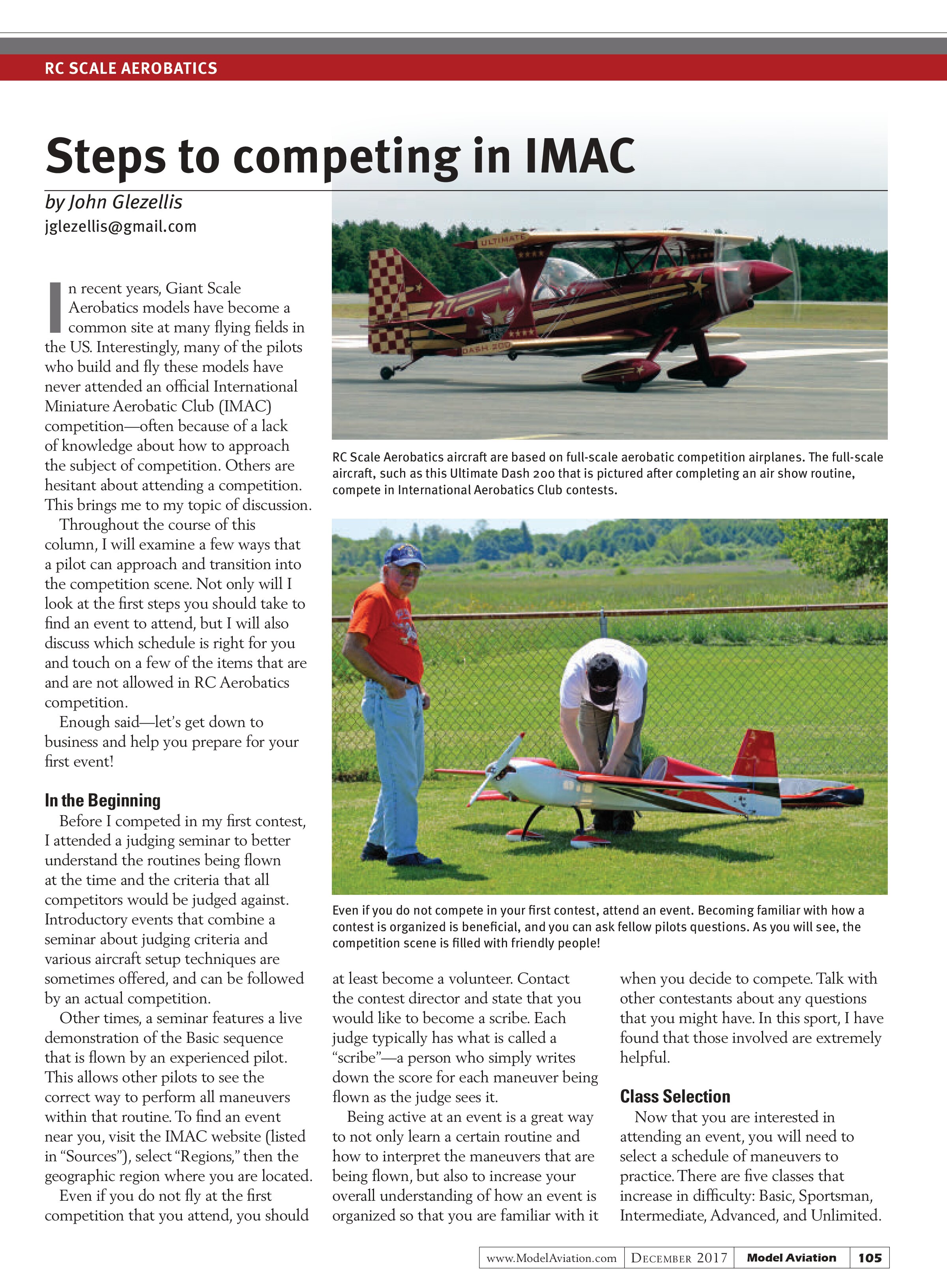
Regarding the airplanes being flown, the Basic class is flexible because the aircraft being flown do not have to resemble a full-scale aerobatic aircraft. However, in Scale Aerobatics competition, there can be no airborne devices fitted to the aircraft that place it under less than total control by the pilot. Non-airborne aids, such as transmitter-based functions, are allowed.
Airborne devices include, but are not limited to, gyros, automatic pilots, and timing devices. Examples of flight stabilization systems include AS3X from Horizon Hobby, the bavarianDEMON Cortex, PowerBox three-axis aircraft gyro stabilization systems, and the Aura 8 advanced flight control system. All allow the aircraft to have a more locked-in and predictable feel during maneuvers such as knife-edge flight, or while flying in wind.
It is important to know the rules that pertain to an aircraft to ensure it is outfitted with the right equipment to avoid a problem at the contest site on competition day. Many of today’s RTF aircraft that are capable of performing the Basic routine have flight stabilization systems.
Programmable mixing is permitted and allows control input for a channel to affect more than one channel at a time. For Scale Aerobatics pilots, commonly used mixes include rudder to elevator, rudder to aileron, and throttle to elevator. All are intended to decrease a pilot’s workload. It is beneficial to utilize these mixes when they are needed.
Final Thoughts
In closing, I’ve discussed the initial steps you should take if you are interested in RC Scale Aerobatics competition. It is important to stress that pilots compete for many reasons. Although some might have the goal of one day becoming the next world champion, others simply compete to become more proficient RC Scale Aerobatics pilots.
With time, you will not only learn about new RC Scale Aerobatics maneuvers, but also about proper flying and trimming techniques that will decrease your workload and perfect a flight. This extends itself into all other aspects of our great hobby.
Until next time, fly hard!
SOURCES:
IMAC
www.mini-iac.com
International Aerobatic Club (IAC)
www.iac.org
AirAge Media
(203) 431-9000
www.airage.com
bavarianDEMON
info@bavariandemon.com
www.bavariandemon.com
Flex Innovations
(866) 310-3539
www.flexinnovations.com
Horizon Hobby
(800) 338-4639
www.horizonhobby.com
PowerBox Systems
www.powerbox-systems.com