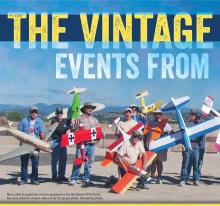
The Vintage RC Society Events from Coast to Coast
BY BOB NOLL AND BRUCE THARPE | PHOTOS BY THE AUTHORS AND AS NOTED

The Vintage RC Society (VRCS) was born in 1989, initially as an idea by Bill Winter, resulting from discussions with Hal “Pappy” deBolt, about how the history of RC could be recorded and preserved. Further discussions involved Joe Beshar, John Worth, and Art Schroeder.
This founding group quickly agreed that a newsletter would be needed to serve as a means of communication among interested parties and to provide the basis for historical documentation. With Joe Beshar’s prodding, Art Schroeder accepted the editorship responsibility for producing the newsletter, and John Worth agreed to serve as the initial president. Joe signed on as secretary-treasurer. The organization was informally established, with decisions made by unanimous agreement of the three officers.
By the end of 1989, with 220 members, the “fly and tell” concept was established. The first reunion was scheduled on Labor Day weekend in 1990 at the airport in Selinsgrove, Pennsylvania, a site where earlier RC events had been held. Now, in 2017, VRCS hosts many events across the nation.
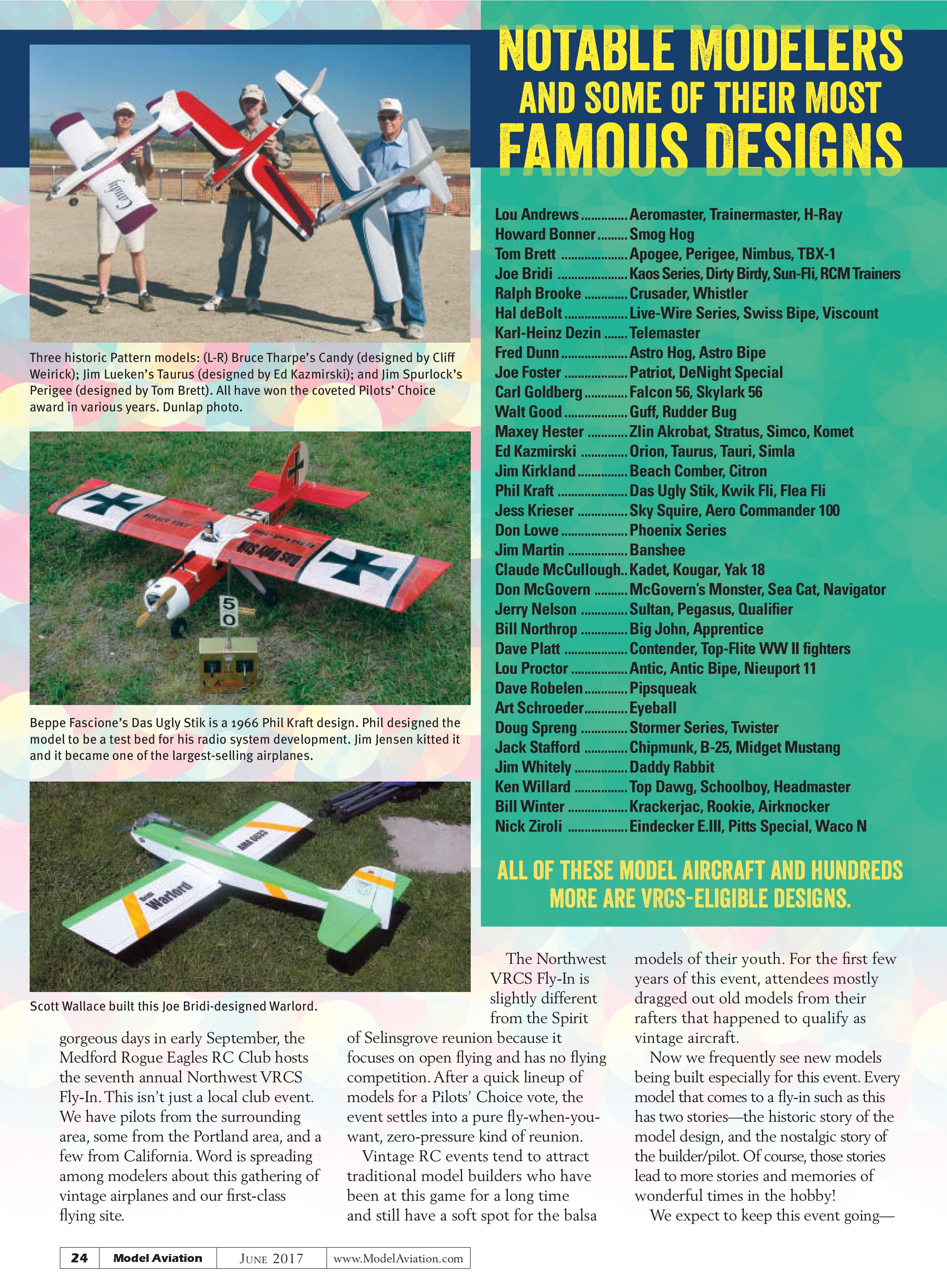
Model aircraft that can be seen at VRCS events include those designed by Hal deBolt, Lew Andrews, Joe Bridi, Phil Kraft, Carl Goldberg, and many more RC pioneers (see sidebar). The most important requirements are that airplanes flown at VRCS events must have been designed for RC at least 35 years ago. They can either be built from kits or scratch-built from original plans. Modern engines and radios are acceptable and even encouraged.
Let’s take a look at a couple of popular events that were held in early September 2016, on opposite sides of the country. Like all VRCS gatherings, both events have the commonality of seeing great vintage RC airplanes in the air and a lot of storytelling about those earlier days of RC.
The Spirit of Selinsgrove
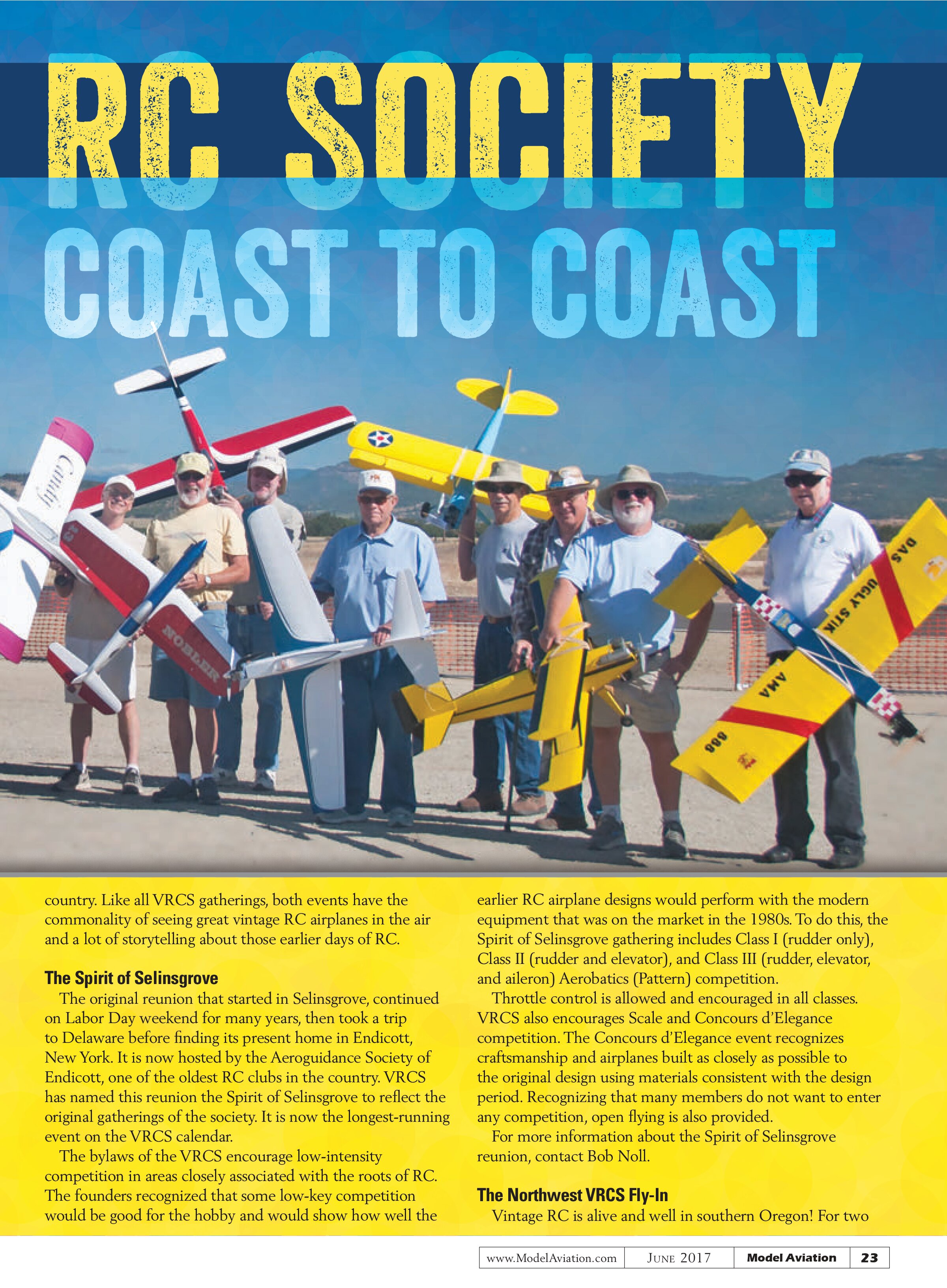
The original reunion that started in Selinsgrove, continued on Labor Day weekend for many years, then took a trip to Delaware before finding its present home in Endicott, New York. It is now hosted by the Aeroguidance Society of Endicott, one of the oldest RC clubs in the country. VRCS has named this reunion the Spirit of Selinsgrove to reflect the original gatherings of the society. It is now the longest-running event on the VRCS calendar.
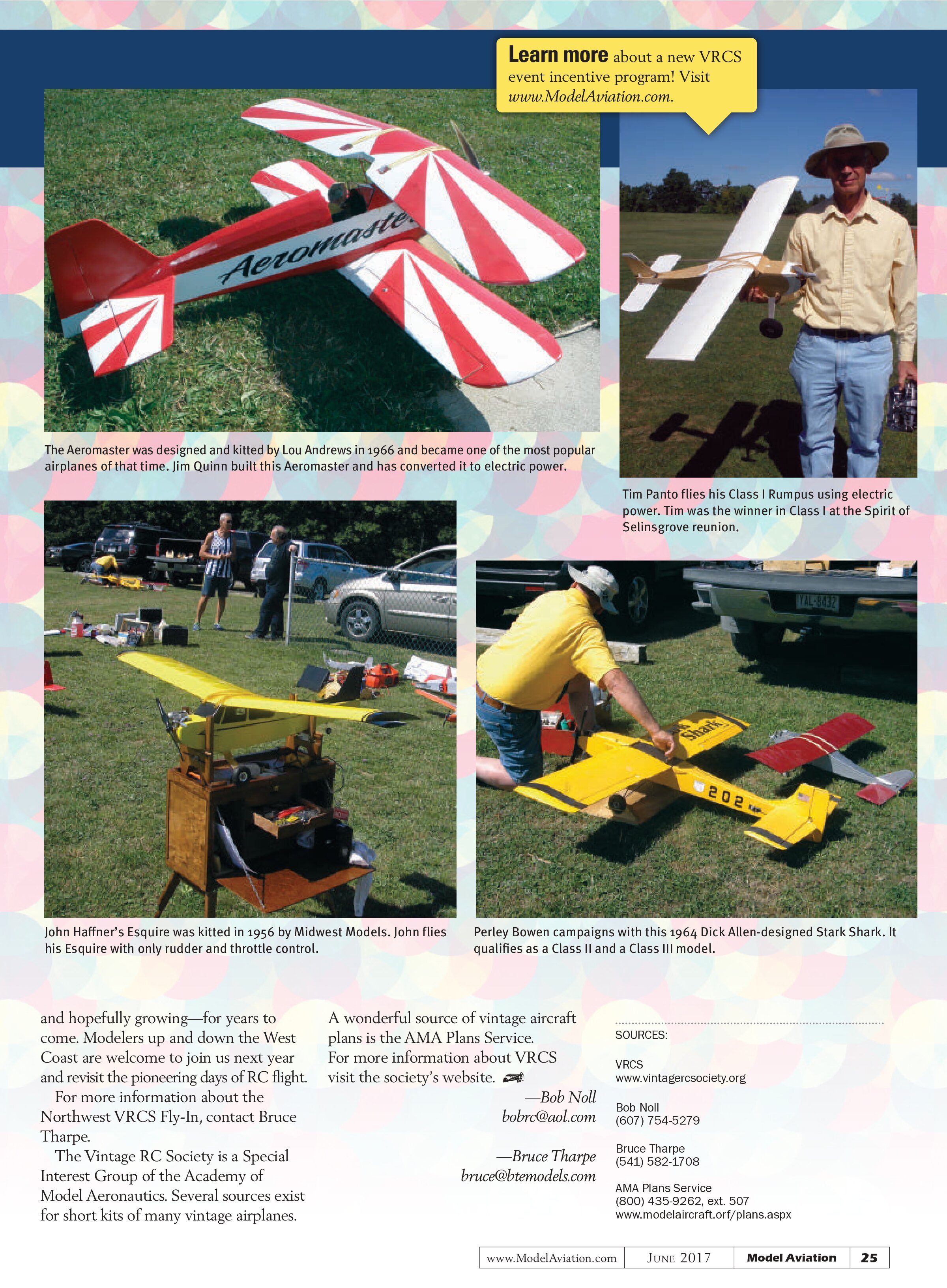
The bylaws of the VRCS encourage low-intensity competition in areas closely associated with the roots of RC. The founders recognized that some low-key competition would be good for the hobby and would show how well the earlier RC airplane designs would perform with the modern equipment that was on the market in the 1980s. To do this, the Spirit of Selinsgrove gathering includes Class I (rudder only), Class II (rudder and elevator), and Class III (rudder, elevator, and aileron) Aerobatics (Pattern) competition.
Throttle control is allowed and encouraged in all classes. VRCS also encourages Scale and Concours d’Elegance competition. The Concours d’Elegance event recognizes craftsmanship and airplanes built as closely as possible to the original design using materials consistent with the design period. Recognizing that many members do not want to enter any competition, open flying is also provided.
For more information about the Spirit of Selinsgrove reunion, contact Bob Noll.
The Northwest VRCS Fly-In
Vintage RC is alive and well in southern Oregon! For two


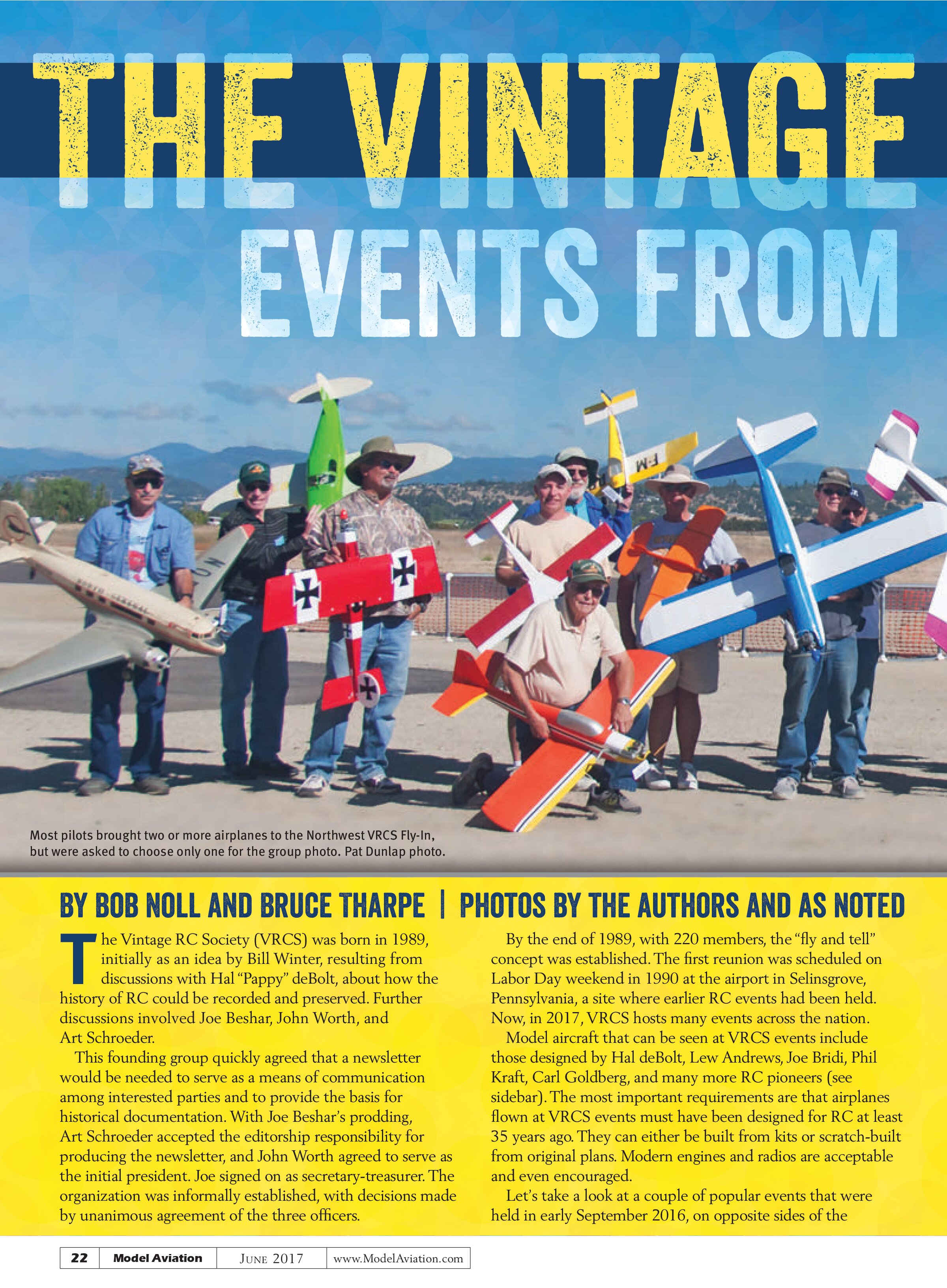
gorgeous days in early September, the Medford Rogue Eagles RC Club hosts the seventh annual Northwest VRCS Fly-In. This isn’t just a local club event. We have pilots from the surrounding area, some from the Portland area, and a few from California. Word is spreading among modelers about this gathering of vintage airplanes and our first-class flying site.
The Northwest VRCS Fly-In is slightly different from the Spirit of Selinsgrove reunion because it focuses on open flying and has no flying competition. After a quick lineup of models for a Pilots’ Choice vote, the event settles into a pure fly-when-you-want, zero-pressure kind of reunion.
Vintage RC events tend to attract traditional model builders who have been at this game for a long time and still have a soft spot for the balsa models of their youth. For the first few years of this event, attendees mostly dragged out old models from their rafters that happened to qualify as vintage aircraft.
Now we frequently see new models being built especially for this event. Every model that comes to a fly-in such as this has two stories—the historic story of the model design, and the nostalgic story of the builder/pilot. Of course, those stories lead to more stories and memories of wonderful times in the hobby!
We expect to keep this event going—and hopefully growing—for years to come. Modelers up and down the West Coast are welcome to join us next year and revisit the pioneering days of RC flight.
For more information about the Northwest VRCS Fly-In, contact Bruce Tharpe.
The Vintage RC Society is a Special Interest Group of the Academy of Model Aeronautics. Several sources exist for short kits of many vintage airplanes.
A wonderful source of vintage aircraft plans is the AMA Plans Service. For more information about VRCS visit the society’s website.
—Bob Noll
bobrc@aol.com
—Bruce Tharpe
bruce@btemodels.com


Learn more about a new VRCS event incentive program! Visit www.ModelAviation.com.
SOURCES:
VRCS
www.vintagercsociety.org
Bob Noll
(607) 754-5279
Bruce Tharpe
(541) 582-1708
AMA Plans Service
(800) 435-9262, ext. 507
www.modelaircraft.org/plans.aspx