Preflight checks
Chris Mulcahy
cspaced@gmail.com
Like many of us, I have dreamed about being a full-scale pilot since I was very young. I’ve recently started turning my dream into a reality by taking flying lessons and building hours toward that goal.
One of the first things I learned was how to do a proper preflight check of a full-scale aircraft before stepping into it. After all, I am putting my life in the hands of this machine. It is only prudent to check that everything is working correctly before starting up the engine.
This got me thinking about our RC aircraft and what we should check before each flight. Although we might not be putting our lives in the hands of the machine per se, there is definite potential to harm ourselves or others if something goes wrong.
Without realizing it, you might already be performing preflight checks before flying your model aircraft. Is your receiver battery charged? Is the flight pack charged or the fuel tank filled? How about your transmitter—is that battery charged too? This is about as basic of a preflight check as you can get. Pilots check different things from this point on.
After powering up the helicopter, I also check the gyro response direction on the swashplate and tail. This is a habit I picked up a while ago from a friend while tweaking gyro settings. It was an easy way to make sure that we didn’t accidentally reverse anything while poking around in the gyro menus.
With my own habits in mind, what else should I check before that first flight of the day? It seems to me that I could check on a few more items before putting my helicopter up in the air. Carrying helicopters back and forth to the field can result in a little hangar rash when accidents occur, such as knocking the tail on something or bumping the head.
I started checking out a few more things at the beginning of the flying day and felt that after an initial inspection before the first flight, I didn’t really need to go back and keep checking for each subsequent flight.
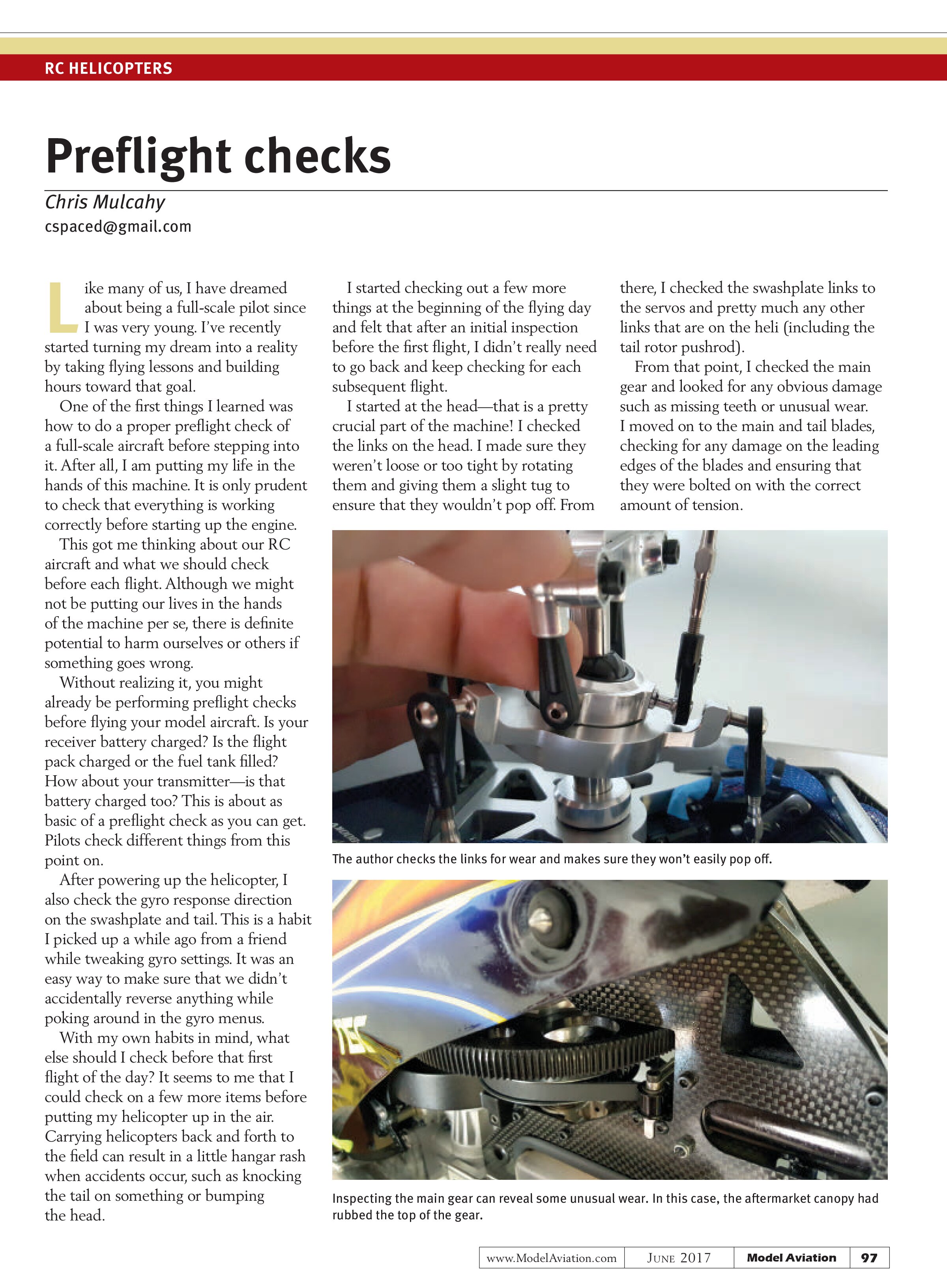
I started at the head—that is a pretty crucial part of the machine! I checked the links on the head. I made sure they weren’t loose or too tight by rotating them and giving them a slight tug to ensure that they wouldn’t pop off. From there, I checked the swashplate links to the servos and pretty much any other links that are on the heli (including the tail rotor pushrod).
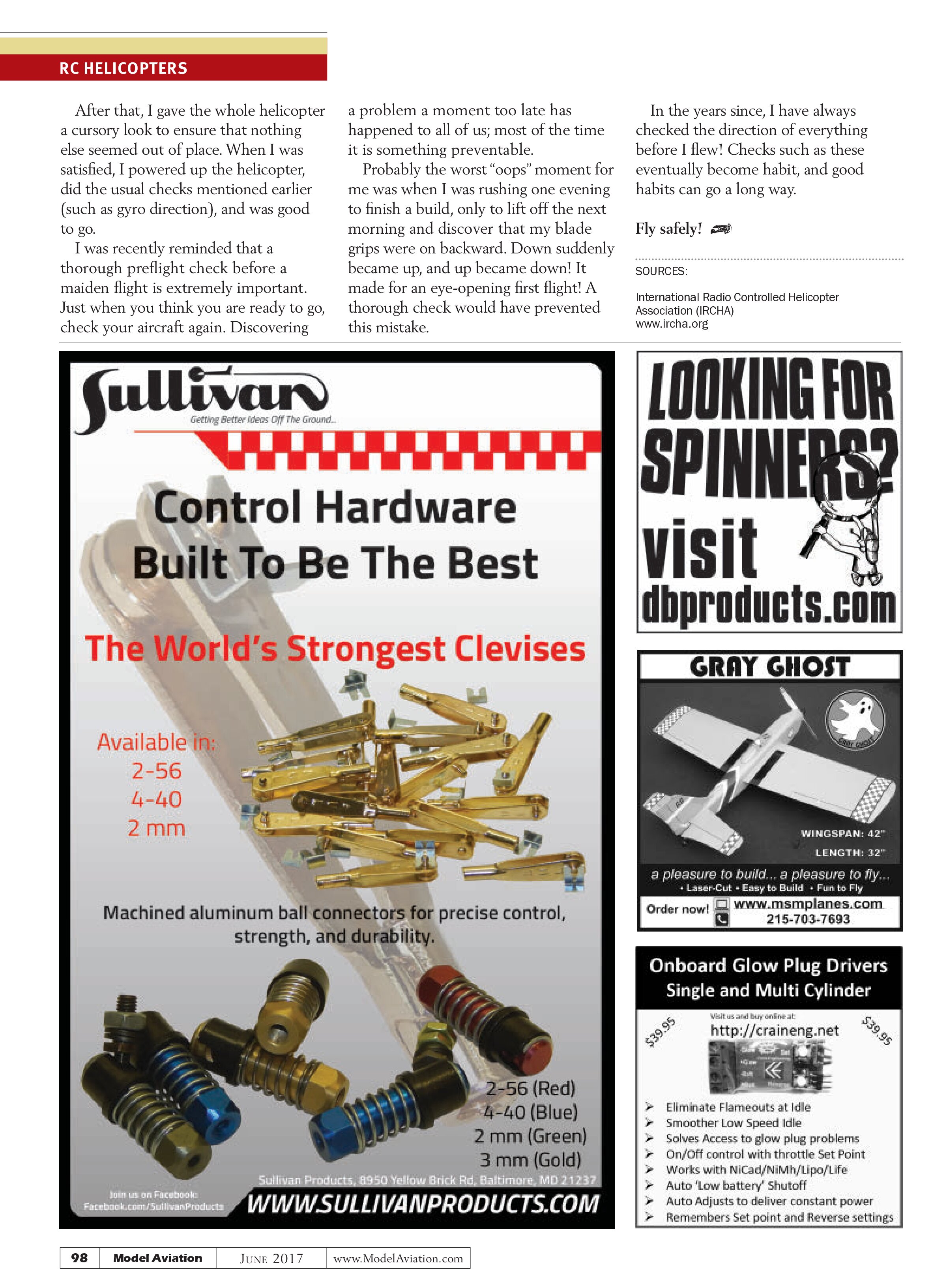
From that point, I checked the main gear and looked for any obvious damage such as missing teeth or unusual wear. I moved on to the main and tail blades, checking for any damage on the leading edges of the blades and ensuring that they were bolted on with the correct amount of tension.


After that, I gave the whole helicopter a cursory look to ensure that nothing else seemed out of place. When I was satisfied, I powered up the helicopter, did the usual checks mentioned earlier (such as gyro direction), and was good to go.
I was recently reminded that a thorough preflight check before a maiden flight is extremely important. Just when you think you are ready to go, check your aircraft again. Discovering a problem a moment too late has happened to all of us; most of the time it is something preventable.
Probably the worst “oops” moment for me was when I was rushing one evening to finish a build, only to lift off the next morning and discover that my blade grips were on backward. Down suddenly became up, and up became down! It made for an eye-opening first flight! A thorough check would have prevented this mistake.
In the years since, I have always checked the direction of everything before I flew! Checks such as these eventually become habit, and good habits can go a long way.
Fly safely!
SOURCES:
International Radio Controlled Helicopter Association (IRCHA)
www.ircha.org