One, two, tree
Dave Gee
safetycolumn@cs.com
Modelers sometimes have a love-hate relationship with trees. Sure, we make many of our airplanes from wood, but there seems to be a magnetic attraction that pulls a flying model into the nearest elm or pine tree. Rescuing an aircraft from a high branch can be dangerous to a pilot. We’re used to keeping our feet on the ground!
In the old days, an ax was considered a viable rescue tool. That pesky tree won’t catch any more models after we chop it down and teach it a lesson! Good luck with using that plan today at a municipal park.
Long poles are sometimes useful to snag a wing or shake the model free. Not many pilots carry a ladder to the flying field. Check out the photo showing how Lowell Norenberg got his RC biplane out of a tall tree.
On rare occasions, good-natured fire crews have rescued a model and called it a training exercise. Lowell said that a token gift of beverages was sent in gratitude for such kind assistance.

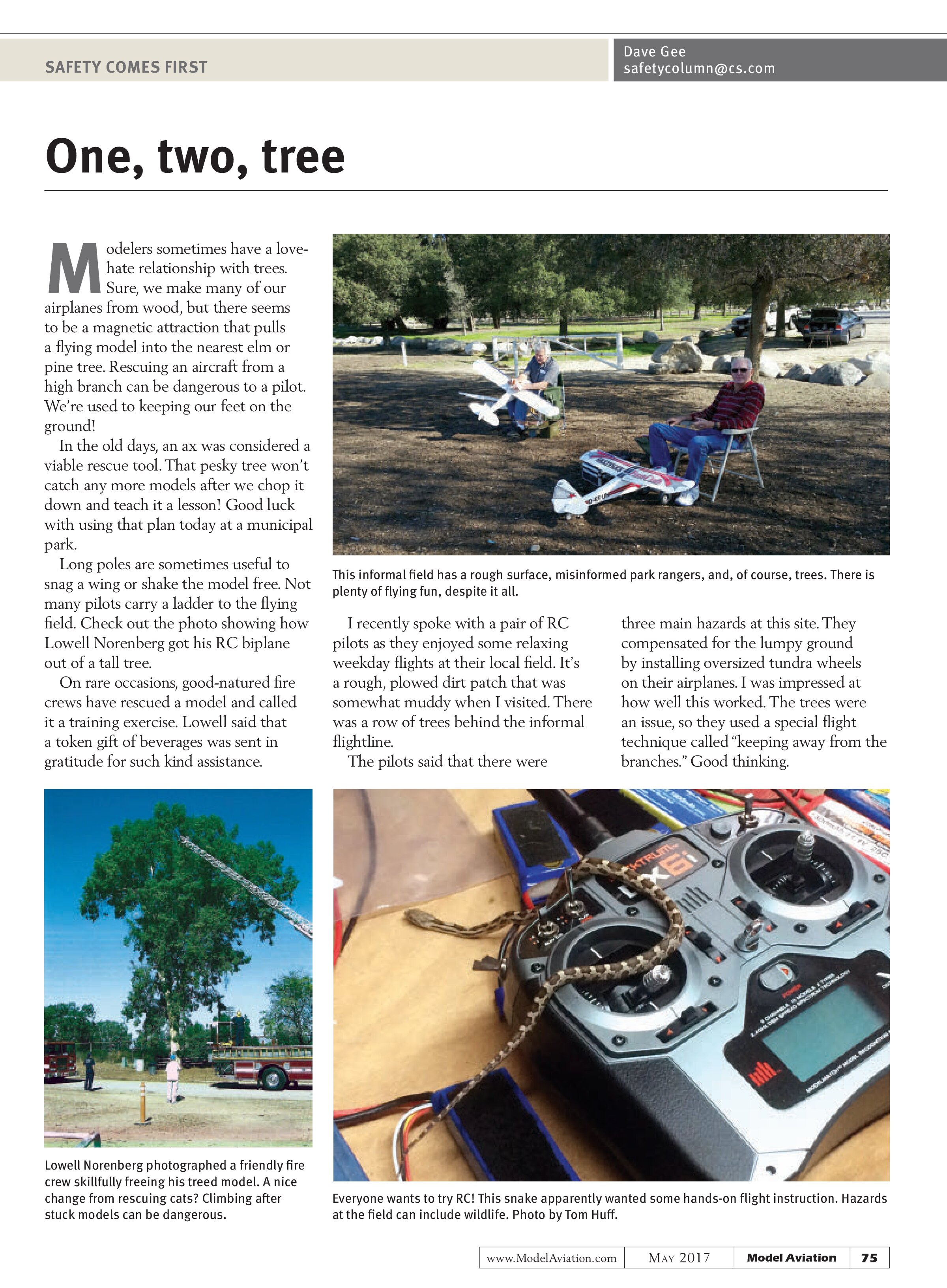
I recently spoke with a pair of RC pilots as they enjoyed some relaxing weekday flights at their local field. It’s a rough, plowed dirt patch that was somewhat muddy when I visited. There was a row of trees behind the informal flightline.
The pilots said that there were three main hazards at this site. They compensated for the lumpy ground by installing oversized tundra wheels on their airplanes. I was impressed at how well this worked. The trees were an issue, so they used a special flight technique called “keeping away from the branches.” Good thinking.


The biggest danger at this strip was from poorly informed park rangers who occasionally chased RC pilots away. Despite posted signs about which types of models are allowed and which are prohibited, there were still occasional problems. One doesn’t like to argue with a government employee holding a citation form!
It was this third hazard that made the pilots ask me to keep the site and their names out of this story. I don’t know if any park rangers read my column, but they’ll never make me talk.
Snake on a Plane’s Transmitter
Tom Huff sent a unique photo. Some say that aeromodeling has a wide appeal, but who knew that snakes liked RC? Tom says he initially gave the reptile a wide berth, but later identified it as a harmless eastern rat snake. I prefer to observe snakes through high-powered binoculars, unless they are in a can of chili.
Tom is retired U.S. Navy Capt. Tom Huff, a naval aviator, test pilot, and

model airplane enthusiast who flew F-18 fighters from carriers and even did a tour as Commander of Naval Test Wing Atlantic. He never received a scratch. What finally drew blood on Tom was a low-end RC electric airplane. It had basic radio features and no throttle cutoff.
He told me about the propellers on such models. “Those sons-of-a-guns are sharp like razors! Just because they are light and flexible, doesn’t mean they don’t fillet!” Yep, people underestimate smaller aircraft—sometimes at their peril.
Tom wore a bandage for a while and came away with some scarring and a new respect for small aircrews. After all of the exciting and hazardous adventures in his career, to be laid low by a discount RC model? It’s a fine cautionary tale for