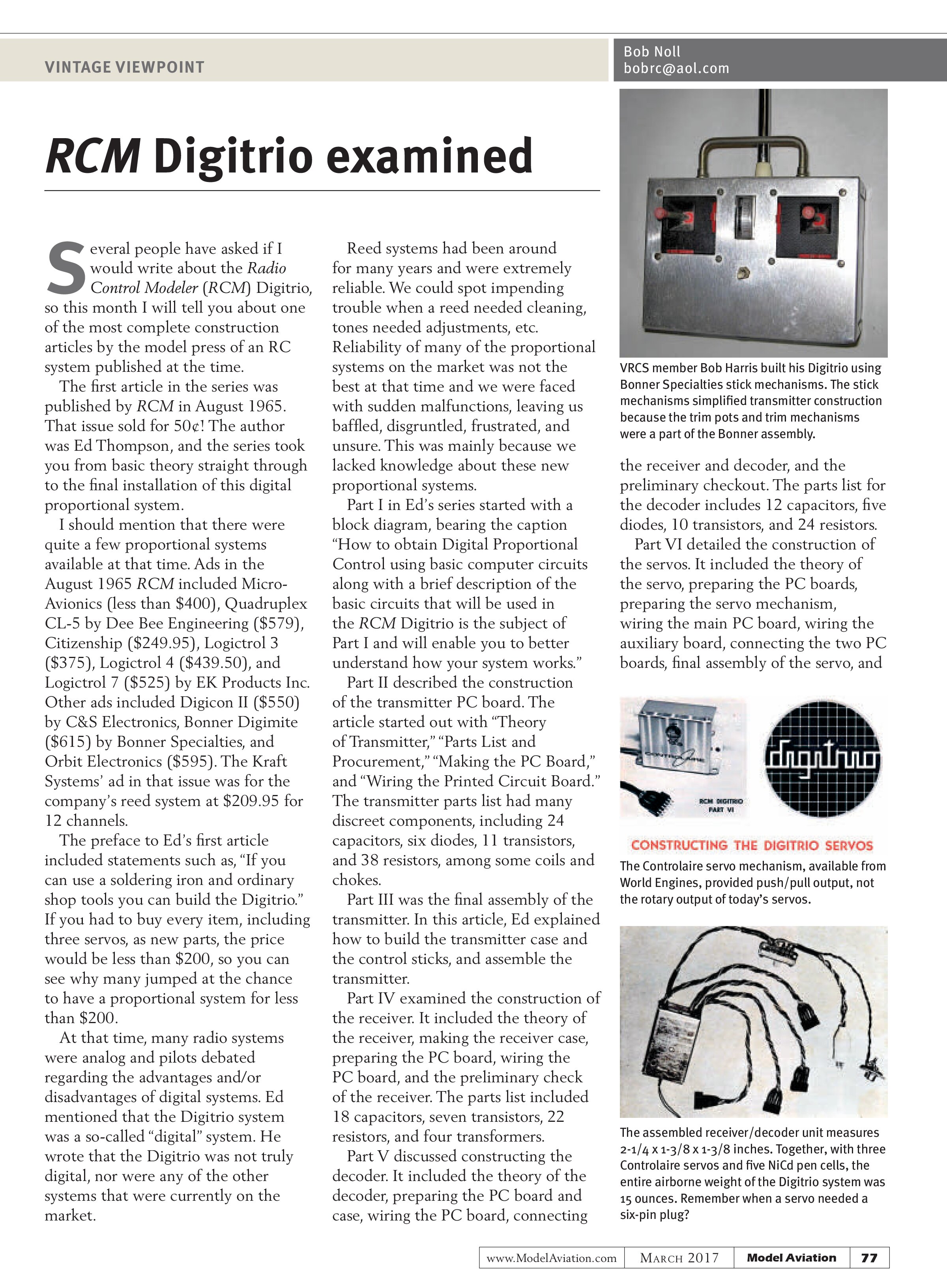
RCM Digit rio examined
the preliminary checkout. The servo parts list included nine capacitors, eight diodes, 12 transistors, and 28 resistors.
Hundreds of modelers built the Digitrio, and by the time Part VI was published in February 1966, most of the needed components were available from World Engines, including the servo mechanism with covers, male six-pin servo plugs, all of the PC boards, and several other items.
Part VII was the final system alignment of the transmitter, receiver, decoder, and servos. I thought that the following statement was interesting: “After you are satisfied with the system performance, some of the components can be epoxied in place to prevent vibration problems later on.”
Ed recommended which components to use for the receiver, decoder, and servos. The Digitrio was not without difficulties, and a series of problems and solutions were contained in the final part.
Wow! This was some set of articles, with schematics, wave patterns, wiring diagrams, full-size PC board photos, full-size transmitter templates, templates for stick sheet-metal parts, and many photographs to help with the building process.
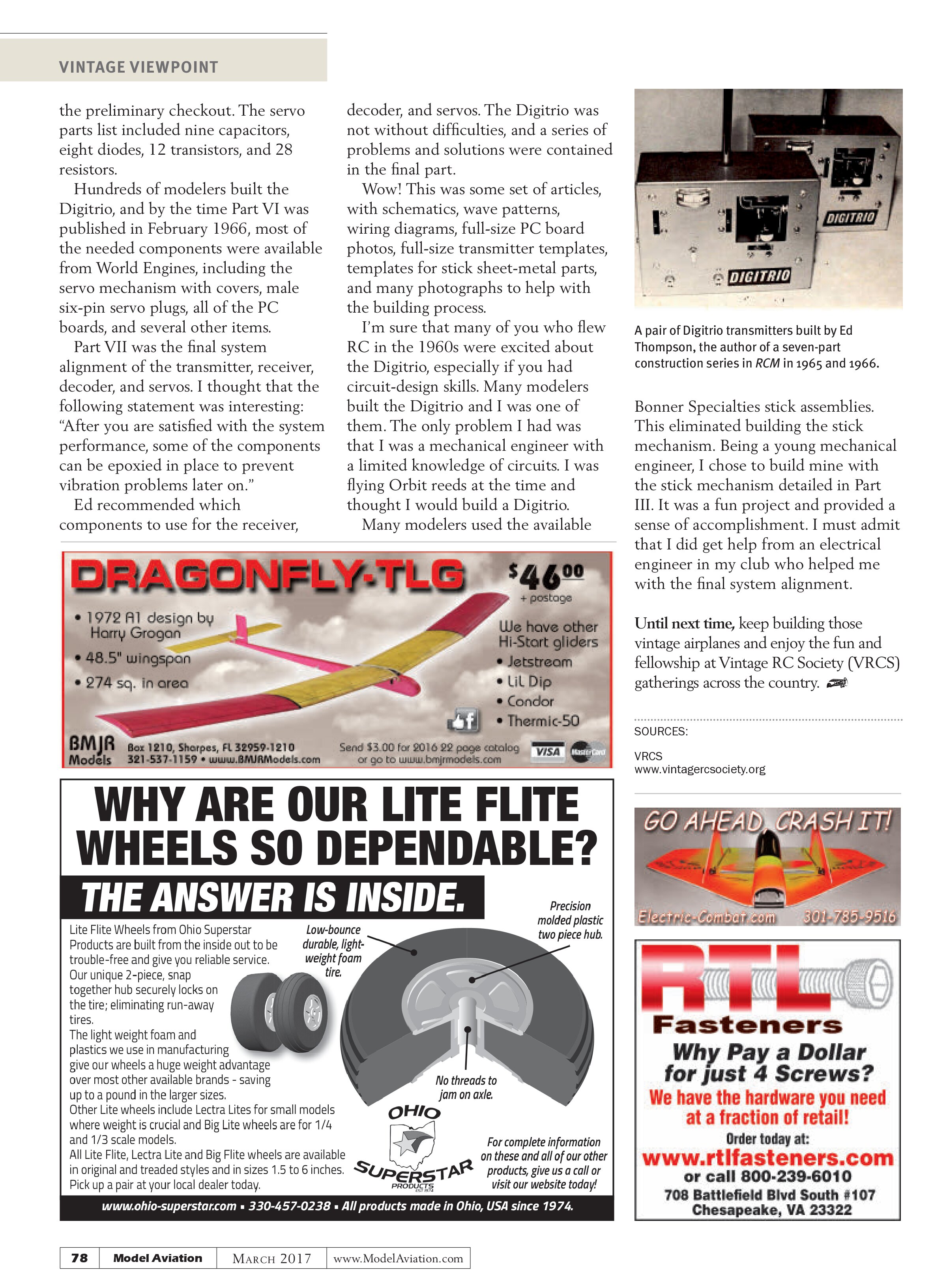
I’m sure that many of you who flew RC in the 1960s were excited about the Digitrio, especially if you had circuit-design skills. Many modelers built the Digitrio and I was one of them. The only problem I had was that I was a mechanical engineer with a limited knowledge of circuits. I was flying Orbit reeds at the time and thought I would build a Digitrio.
Many modelers used the available

Bonner Specialties stick assemblies. This eliminated building the stick mechanism. Being a young mechanical engineer, I chose to build mine with the stick mechanism detailed in Part III. It was a fun project and provided a sense of accomplishment. I must admit that I did get help from an electrical engineer in my club who helped me with the final system alignment.
Until next time, keep building those vintage airplanes and enjoy the fun and fellowship at Vintage RC Society (VRCS) gatherings across the country.
SOURCES:
VRCS
www.vintagercsociety.org