Product Spotlight
New products that are Worth a Closer Look
REALFLIGHT-X
RealFlight RC simulators have been around for more than a decade and have provided countless prospective pilots, as well as current pilots, a digital playground to indulge in flying model aircraft. For those who enjoy flying on a simulator, either when flying outdoors is not an option, or to take their skills to the next level, RealFlight provides a zero-risk, rewarding experience.
You can try any aircraft, any flying style, and any maneuver. If you push beyond your skill level and crash the aircraft, simply press the reset button and begin again, with no need to reach for your wallet or contemplate a complex repair.
Some prospective pilots overlook using a simulator, concerned about the cost of investing in one; however, simply preventing a single crash and the possible loss of an aircraft can often justify a simulator’s cost.
The key to being successful when using a flight simulator is to use it as a tool and not a toy. Muscle memory allows you to commit a specific motor task into memory through repetition, but that memory can be good or bad, depending on how you use the simulator.
RealFlight’s newest simulator, the RealFlight-X, looks fantastic! The detail of the aircraft and the scenery is the best we have ever seen. Knife Edge Software upped its game with this release to bring simulator pilots a stunningly nice presentation, but the improved graphical content does come with a price.
To provide the best graphics, the system requirements are significantly higher than anything we have seen before with RealFlight. If your PC doesn’t have a dedicated video card, you can pretty much forget about running RealFlight-X on it. Simply turning down the graphic settings won’t provide the same experience because lower frame rates will cause the video to seem jerky—if the program will even run at all. If you do have a PC that meets the system requirements, you will find a beautiful and immersive digital landscape from which to fly.
If you have some experience with a previous copy of RealFlight, then it is likely that one of the things you enjoyed was flying online with friends. It could be everyone flying at a flying site, similar to the experience you get at your local club or the addicting combat scenario where you take your model into virtual dogfights. Unfortunately, the multiplayer option is absent from RealFlight-X. Whether or not this omission will be rectified in an update is yet to be seen.
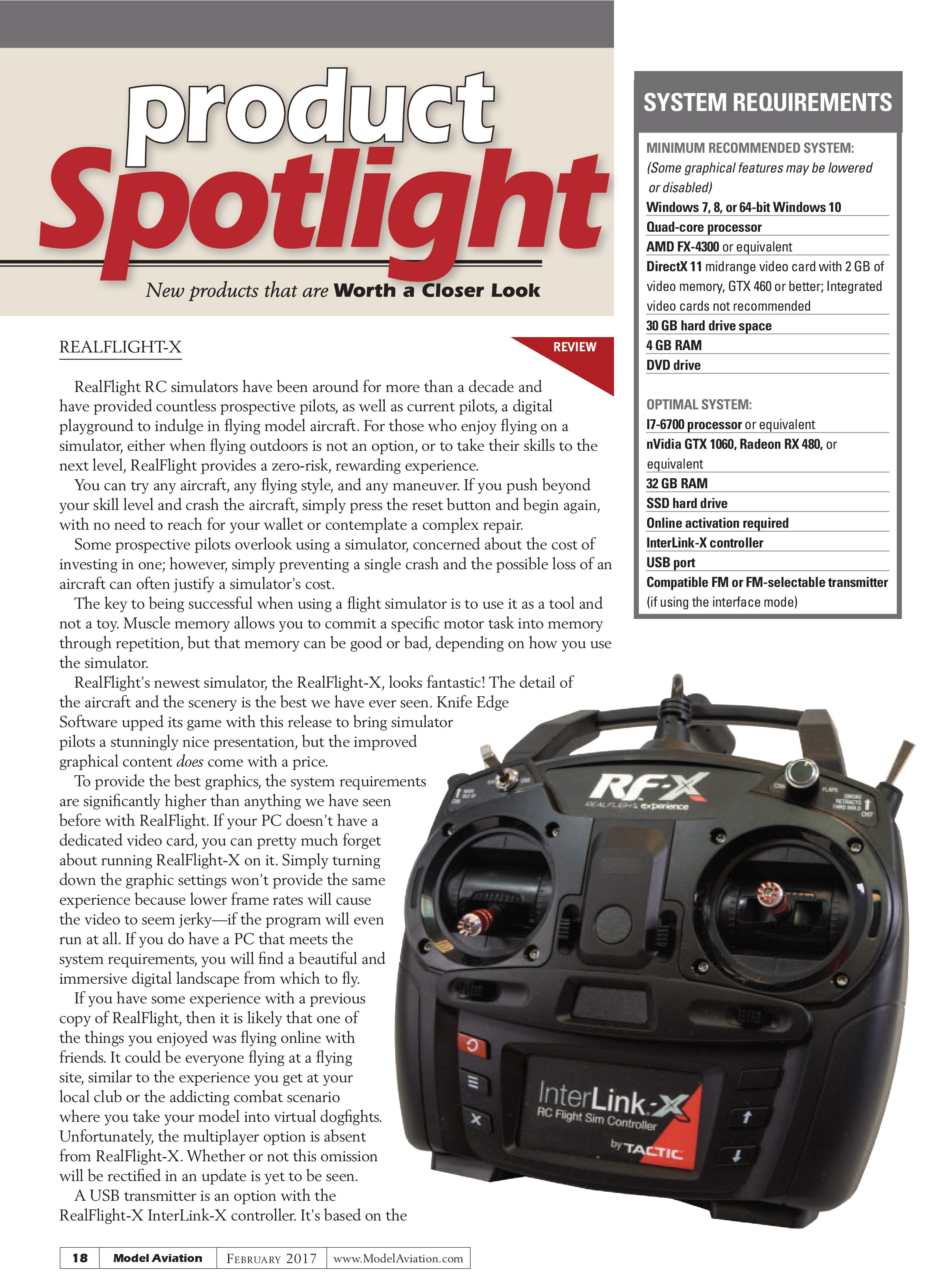
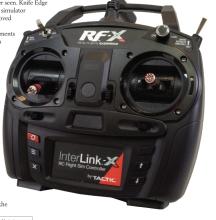
A USB transmitter is an option with the RealFlight-X InterLink-X controller. It’s based on the Tactic transmitter design and includes 10-channel capability, allowing for more advanced models to be flown in the simulator. It has sliders and a reset/rewind button. You can also make menu selections with the transmitter.

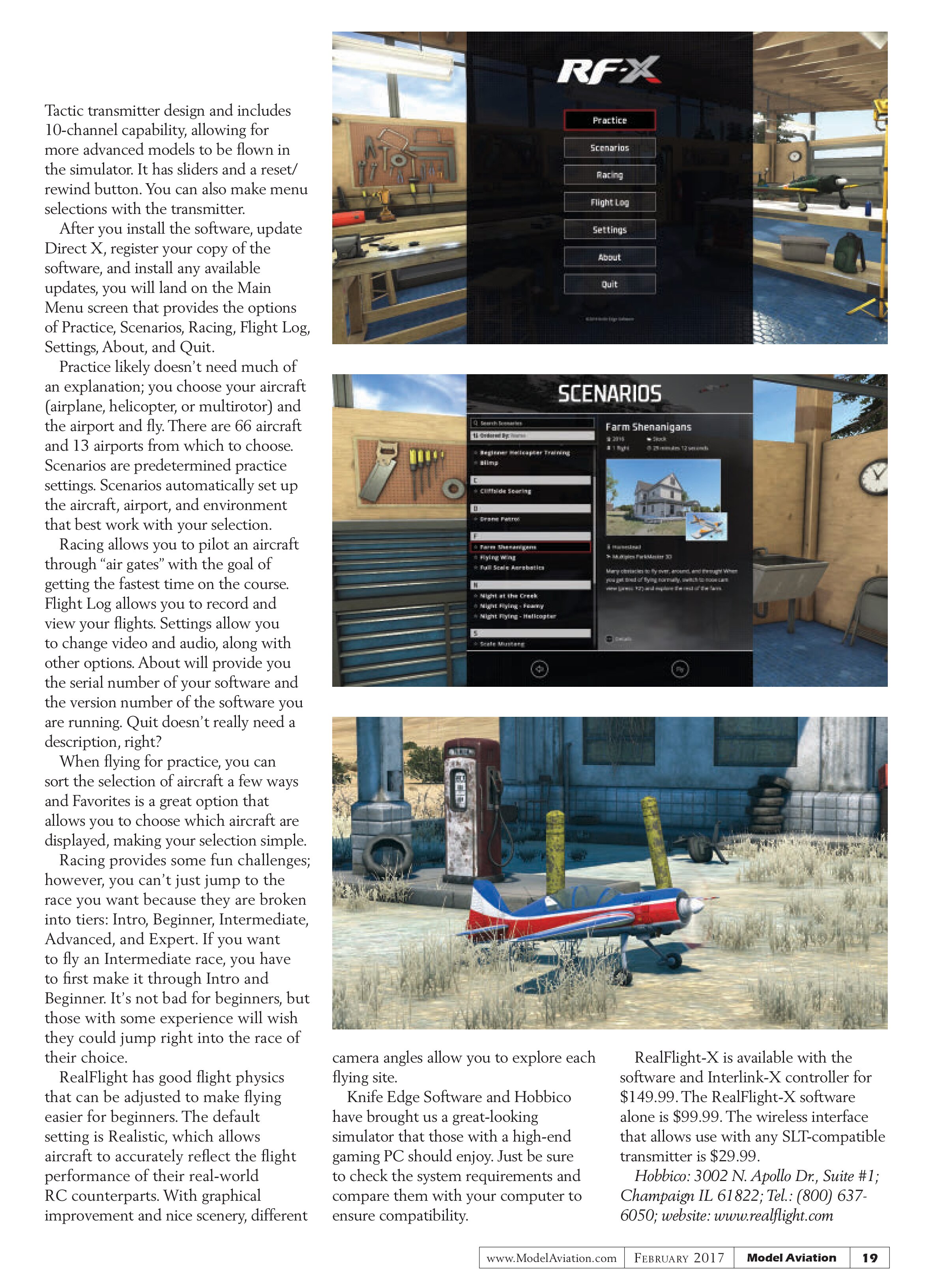
After you install the software, update Direct X, register your copy of the software, and install any available updates, you will land on the Main Menu screen that provides the options of Practice, Scenarios, Racing, Flight Log, Settings, About, and Quit.


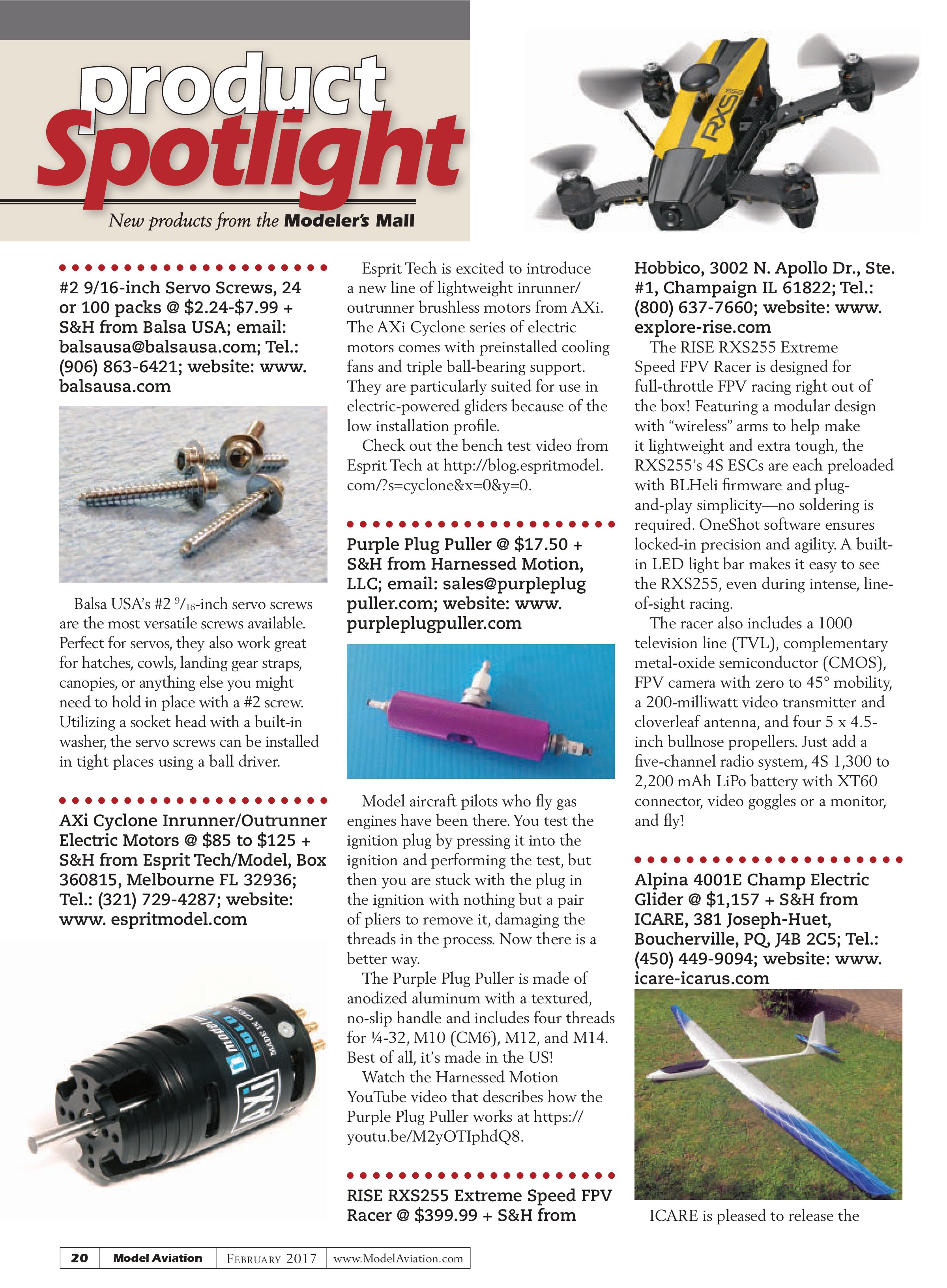
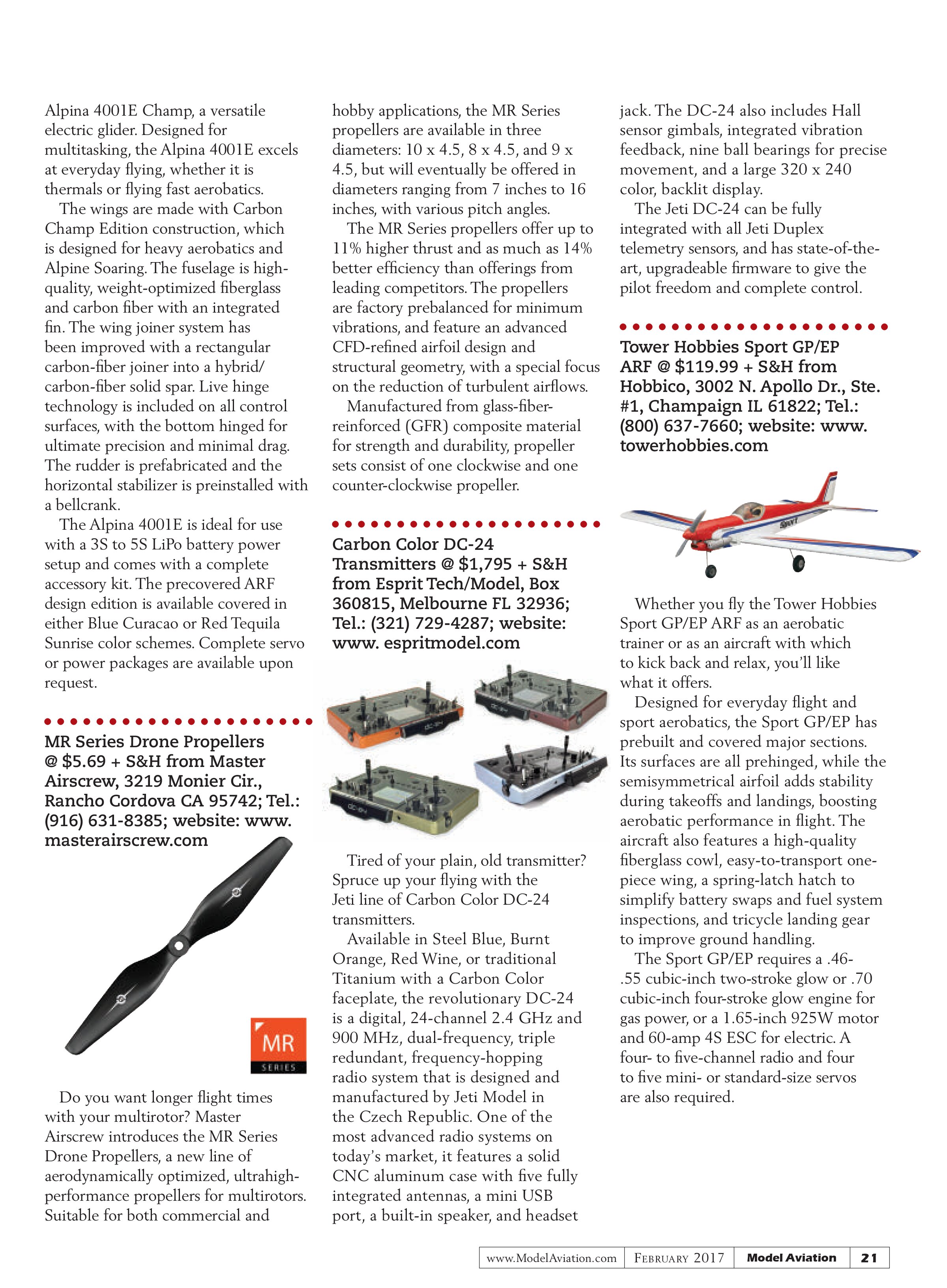
Practice likely doesn’t need much of an explanation; you choose your aircraft (airplane, helicopter, or multirotor) and the airport and fly. There are 66 aircraft and 13 airports from which to choose. Scenarios are predetermined practice settings. Scenarios automatically set up the aircraft, airport, and environment that best work with your selection.
Racing allows you to pilot an aircraft through “air gates” with the goal of getting the fastest time on the course. Flight Log allows you to record and view your flights. Settings allow you to change video and audio, along with other options. About will provide you the serial number of your software and the version number of the software you are running. Quit doesn’t really need a description, right?
When flying for practice, you can sort the selection of aircraft a few ways and Favorites is a great option that allows you to choose which aircraft are displayed, making your selection simple.

Racing provides some fun challenges; however, you can’t just jump to the race you want because they are broken into tiers: Intro, Beginner, Intermediate, Advanced, and Expert. If you want to fly an Intermediate race, you have to first make it through Intro and Beginner. It’s not bad for beginners, but those with some experience will wish they could jump right into the race of their choice.
RealFlight has good flight physics that can be adjusted to make flying easier for beginners. The default setting is Realistic, which allows aircraft to accurately reflect the flight performance of their real-world RC counterparts. With graphical improvement and nice scenery, different camera angles allow you to explore each flying site.
Knife Edge Software and Hobbico have brought us a great-looking simulator that those with a high-end gaming PC should enjoy. Just be sure to check the system requirements and compare them with your computer to ensure compatibility.
RealFlight-X is available with the software and Interlink-X controller for $149.99. The RealFlight-X software alone is $99.99. The wireless interface that allows use with any SLT-compatible transmitter is $29.99.
Hobbico: 3002 N. Apollo Dr., Suite #1; Champaign IL 61822; Tel.: (800) 637-6050; website: www.realflight.com
#2 9/16-inch Servo Screws, 24 or 100 packs @ $2.24-$7.99 + S&H from Balsa USA; email: balsausa@balsausa.com; Tel.: (906) 863-6421; website: www.balsausa.com

Balsa USA’s #2 9/16-inch servo screws are the most versatile screws available. Perfect for servos, they also work great for hatches, cowls, landing gear straps, canopies, or anything else you might need to hold in place with a #2 screw. Utilizing a socket head with a built-in washer, the servo screws can be installed in tight places using a ball driver.
AXi Cyclone Inrunner/Outrunner Electric Motors @ $85 to $125 + S&H from Esprit Tech/Model, Box 360815, Melbourne FL 32936; Tel.: (321) 729-4287; website: www.espritmodel.com

Esprit Tech is excited to introduce a new line of lightweight inrunner/outrunner brushless motors from AXi. The AXi Cyclone series of electric motors comes with preinstalled cooling fans and triple ball-bearing support. They are particularly suited for use in electric-powered gliders because of the low installation profile.
Check out the bench test video from Esprit Tech at http://blog.espritmodel.com/?s=cyclone&x=0&y=0.
Purple Plug Puller @ $17.50 + S&H from Harnessed Motion, LLC; email: sales@purpleplugpuller.com; website: www.purpleplugpuller.com

Model aircraft pilots who fly gas engines have been there. You test the ignition plug by pressing it into the ignition and performing the test, but then you are stuck with the plug in the ignition with nothing but a pair of pliers to remove it, damaging the threads in the process. Now there is a better way.
The Purple Plug Puller is made of anodized aluminum with a textured, no-slip handle and includes four threads for ¼-32, M10 (CM6), M12, and M14. Best of all, it’s made in the US!
Watch the Harnessed Motion YouTube video that describes how the Purple Plug Puller works at https://youtu.be/M2yOTIphdQ8.
RISE RXS255 Extreme Speed FPV Racer @ $399.99 + S&H from Hobbico, 3002 N. Apollo Dr., Ste. #1, Champaign IL 61822; Tel.: (800) 637-7660; website: www.explore-rise.com

The RISE RXS255 Extreme Speed FPV Racer is designed for full-throttle FPV racing right out of the box! Featuring a modular design with “wireless” arms to help make it lightweight and extra tough, the RXS255’s 4S ESCs are each preloaded with BLHeli firmware and plug-and-play simplicity—no soldering is required. OneShot software ensures locked-in precision and agility. A built-in LED light bar makes it easy to see the RXS255, even during intense, line-of-sight racing.
The racer also includes a 1000 television line (TVL), complementary metal-oxide semiconductor (CMOS), FPV camera with zero to 45° mobility, a 200-milliwatt video transmitter and cloverleaf antenna, and four 5 x 4.5-inch bullnose propellers. Just add a five-channel radio system, 4S 1,300 to 2,200 mAh LiPo battery with XT60 connector, video goggles or a monitor, and fly!
Alpina 4001E Champ Electric Glider @ $1,157 + S&H from ICARE, 381 Joseph-Huet, Boucherville, PQ, J4B 2C5; Tel.: (450) 449-9094; website: www.icare-icarus.com

ICARE is pleased to release the Alpina 4001E Champ, a versatile electric glider. Designed for multitasking, the Alpina 4001E excels at everyday flying, whether it is thermals or flying fast aerobatics.
The wings are made with Carbon Champ Edition construction, which is designed for heavy aerobatics and Alpine Soaring. The fuselage is high-quality, weight-optimized fiberglass and carbon fiber with an integrated fin. The wing joiner system has been improved with a rectangular carbon-fiber joiner into a hybrid/carbon-fiber solid spar. Live hinge technology is included on all control surfaces, with the bottom hinged for ultimate precision and minimal drag. The rudder is prefabricated and the horizontal stabilizer is preinstalled with a bellcrank.
The Alpina 4001E is ideal for use with a 3S to 5S LiPo battery power setup and comes with a complete accessory kit. The precovered ARF design edition is available covered in either Blue Curacao or Red Tequila Sunrise color schemes. Complete servo or power packages are available upon request.
MR Series Drone Propellers @ $5.69 + S&H from Master Airscrew, 3219 Monier Cir., Rancho Cordova CA 95742; Tel.: (916) 631-8385; website: www.masterairscrew.com

Do you want longer flight times with your multirotor? Master Airscrew introduces the MR Series Drone Propellers, a new line of aerodynamically optimized, ultrahigh-performance propellers for multirotors. Suitable for both commercial and hobby applications, the MR Series propellers are available in three diameters: 10 x 4.5, 8 x 4.5, and 9 x 4.5, but will eventually be offered in diameters ranging from 7 inches to 16 inches, with various pitch angles.
The MR Series propellers offer up to 11% higher thrust and as much as 14% better efficiency than offerings from leading competitors. The propellers are factory prebalanced for minimum vibrations, and feature an advanced CFD-refined airfoil design and structural geometry, with a special focus on the reduction of turbulent airflows.
Manufactured from glass-fiber-reinforced (GFR) composite material for strength and durability, propeller sets consist of one clockwise and one counter-clockwise propeller.
Carbon Color DC-24 Transmitters @ $1,795 + S&H from Esprit Tech/Model, Box 360815, Melbourne FL 32936; Tel.: (321) 729-4287; website: www.espritmodel.com

Tired of your plain, old transmitter? Spruce up your flying with the Jeti line of Carbon Color DC-24 transmitters.
Available in Steel Blue, Burnt Orange, Red Wine, or traditional Titanium with a Carbon Color faceplate, the revolutionary DC-24 is a digital, 24-channel 2.4 GHz and 900 MHz, dual-frequency, triple redundant, frequency-hopping radio system that is designed and manufactured by Jeti Model in the Czech Republic. One of the most advanced radio systems on today’s market, it features a solid CNC aluminum case with five fully integrated antennas, a mini USB port, a built-in speaker, and headset jack. The DC-24 also includes Hall sensor gimbals, integrated vibration feedback, nine ball bearings for precise movement, and a large 320 x 240 color, backlit display.
The Jeti DC-24 can be fully integrated with all Jeti Duplex telemetry sensors, and has state-of-the-art, upgradeable firmware to give the pilot freedom and complete control.
Tower Hobbies Sport GP/EP ARF @ $119.99 + S&H from Hobbico, 3002 N. Apollo Dr., Ste. #1, Champaign IL 61822; Tel.: (800) 637-7660; website: www.towerhobbies.com

Whether you fly the Tower Hobbies Sport GP/EP ARF as an aerobatic trainer or as an aircraft with which to kick back and relax, you’ll like what it offers.
Designed for everyday flight and sport aerobatics, the Sport GP/EP has prebuilt and covered major sections. Its surfaces are all prehinged, while the semisymmetrical airfoil adds stability during takeoffs and landings, boosting aerobatic performance in flight. The aircraft also features a high-quality fiberglass cowl, easy-to-transport one-piece wing, a spring-latch hatch to simplify battery swaps and fuel system inspections, and tricycle landing gear to improve ground handling.
The Sport GP/EP requires a .46-.55 cubic-inch two-stroke glow or .70 cubic-inch four-stroke glow engine for gas power, or a 1.65-inch 925W motor and 60-amp 4S ESC for electric. A four- to five-channel radio and four to five mini- or standard-size servos are also required.
BY JON BARNES | PHOTOS BY THE AUTHOR

The U.S. Scale Masters traces its roots to the year 1976; this past year marked 40 years of competition squarely focused on RC Scale aircraft. This nonprofit organization holds 22 regional qualifying events throughout the year, which culminates in the granddaddy event known as the U.S. Scale Masters Championships (USSMC).
Generally speaking, pilots earn their way into attending and competing at this final event by participating and qualifying in one of the regional qualifiers held throughout the year. The location selected for the USSMC varies from year to year. For the second time in three years, the venue for the event was the Woodland Davis Aeromodelers’ club field, located 18 miles northwest of Sacramento, California. This beautiful facility boasts a 600- x 57-foot geotextile runway and enjoys great weather nearly year-round.
The competition features five classes: Expert, Advanced, Pro Am/Pro class, Pro Am/Sportsman, and Team Scale class. The classes are designed to allow newer pilots, veteran pilots, and everyone in between to participate. Pilots are required to select a model that is a scale representation of a fixed-wing aircraft—one that actually did exist and was flown.
Contestants who are entered in the Expert and Team classes are required to have been the builder of the model, while the balance of the classes allow pilots to use models that they did not personally build. Pilots in these classes are even permitted to compete with an ARF model.
The Pro Am/Sportsman class is notably available to those who are complete novices to Scale competition. The USSMC features a preliminary round of static judging that is followed by several rounds of flight judging.
The entire competition spans four days. No matter which class a competitor competes in, he or she must provide a documentation package that authenticates his or her model as having actually existed as a real-world, full-scale aircraft. Scale details, on which the judges will statically score the models, include the accuracy of the scale outline of the model and the authenticity and accuracy of its color scheme and markings.

U.S. Scale Masters Championships


The flight component of the competition is where pilots are challenged to fly their models in a manner that as closely as possible replicates the in-flight appearance and capabilities of the full-scale aircraft. Pilots are obligated to perform several mandatory maneuvers, but are also given the freedom to showcase their models’ strong points by freely selecting and flying several maneuvers of their choice.
Each individual flight is closely observed, scrupulously analyzed, and assigned scores by a pair of qualified judges. The amazing diversity of the pilots competing, and in the variety of aircraft flown at the USSMC, was a solid testimony to the event’s continuing popularity with novice and veteran pilots alike.
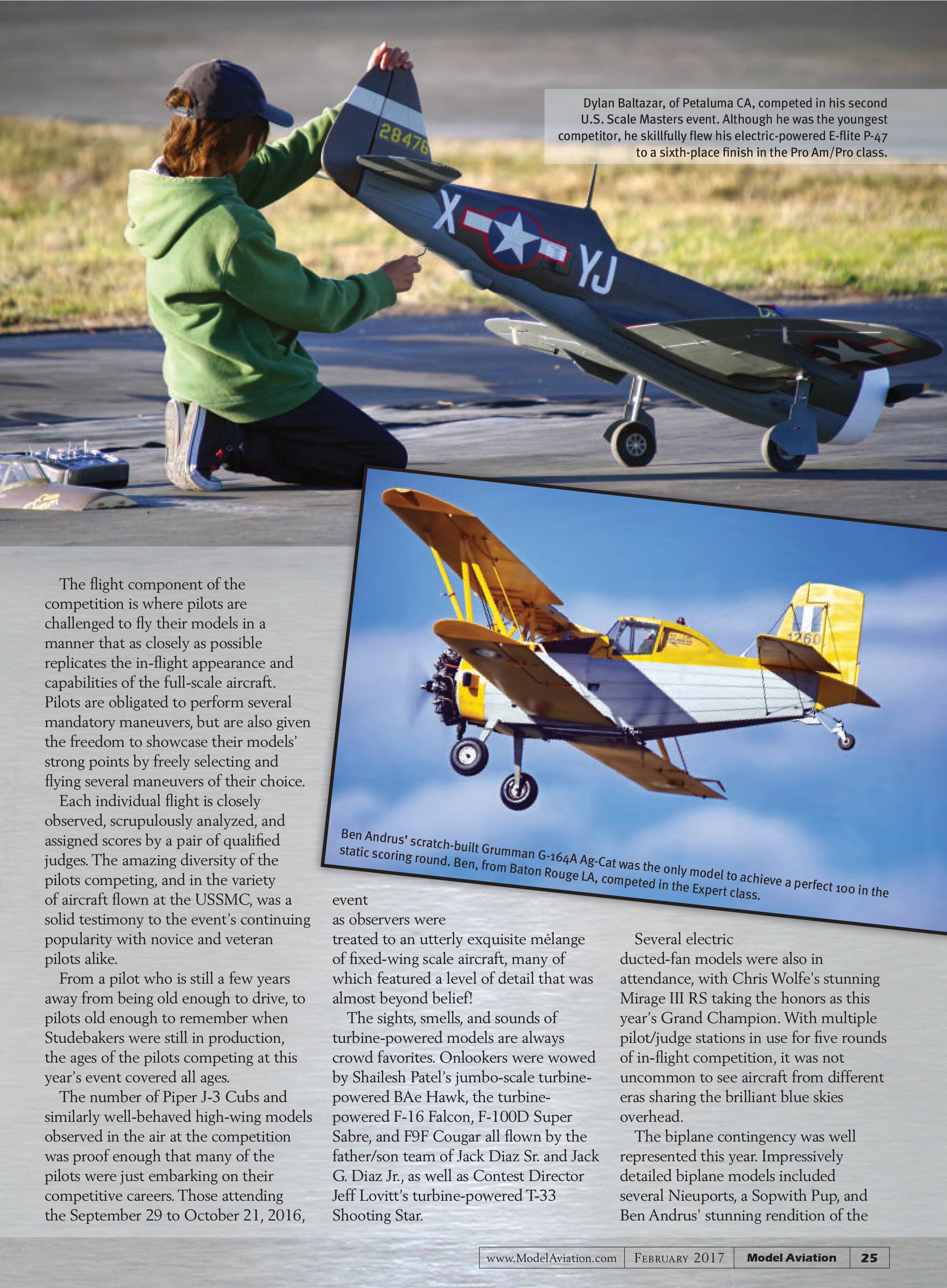
From a pilot who is still a few years away from being old enough to drive, to pilots old enough to remember when Studebakers were still in production, the ages of the pilots competing at this year’s event covered all ages.
The number of Piper J-3 Cubs and similarly well-behaved high-wing models observed in the air at the competition was proof enough that many of the pilots were just embarking on their competitive careers. Those attending the September 29 to October 21, 2016,
event as observers were treated to an utterly exquisite mélange of fixed-wing scale aircraft, many of which featured a level of detail that was almost beyond belief!
The sights, smells, and sounds of turbine-powered models are always crowd favorites. Onlookers were wowed by Shailesh Patel’s jumbo-scale turbine-powered BAe Hawk, the turbine-powered F-16 Falcon, F-100D Super Sabre, and F9F Cougar all flown by the father/son team of Jack Diaz Sr. and Jack G. Diaz Jr., as well as Contest Director Jeff Lovitt’s turbine-powered T-33 Shooting Star.
Several electric ducted-fan models were also in attendance, with Chris Wolfe’s stunning Mirage III RS taking the honors as this year’s Grand Champion. With multiple pilot/judge stations in use for five rounds of in-flight competition, it was not uncommon to see aircraft from different eras sharing the brilliant blue skies overhead.
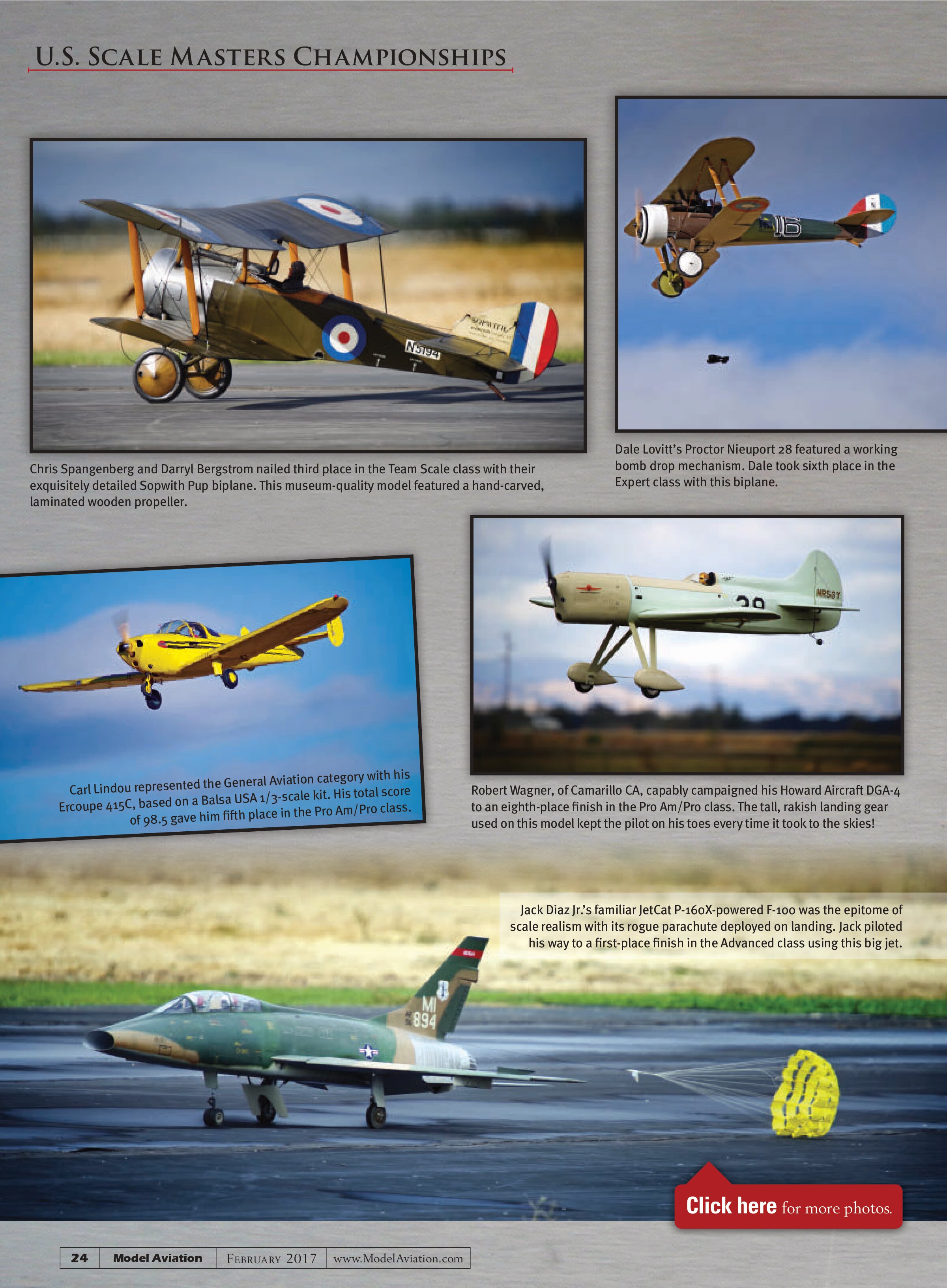
The biplane contingency was well represented this year. Impressively detailed biplane models included several Nieuports, a Sopwith Pup, and Ben Andrus’ stunning rendition of the

U.S. Scale Masters Championships
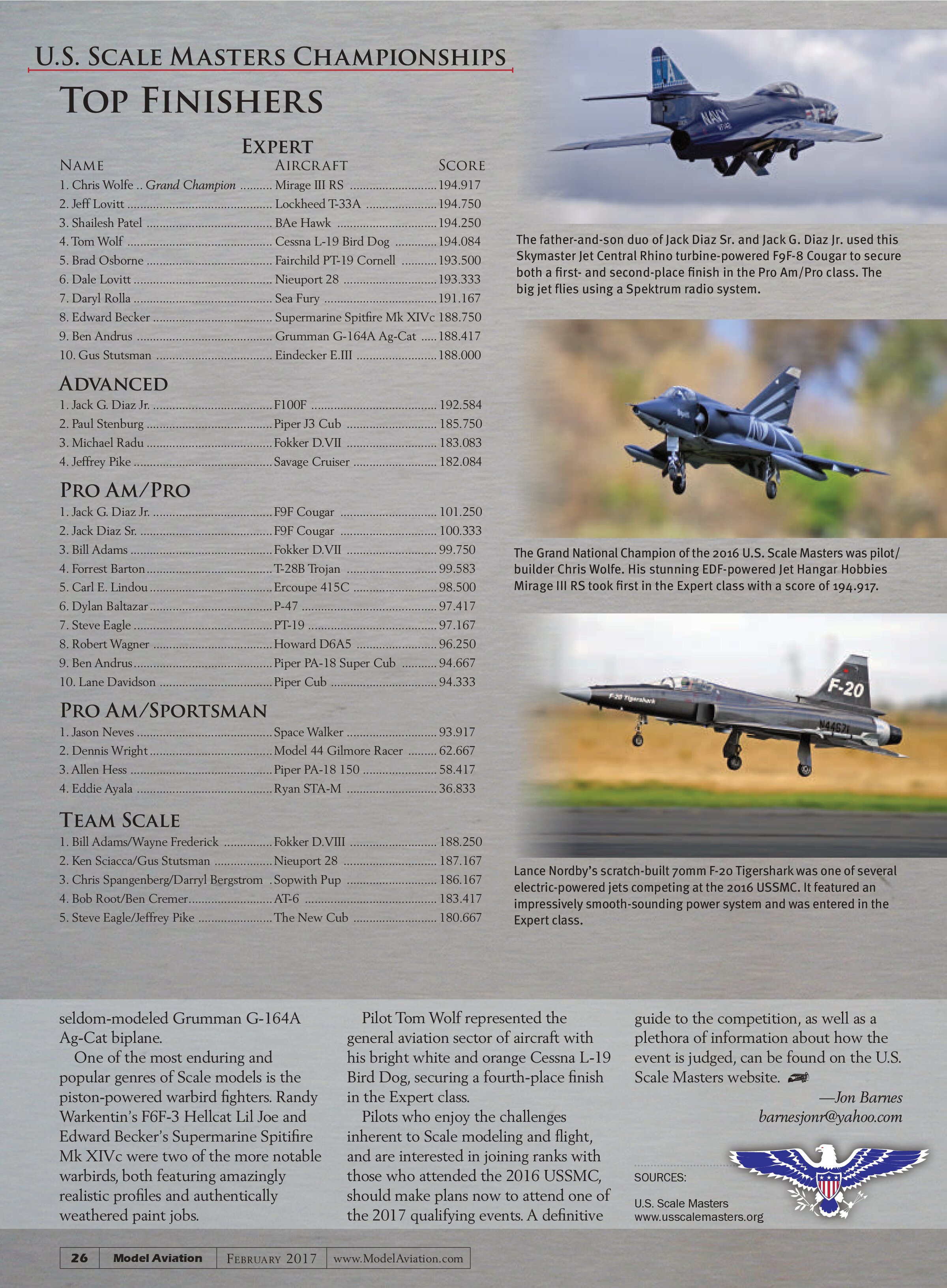
Top Finishers
Expert
Name Aircraft Score
- Chris Wolfe . Grand Champion — Mirage III RS — 194.917
- Jeff Lovitt — Lockheed T-33A — 194.750
- Shailesh Patel — BAe Hawk — 194.250
- Tom Wolf — Cessna L-19 Bird Dog — 194.084
- Brad Osborne — Fairchild PT-19 Cornell — 193.500
- Dale Lovitt — Nieuport 28 — 193.333
- Daryl Rolla — Sea Fury — 191.167
- Edward Becker — Supermarine Spitfire Mk XIVc — 188.750
- Ben Andrus — Grumman G-164A Ag-Cat — 188.417
- Gus Stutsman — Eindecker E.III — 188.000
Advanced
- Jack G. Diaz Jr. — F100F — 192.584
- Paul Stenburg — Piper J3 Cub — 185.750
- Michael Radu — Fokker D.VII — 183.083
- Jeffrey Pike — Savage Cruiser — 182.084
Pro Am/Pro
- Jack G. Diaz Jr. — F9F Cougar — 101.250
- Jack Diaz Sr. — F9F Cougar — 100.333
- Bill Adams — Fokker D.VII — 99.750
- Forrest Barton — T-28B Trojan — 99.583
- Carl E. Lindou — Ercoupe 415C — 98.500
- Dylan Baltazar — P-47 — 97.417
- Steve Eagle — PT-19 — 97.167
- Robert Wagner — Howard D6A5 — 96.250
- Ben Andrus — Piper PA-18 Super Cub — 94.667
- Lane Davidson — Piper Cub — 94.333
Pro Am/Sportsman
- Jason Neves — Space Walker — 93.917
- Dennis Wright — Model 44 Gilmore Racer — 62.667
- Allen Hess — Piper PA-18 150 — 58.417
- Eddie Ayala — Ryan STA-M — 36.833
Team Scale
- Bill Adams/Wayne Frederick — Fokker D.VIII — 188.250
- Ken Sciacca/Gus Stutsman — Nieuport 28 — 187.167
- Chris Spangenberg/Darryl Bergstrom — Sopwith Pup — 186.167
- Bob Root/Ben Cremer — AT-6 — 183.417
- Steve Eagle/Jeffrey Pike — The New Cub — 180.667

The father-and-son duo of Jack Diaz Sr. and Jack G. Diaz Jr. used this Skymaster Jet Central Rhino turbine-powered F9F-8 Cougar to secure both a first- and second-place finish in the Pro Am/Pro class. The big jet flies using a Spektrum radio system.

The Grand National Champion of the 2016 U.S. Scale Masters was pilot/builder Chris Wolfe. His stunning EDF-powered Jet Hangar Hobbies Mirage III RS took first in the Expert class with a score of 194.917.

Lance Nordby’s scratch-built 70mm F-20 Tigershark was one of several electric-powered jets competing at the 2016 USSMC. It featured an impressively smooth-sounding power system and was entered in the Expert class.
seldom-modeled Grumman G-164A Ag-Cat biplane.
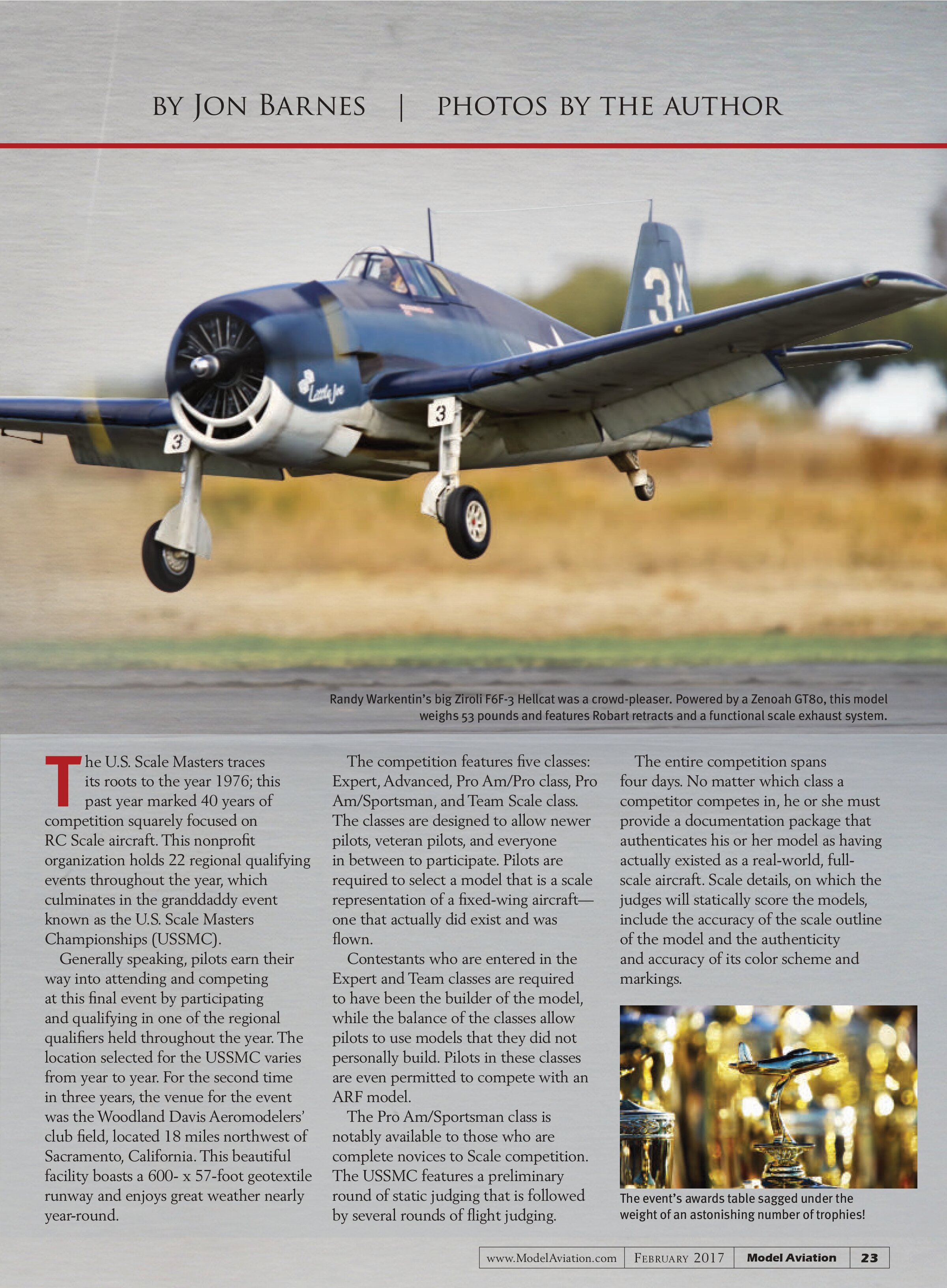
One of the most enduring and popular genres of Scale models is the piston-powered warbird fighters. Randy Warkentin’s F6F-3 Hellcat Lil Joe and Edward Becker’s Supermarine Spitfire Mk XIVc were two of the more notable warbirds, both featuring amazingly realistic profiles and authentically weathered paint jobs.
Pilot Tom Wolf represented the general aviation sector of aircraft with his bright white and orange Cessna L-19 Bird Dog, securing a fourth-place finish in the Expert class.
Pilots who enjoy the challenges inherent to Scale modeling and flight, and are interested in joining ranks with those who attended the 2016 USSMC, should make plans now to attend one of the 2017 qualifying events. A definitive guide to the competition, as well as a plethora of information about how the event is judged, can be found on the U.S. Scale Masters website.
—Jon Barnes
barnesjonr@yahoo.com
SOURCES:
U.S. Scale Masters
www.usscalemasters.org