OT and Classic Stunt
by Bob Hunt
robinhunt@rcn.com

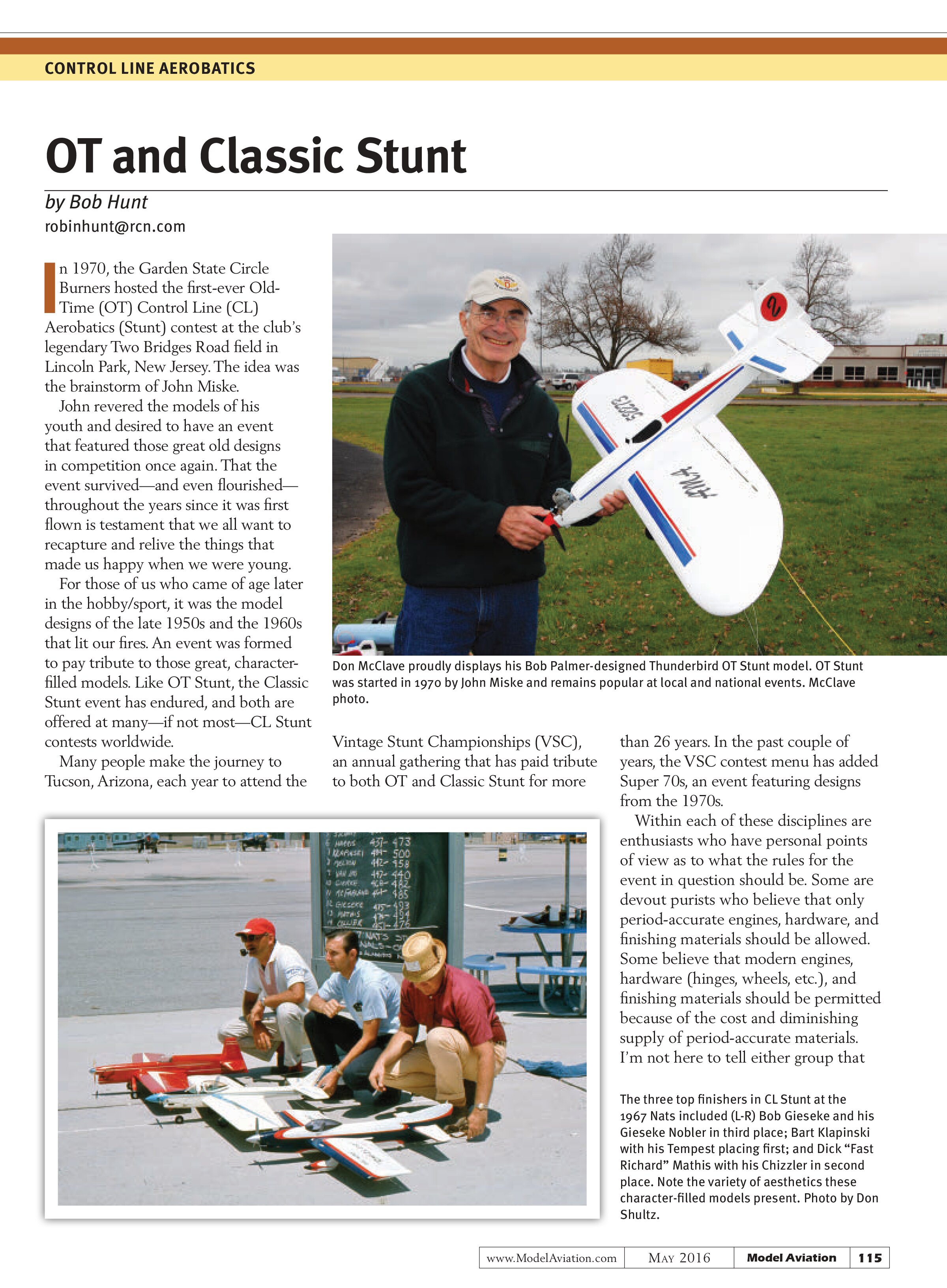
In 1970, the Garden State Circle Burners hosted the first-ever Old-Time (OT) Control Line (CL) Aerobatics (Stunt) contest at the club’s legendary Two Bridges Road field in Lincoln Park, New Jersey. The idea was the brainstorm of John Miske.
John revered the models of his youth and desired to have an event that featured those great old designs in competition once again. That the event survived—and even flourished—throughout the years since it was first flown is testament that we all want to recapture and relive the things that made us happy when we were young.
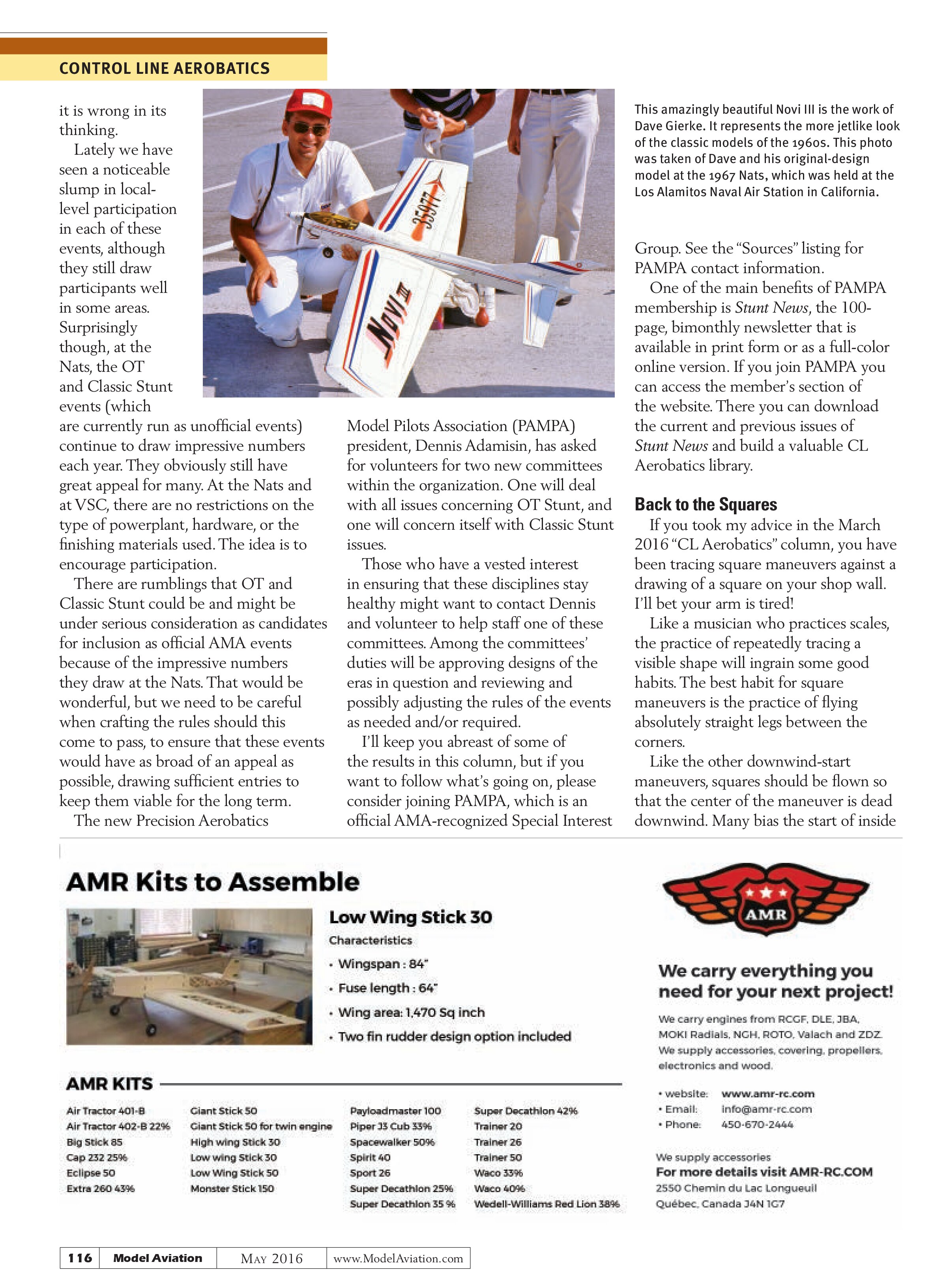
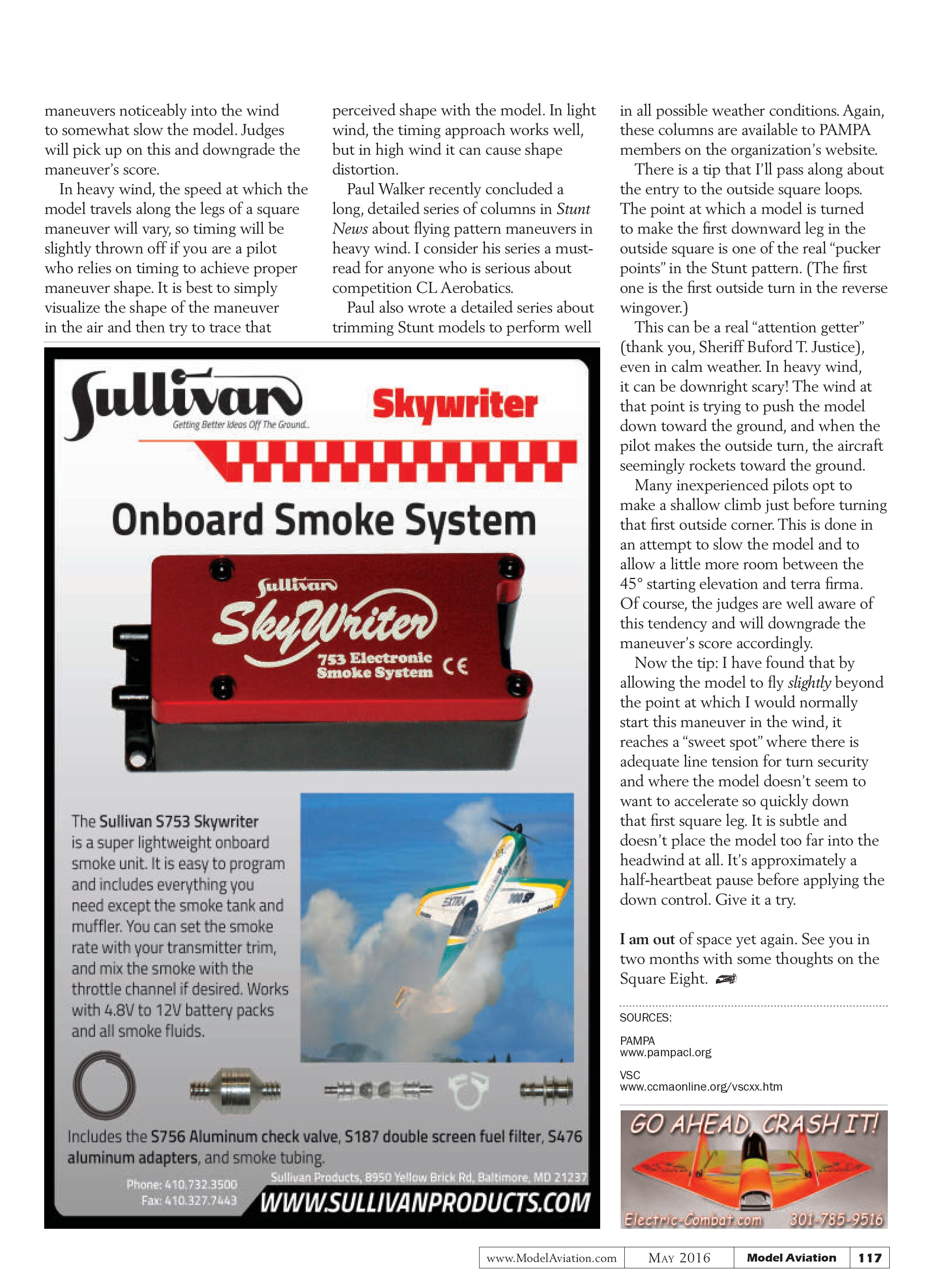
For those of us who came of age later in the hobby/sport, it was the model designs of the late 1950s and the 1960s that lit our fires. An event was formed to pay tribute to those great, character-filled models. Like OT Stunt, the Classic Stunt event has endured, and both are offered at many—if not most—CL Stunt contests worldwide.
Many people make the journey to Tucson, Arizona, each year to attend the Vintage Stunt Championships (VSC), an annual gathering that has paid tribute to both OT and Classic Stunt for more than 26 years. In the past couple of years, the VSC contest menu has added Super 70s, an event featuring designs from the 1970s.
Within each of these disciplines are enthusiasts who have personal points of view as to what the rules for the event in question should be. Some are devout purists who believe that only period-accurate engines, hardware, and finishing materials should be allowed. Some believe that modern engines, hardware (hinges, wheels, etc.), and finishing materials should be permitted because of the cost and diminishing supply of period-accurate materials. I’m not here to tell either group that

it is wrong in its thinking.
Lately we have seen a noticeable slump in local-level participation in each of these events, although they still draw participants well in some areas. Surprisingly though, at the Nats, the OT and Classic Stunt events (which are currently run as unofficial events) continue to draw impressive numbers each year. They obviously still have great appeal for many. At the Nats and at VSC, there are no restrictions on the type of powerplant, hardware, or the finishing materials used. The idea is to encourage participation.
There are rumblings that OT and Classic Stunt could be and might be under serious consideration as candidates for inclusion as official AMA events because of the impressive numbers they draw at the Nats. That would be wonderful, but we need to be careful when crafting the rules should this come to pass, to ensure that these events would have as broad of an appeal as possible, drawing sufficient entries to keep them viable for the long term.
The new Precision Aerobatics

Model Pilots Association (PAMPA) president, Dennis Adamisin, has asked for volunteers for two new committees within the organization. One will deal with all issues concerning OT Stunt, and one will concern itself with Classic Stunt issues.
Those who have a vested interest in ensuring that these disciplines stay healthy might want to contact Dennis and volunteer to help staff one of these committees. Among the committees’ duties will be approving designs of the eras in question and reviewing and possibly adjusting the rules of the events as needed and/or required.
I’ll keep you abreast of some of the results in this column, but if you want to follow what’s going on, please consider joining PAMPA, which is an official AMA-recognized Special Interest Group. See the “Sources” listing for PAMPA contact information.
One of the main benefits of PAMPA membership is Stunt News, the 100-page, bimonthly newsletter that is available in print form or as a full-color online version. If you join PAMPA you can access the member’s section of the website. There you can download the current and previous issues of Stunt News and build a valuable CL Aerobatics library.
maneuvers noticeably into the wind to somewhat slow the model. Judges will pick up on this and downgrade the maneuver’s score.
In heavy wind, the speed at which the model travels along the legs of a square maneuver will vary, so timing will be slightly thrown off if you are a pilot who relies on timing to achieve proper maneuver shape. It is best to simply visualize the shape of the maneuver in the air and then try to trace that perceived shape with the model. In light wind, the timing approach works well, but in high wind it can cause shape distortion.
Paul Walker recently concluded a long, detailed series of columns in Stunt News about flying pattern maneuvers in heavy wind. I consider his series a must-read for anyone who is serious about competition CL Aerobatics.
Paul also wrote a detailed series about trimming Stunt models to perform well in all possible weather conditions. Again, these columns are available to PAMPA members on the organization’s website.
Back to the Squares
If you took my advice in the March 2016 “CL Aerobatics” column, you have been tracing square maneuvers against a drawing of a square on your shop wall. I’ll bet your arm is tired!
Like a musician who practices scales, the practice of repeatedly tracing a visible shape will ingrain some good habits. The best habit for square maneuvers is the practice of flying absolutely straight legs between the corners.
Like the other downwind-start maneuvers, squares should be flown so that the center of the maneuver is dead downwind. Many bias the start of inside maneuvers noticeably into the wind to somewhat slow the model. Judges will pick up on this and downgrade the maneuver’s score.
In heavy wind, the speed at which the model travels along the legs of a square maneuver will vary, so timing will be slightly thrown off if you are a pilot who relies on timing to achieve proper maneuver shape. It is best to simply visualize the shape of the maneuver in the air and then try to trace that perceived shape with the model. In light wind, the timing approach works well, but in high wind it can cause shape distortion.
Paul Walker recently concluded a long, detailed series of columns in Stunt News about flying pattern maneuvers in heavy wind. I consider his series a must-read for anyone who is serious about competition CL Aerobatics.
Paul also wrote a detailed series about trimming Stunt models to perform well in all possible weather conditions. Again, these columns are available to PAMPA members on the organization’s website.
There is a tip that I’ll pass along about the entry to the outside square loops. The point at which a model is turned to make the first downward leg in the outside square is one of the real “pucker points” in the Stunt pattern. (The first one is the first outside turn in the reverse wingover.)
This can be a real “attention getter” (thank you, Sheriff Buford T. Justice), even in calm weather. In heavy wind, it can be downright scary! The wind at that point is trying to push the model down toward the ground, and when the pilot makes the outside turn, the aircraft seemingly rockets toward the ground.
Many inexperienced pilots opt to make a shallow climb just before turning that first outside corner. This is done in an attempt to slow the model and to allow a little more room between the 45° starting elevation and terra firma. Of course, the judges are well aware of this tendency and will downgrade the maneuver’s score accordingly.
Now the tip: I have found that by allowing the model to fly slightly beyond the point at which I would normally start this maneuver in the wind, it reaches a “sweet spot” where there is adequate line tension for turn security and where the model doesn’t seem to want to accelerate so quickly down that first square leg. It is subtle and doesn’t place the model too far into the headwind at all. It’s approximately a half-heartbeat pause before applying the down control. Give it a try.
I am out of space yet again. See you in two months with some thoughts on the Square Eight.
Sources:
PAMPA
www.pampacl.org