Fun on the outside, serious on the inside
Dave Gee
safetycolumn@cs.com

I get such a kick out of the whimsical models that some pilots fly. There is a new trend of Cartoon Scale airplanes that look like funny caricatures of antique aircraft. Flying lawnmowers and Snoopy’s doghouse have been built many times.
I recently saw a large, electric-powered dragon with an outrunner motor clenched in its teeth. What a sight! The builder enjoyed the attention his creation brought him, but a close examination showed that he was also a serious, safety-minded person. He had hidden a strong, off-the-shelf motor mount in the dragon’s mouth. The control system was carefully constructed and was quite conventional.
There were two dimensions to the dragon—the same as most other quirky models. The outside was intended to amaze spectators, but the working parts all had the serious functionality of a standard model. I was doubly impressed at the careful design work that went into making the dragon airplane a safe and reliable aircraft, as well as an amazing piece of sculpture.
The goal of most modelers is to have fun, but no matter how wild the aircraft may look or fly, a sharp pilot makes sure that everything he or she has learned about safe model operation goes into the airframe. There is a hard inner core of preparation and care for both a model and its pilot that makes the outrageous exterior possible.
You might see an aerobatics aircraft performing spectacular tricks, apparently breaking all of the rules. You can bet, however, that the pilot performed a methodical preflight check before takeoff and verified the safe operation of every system on the airplane.
Master the Basics
You might meet an inexperienced flier who doesn’t understand the difference between casual flight and a casual attitude toward field safety. Not everyone has the advantage of learning from a wise instructor and picking up good habits. He or she might not understand the importance of basic caution and courtesy at the field.
I once saw such a pilot. He was prepping for a flight and handling his model in ways that put not only himself, but other people, at risk. To my delight, an experienced modeler went over and started a friendly conversation. He gently mentioned some points about safe pit operations and then assisted his new friend with starting the engine. What a brilliant example of diplomacy and people skills!
Could “Safety” Harm Our Hobby?
Well, in a roundabout way, maybe it could. Here’s my theory: Sometimes, what passes these days for public safety in our society is merely an overcautious fear of lawsuits. There are extreme rules designed to protect everyone.
Many traditional activities are banned because of “safety concerns.” Our fun, educational, and safe model aircraft could get caught in the crossfire. I am concerned that these severe policies could hurt our sport now and in the future.
We face this situation when we seek a new place to fly, or try to demonstrate our models for the public. A club might want to have a display at a mall to recruit new members—only to discover that their models, tools, and support equipment might be against the rules.
Schools and parks might see basic hobby tools as dangerous implements (when the only truly dangerous items are my thumbs on transmitter sticks).
How is a new enthusiast, especially a kid, supposed to get started in this social climate? It’s hard to believe that anyone could be fearful of aeromodeling. What’s not to like? There is a fascinating variety of miniature aircraft to build, fly, and with which to tinker. We get enjoyment out of our airplanes and rotary-wing
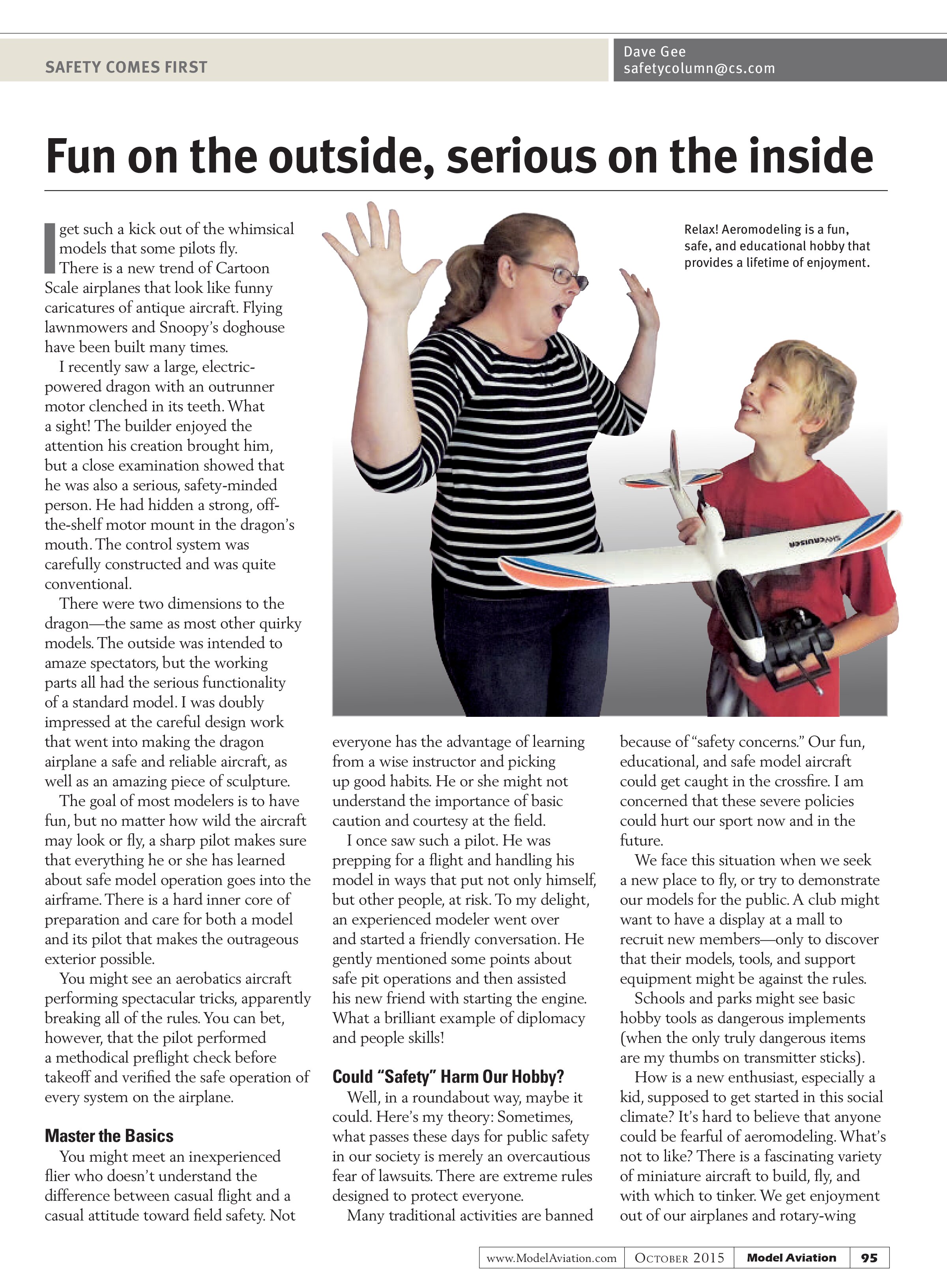
Relax! Aeromodeling is a fun, safe, and educational hobby that provides a lifetime of enjoyment.
aircraft, and I want this beneficial pastime to grow and thrive.
Nobody may know better than I about the importance of safe aeromodeling practices, but the care we take in operating our aircraft is part of the fun.
A Call to Action!
You, dear reader, are already in the lead on this entire matter. Reading Model Aviation magazine means that you are probably a member and supporter of the Academy of Model Aeronautics. (Okay, maybe you’re only checking out the “Safety Comes First” column to find out about my own latest debacle. It’s lurking; never fear.) Our organization is a powerful tool in shaping public perceptions and influencing the authorities.
I think that the best thing we can do to promote our sport is to openly enjoy it! Go out and have some fun with your models, and do so in a way that shows how responsible and careful we, as pilots, are. Remember, we operate under the AMA’s time-tested safety code—a community-based set of standards. Let’s allow people to see how enjoyable this hobby can be when done properly.
In Plane Sight
How can we make sure that the public sees us in action?
AMA uses online videos to show our hobby in a flattering light. Many members do the same by posting clips of themselves having a ball with their favorite model aircraft. Using this trendy way to share homemade movies is great exposure for our sport, plus it’s fun to see your airplane online.


AMA members include the cutting edge of technology as part of the backbone of tradition in our hobby. Let’s get it on video!
Model aircraft are as fascinating as ever to kids, and young people can benefit from the things that aeromodeling can teach them. Online videos are their idea of watching TV nowadays. Seeing the fun we’re having might bring in the new recruits we need to sustain our sport.
There is one more thing modelers can do to fight the current lawsuit-driven restrictions on everything: openly oppose excessive rules. Make your feelings known at a parent-teacher association event, or to a local organization’s board of directors.
Say a few words at your neighborhood association meeting. Write an old-fashioned letter to the editor of your local newspaper. Let people know that you support traditional fun-for-all-ages recreational activities (such as flying a model aircraft).
Guess Again
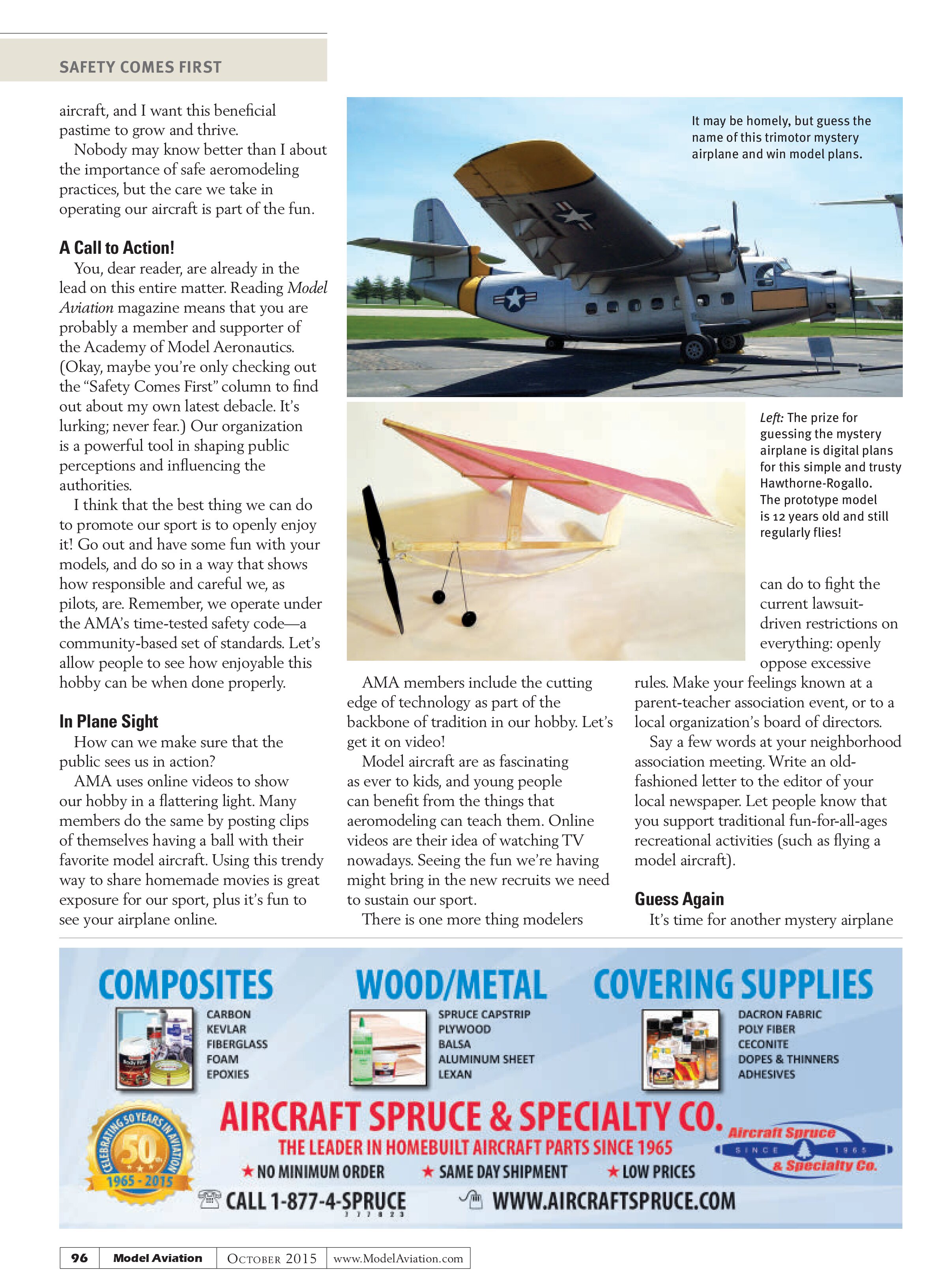
It’s time for another mystery airplane game! Many readers kidded me for making the recent ones too easy to guess, so here is a tougher subject. I even “painted over” the serial numbers to thwart the “sharpies” who look them up online.
This obscure cargo airplane won’t win any beauty contests. Few were built, but it came in civilian and military versions. What was the mystery airplane called?
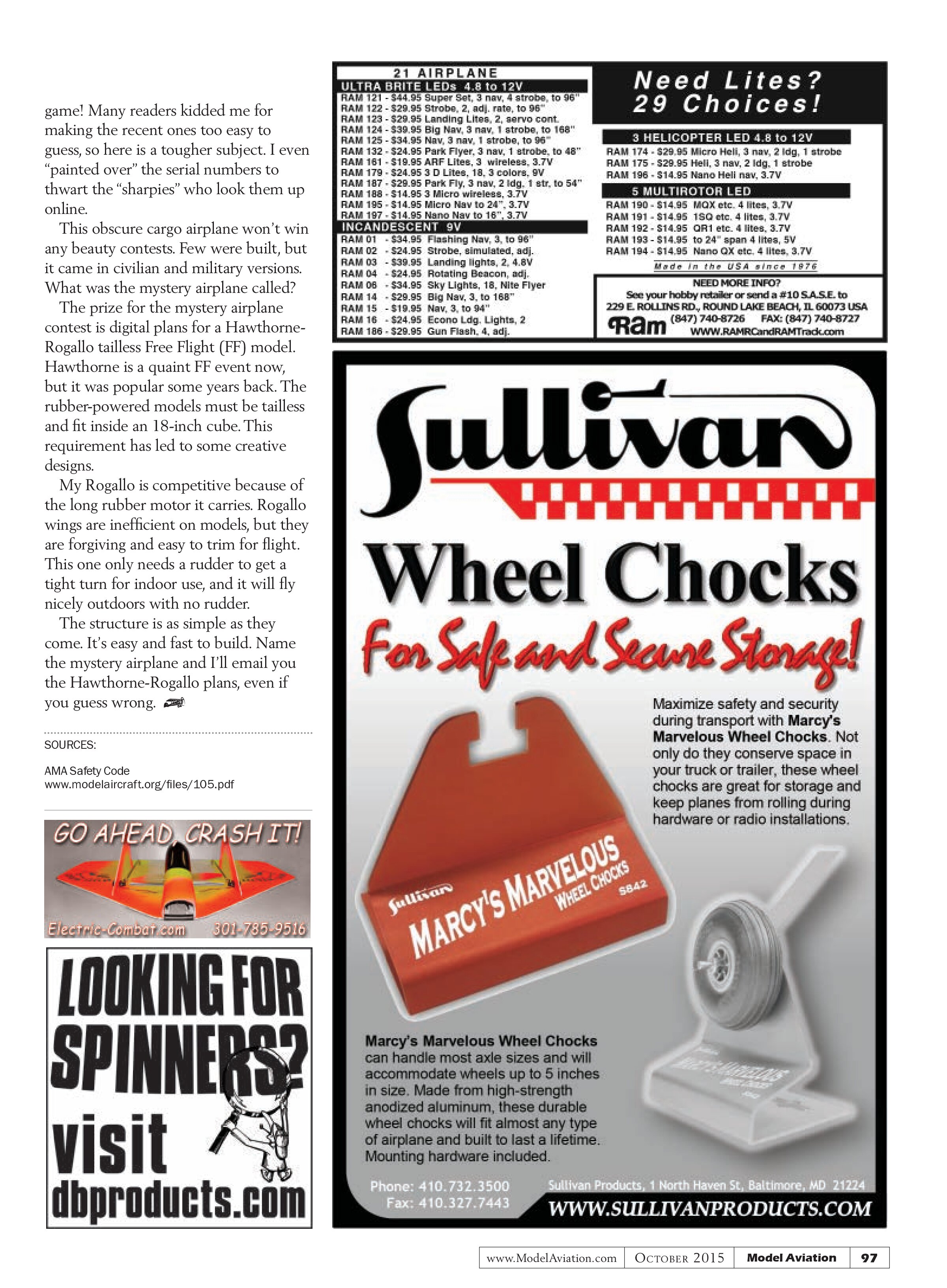
The prize for the mystery airplane contest is digital plans for a Hawthorne-Rogallo tailless Free Flight (FF) model. Hawthorne is a quaint FF event now, but it was popular some years back. The rubber-powered models must be tailless and fit inside an 18-inch cube. This requirement has led to some creative designs.
My Rogallo is competitive because of the long rubber motor it carries. Rogallo wings are inefficient on models, but they are forgiving and easy to trim for flight. This one only needs a rudder to get a tight turn for indoor use, and it will fly nicely outdoors with no rudder.
The structure is as simple as they come. It’s easy and fast to build. Name the mystery airplane and I’ll email you the Hawthorne-Rogallo plans, even if you guess wrong.
SOURCES:
AMA Safety Code
www.modelaircraft.org/files/105.pdf