Choosing the right aircraft
by John Glezellis
jglezellis@gmail.com

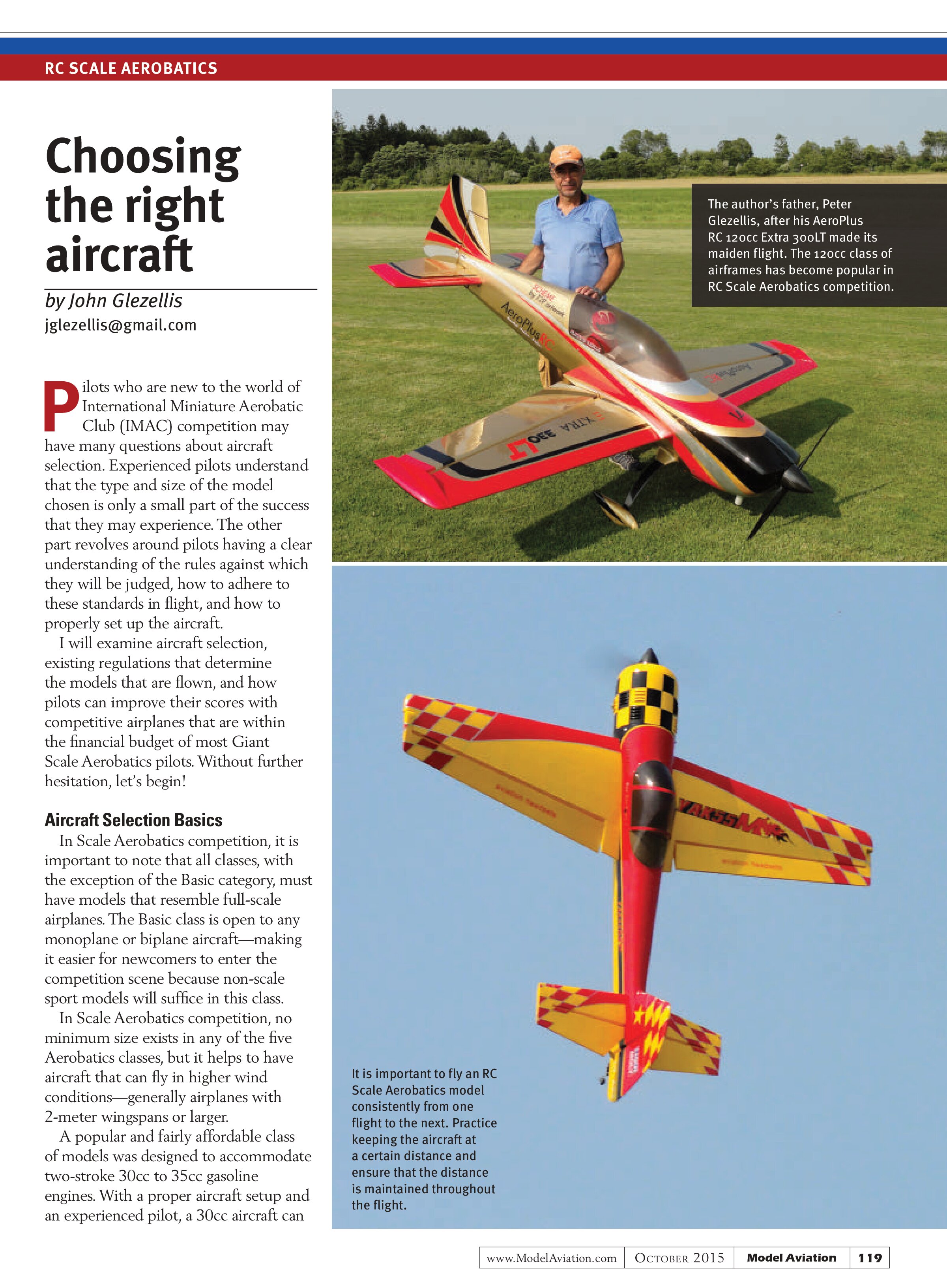
Pilots who are new to the world of International Miniature Aerobatic Club (IMAC) competition may have many questions about aircraft selection. Experienced pilots understand that the type and size of the model chosen is only a small part of the success that they may experience. The other part revolves around pilots having a clear understanding of the rules against which they will be judged, how to adhere to these standards in flight, and how to properly set up the aircraft.
I will examine aircraft selection, existing regulations that determine the models that are flown, and how pilots can improve their scores with competitive airplanes that are within the financial budget of most Giant Scale Aerobatics pilots. Without further hesitation, let’s begin!
Aircraft Selection Basics
In Scale Aerobatics competition, it is important to note that all classes, with the exception of the Basic category, must have models that resemble full-scale airplanes. The Basic class is open to any monoplane or biplane aircraft—making it easier for newcomers to enter the competition scene because non-scale sport models will suffice in this class.
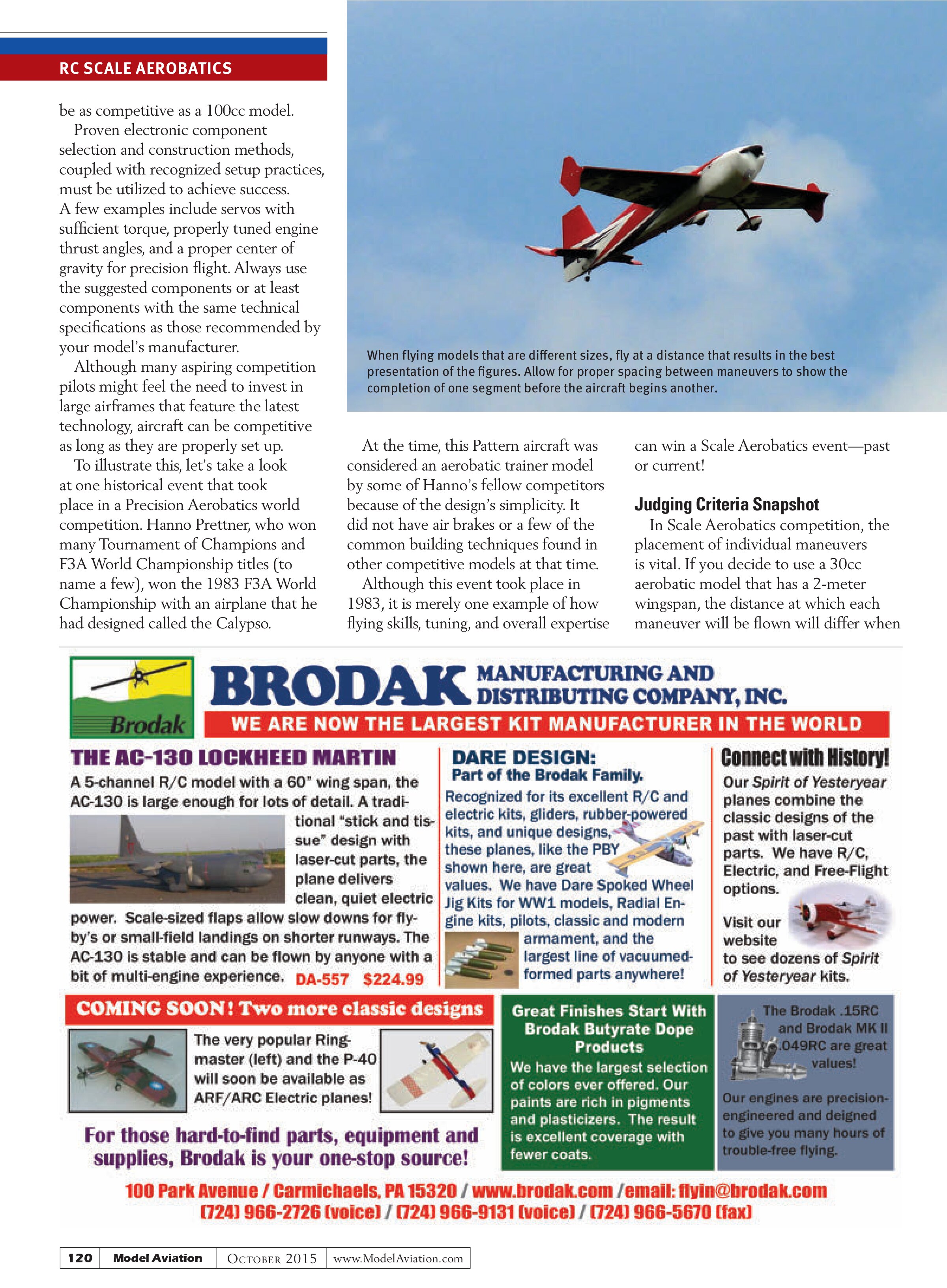
In Scale Aerobatics competition, no minimum size exists in any of the five Aerobatics classes, but it helps to have aircraft that can fly in higher wind conditions—generally airplanes with 2-meter wingspans or larger.
A popular and fairly affordable class of models was designed to accommodate two-stroke 30cc to 35cc gasoline engines. With a proper aircraft setup and an experienced pilot, a 30cc aircraft can

be as competitive as a 100cc model. Proven electronic component selection and construction methods, coupled with recognized setup practices, must be utilized to achieve success. A few examples include servos with sufficient torque, properly tuned engine thrust angles, and a proper center of gravity for precision flight. Always use the suggested components or at least components with the same technical specifications as those recommended by your model’s manufacturer.
Although many aspiring competition pilots might feel the need to invest in large airframes that feature the latest technology, aircraft can be competitive as long as they are properly set up.
To illustrate this, let’s take a look at one historical event that took place in a Precision Aerobatics world competition. Hanno Prettner, who won many Tournament of Champions and F3A World Championship titles (to name a few), won the 1983 F3A World Championship with an airplane that he had designed called the Calypso.

At the time, this Pattern aircraft was considered an aerobatic trainer model by some of Hanno’s fellow competitors because of the design’s simplicity. It did not have air brakes or a few of the common building techniques found in other competitive models at that time.
Although this event took place in 1983, it is merely one example of how flying skills, tuning, and overall expertise can win a Scale Aerobatics event—past or current!
Judging Criteria Snapshot
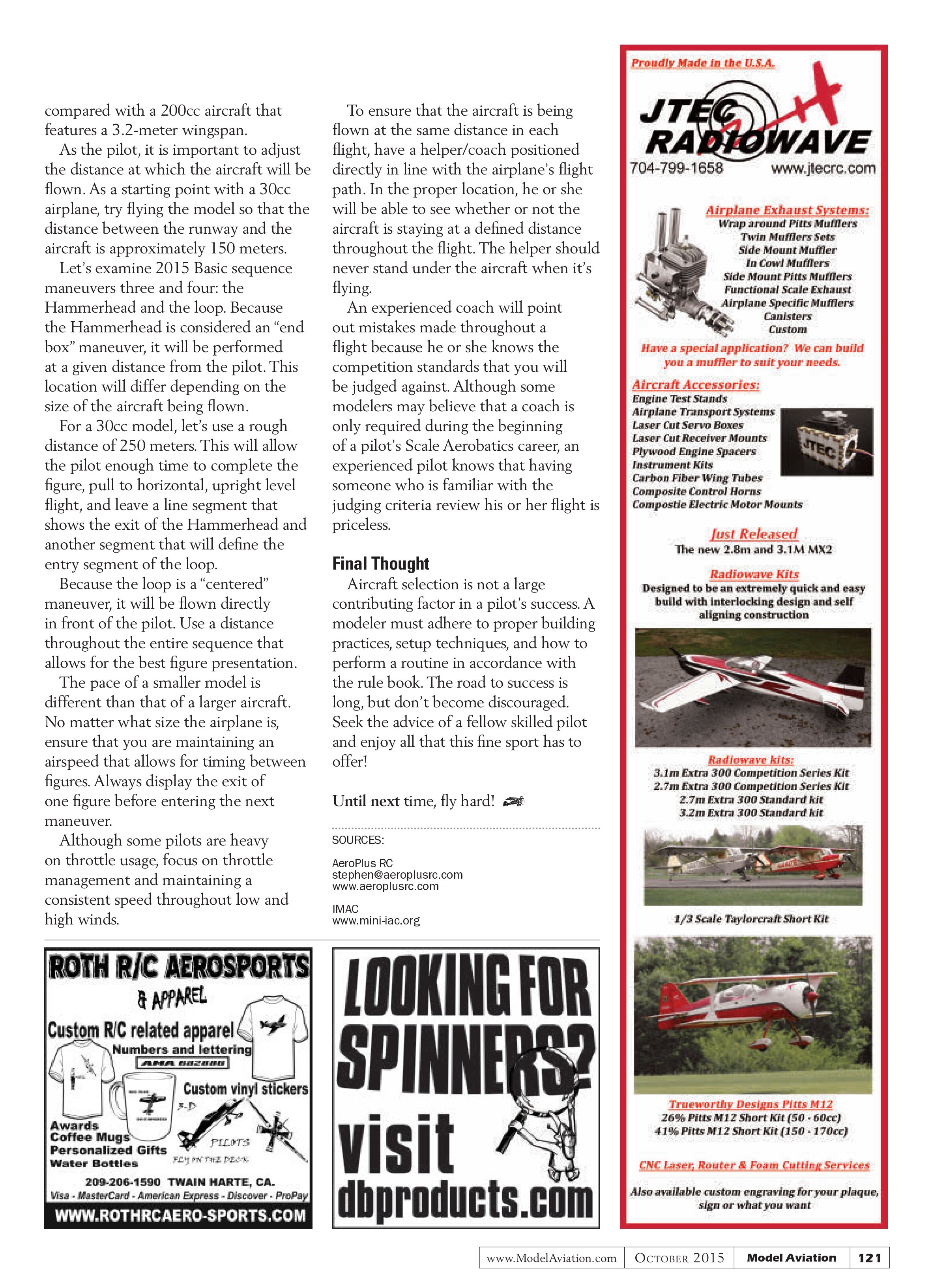
In Scale Aerobatics competition, the placement of individual maneuvers is vital. If you decide to use a 30cc aerobatic model that has a 2-meter wingspan, the distance at which each maneuver will be flown will differ when compared with a 200cc aircraft that features a 3.2-meter wingspan.
As the pilot, it is important to adjust the distance at which the aircraft will be flown. As a starting point with a 30cc airplane, try flying the model so that the distance between the runway and the aircraft is approximately 150 meters.
Let’s examine 2015 Basic sequence maneuvers three and four: the Hammerhead and the loop. Because the Hammerhead is considered an “end box” maneuver, it will be performed at a given distance from the pilot. This location will differ depending on the size of the aircraft being flown.
For a 30cc model, let’s use a rough distance of 250 meters. This will allow the pilot enough time to complete the figure, pull to horizontal, upright level flight, and leave a line segment that shows the exit of the Hammerhead and another segment that will define the entry segment of the loop.
Because the loop is a “centered” maneuver, it will be flown directly in front of the pilot. Use a distance throughout the entire sequence that allows for the best figure presentation.
The pace of a smaller model is different than that of a larger aircraft. No matter what size the airplane is, ensure that you are maintaining an airspeed that allows for timing between figures. Always display the exit of one figure before entering the next maneuver.
Although some pilots are heavy on throttle usage, focus on throttle management and maintaining a consistent speed throughout low and high winds.
To ensure that the aircraft is being flown at the same distance in each flight, have a helper/coach positioned directly in line with the airplane’s flight path. In the proper location, he or she will be able to see whether or not the aircraft is staying at a defined distance throughout the flight. The helper should never stand under the aircraft when it’s flying.
An experienced coach will point out mistakes made throughout a flight because he or she knows the competition standards that you will be judged against. Although some modelers may believe that a coach is only required during the beginning of a pilot’s Scale Aerobatics career, an experienced pilot knows that having someone who is familiar with the judging criteria review his or her flight is priceless.
Final Thought
Aircraft selection is not a large contributing factor in a pilot’s success. A modeler must adhere to proper building practices, setup techniques, and how to perform a routine in accordance with the rule book. The road to success is long, but don’t become discouraged. Seek the advice of a fellow skilled pilot and enjoy all that this fine sport has to offer!
Until next time, fly hard!
SOURCES:
AeroPlus RC
stephen@aeroplusrc.com
www.aeroplusrc.com
IMAC
www.mini-iac.org