Nasa Scale Classic
by Stan Alexander

The AMA Special Interest Group for Scale, the National Association of Scale Aeromodelers (NASA), had batted around ideas for having a fall gathering with all facets of fixed-wing Scale aircraft including Free Flight, Control Line (CL), and RC for several years. With the dates available, NASA was able to bring in RC and CL Scale events on October 3-5, 2014, at AMA’s International Aeromodeling Center Site in Muncie, Indiana.
It was decided that there should be a series of contests across the nation to encourage Scale modeling and competition under AMA Scale rules. These “open” events would lead up to the inaugural NASA Scale Classic. A potential competitor had to finish in the top 25% of an open contest to qualify for one of the spots in the NASA Scale Classic.
The NASA officers and board members also wanted to allow as many modelers who didn’t qualify for the Expert, Sportsman, or Designer classes to compete and enjoy the weekend. Thus, the Fun Scale Novice and Open events were included.
In addition to these classes, it was decided to hold an unofficial event to commemorate the beginning of World War I. It was planned as a fun event with few rules, only six maneuvers, and static judging. The unofficial class was well received and will take place again this year with Golden Age Racers (aircraft built before World War II) as the theme.


No event could take place without volunteers. Members of the NASA board of directors, officers, and many members participated in the planning and follow-through for the event. Mark Lanterman, from Liberty Township, Ohio, did the lion’s share of preplanning and was still able to compete in Fun Scale Advanced, finishing third. The flight judges had the hardest jobs at the site that weekend, being out in the cold with the wind racing around them. My hat’s off to all of them!
Friday, on the first morning of the event, I went out to the field and stood with other brave souls under the large administration tent, watching as the weather let loose with a torrential thunderstorm. The water rose under our feet beneath the tent, but the storm soon dissipated, and registration and static judging for RC and CL Scale began. With the wind blowing up to 34 mph for much of the day, only the hardiest of Scale modelers attempted to fly.
Conditions were much the same on Saturday. The wind barely subsided and it had turned cold. Only one round of flight competition was flown. Dale Arvin, the RC contest director, kept everyone informed with updates of conditions and approaching rain. Had he said it would snow in the next 15 minutes, we would have believed him! The WW I event was postponed until Sunday.
The weather was better on Sunday, but there was still a fairly strong wind. Allen Goff, the CL Scale contest director, took a vote and the CL modelers chose not to fly because of the conditions. The final placement was decided by static scores alone, which was a big disappointment for the CL fliers.
Many accomplished Scale modelers came to compete, including Greg Hahn, Mike Barbee, Dennis Crooks, Steve Eagle, John Brodak, Allen Goff, and Ed Mason.
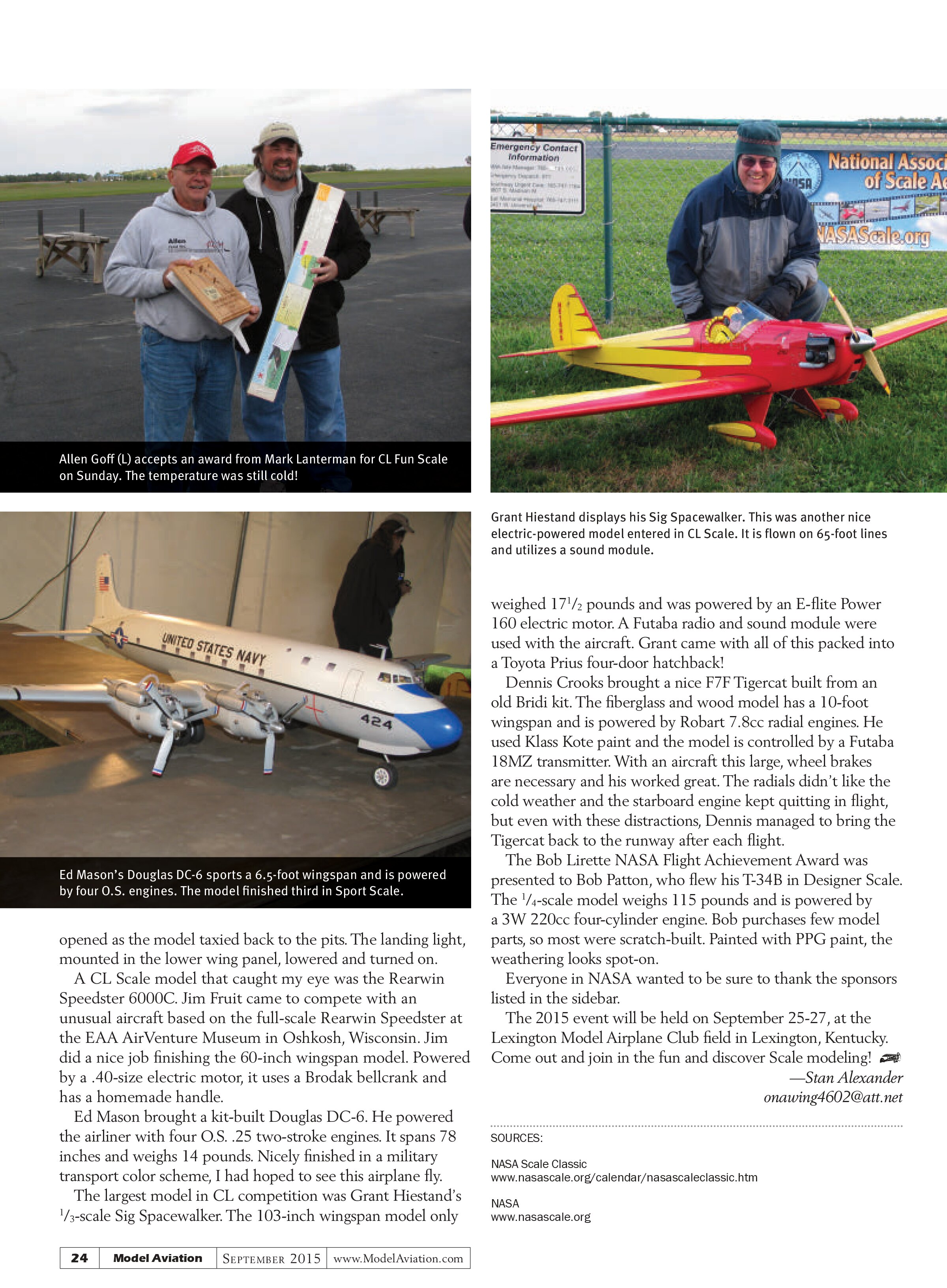
Several aircraft stood out, including the B-17G entered in Team Scale on its first outing. The team consisted of builder Mike Grady and pilot David Payne controlling the sticks. The 138-inch bomber had the most complete interior I’ve seen on this side of the Atlantic Ocean.
Mike used a WingSpan Models kit and his primary construction materials were fiberglass and wood. He added Hacker A-60 electric motors and controlled it with a Spektrum DX18 radio. The model’s weathering details really stood out. Its rubbed aluminum panels appeared to be worn and scuffed. The model’s interior even featured scale “cheesecake” posters in the radio room area.
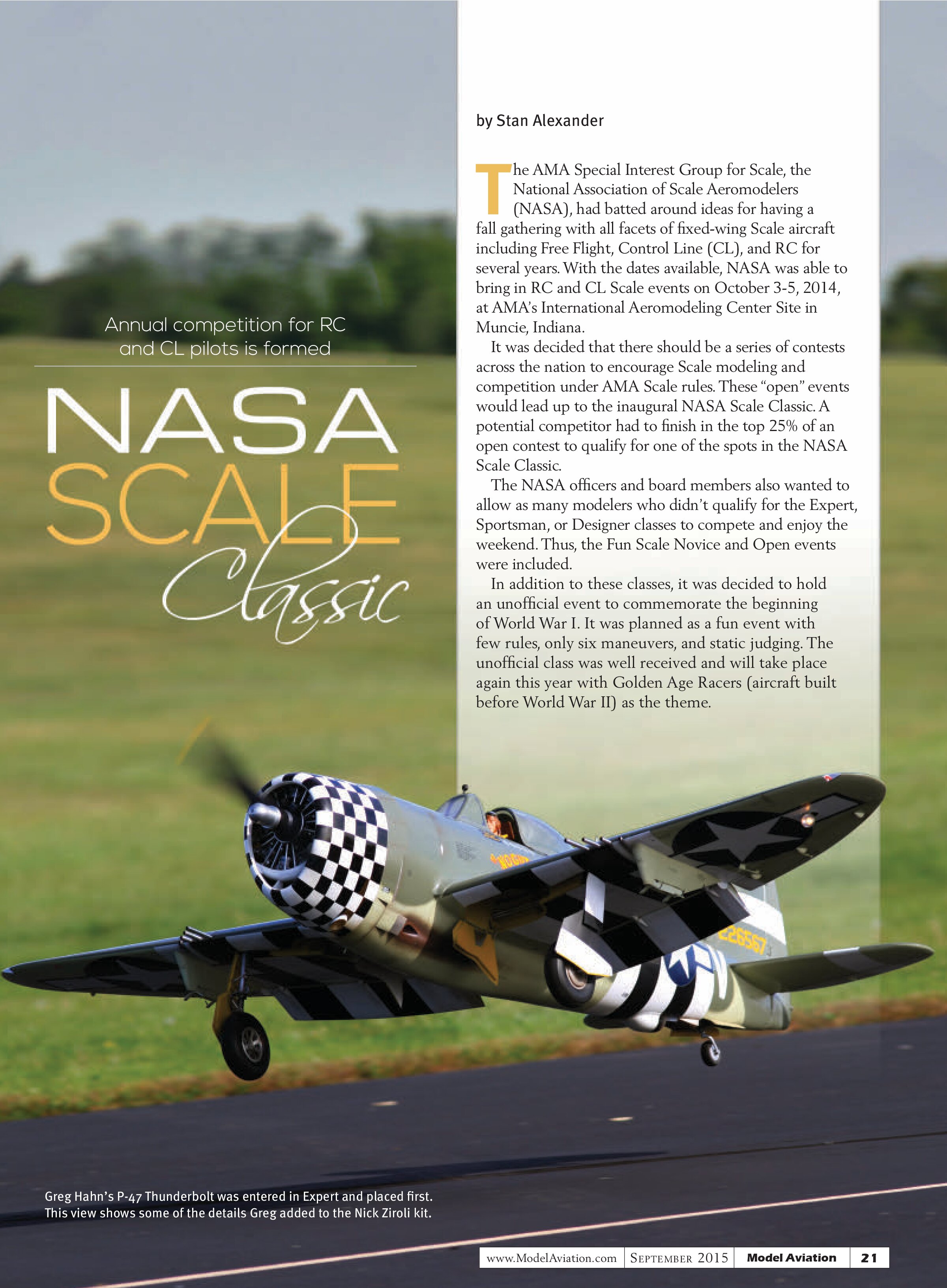
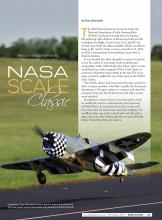
Greg Hahn brought his new P-47 Thunderbolt, built from Nick Ziroli plans. The big Thunderbolt, with a 92-inch wingspan, was of fiberglass and wood construction. The extremely detailed cockpit had a sliding canopy. Each time the model landed, the canopy


opened as the model taxied back to the pits. The landing light, mounted in the lower wing panel, lowered and turned on.
A CL Scale model that caught my eye was the Rearwin Speedster 6000C. Jim Fruit came to compete with an unusual aircraft based on the full-scale Rearwin Speedster at the EAA AirVenture Museum in Oshkosh, Wisconsin. Jim did a nice job finishing the 60-inch wingspan model. Powered by a .40-size electric motor, it uses a Brodak bellcrank and has a homemade handle.
Ed Mason brought a kit-built Douglas DC-6. He powered the airliner with four O.S. .25 two-stroke engines. It spans 78 inches and weighs 14 pounds. Nicely finished in a military transport color scheme, I had hoped to see this airplane fly.
The largest model in CL competition was Grant Hiestand’s ⅓-scale Sig Spacewalker. The 103-inch wingspan model only

weighed 17½ pounds and was powered by an E-flite Power 160 electric motor. A Futaba radio and sound module were used with the aircraft. Grant came with all of this packed into a Toyota Prius four-door hatchback!
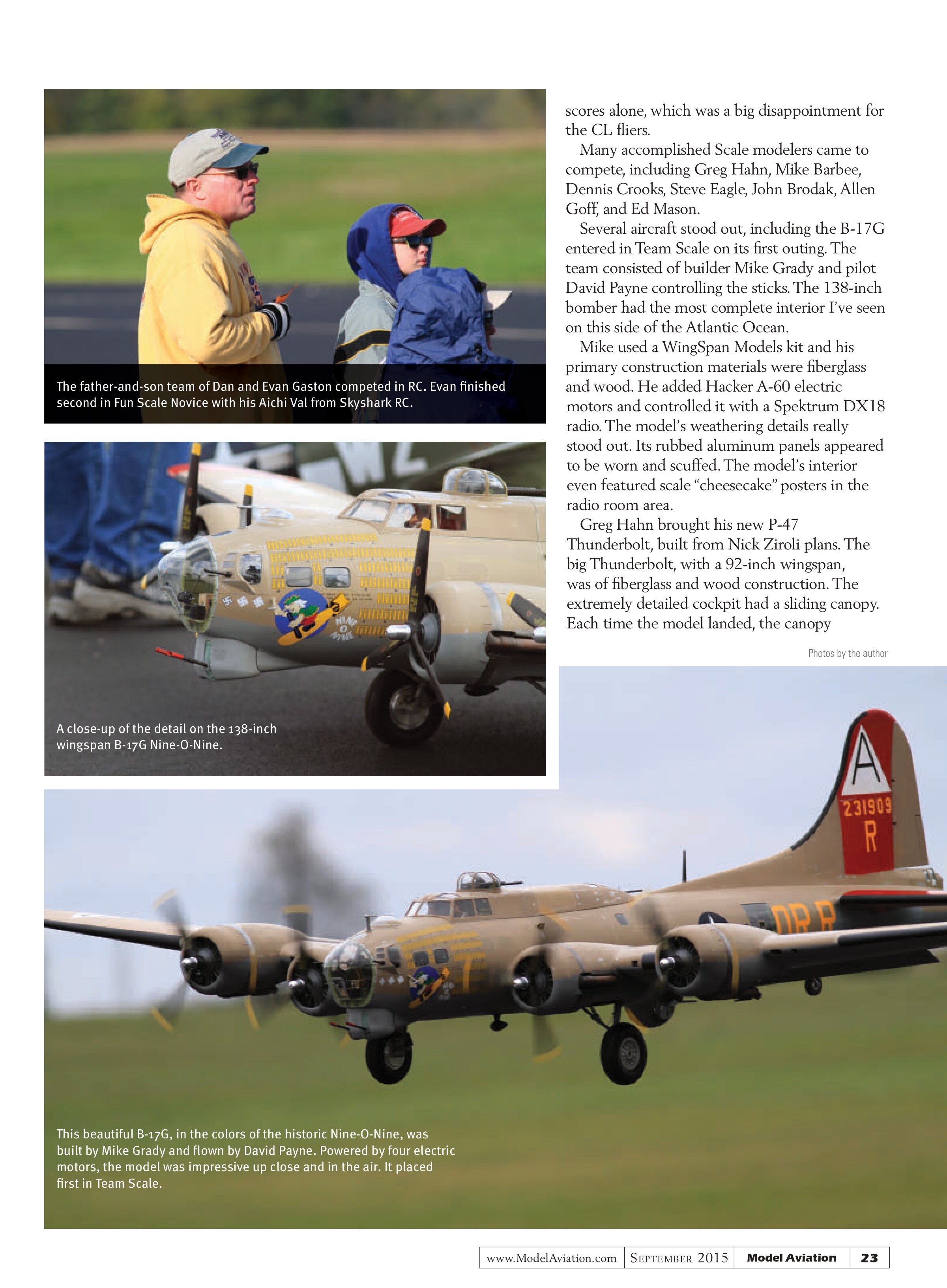
Dennis Crooks brought a nice F7F Tigercat built from an old Bridi kit. The fiberglass and wood model has a 10-foot wingspan and is powered by Robart 7.8cc radial engines. He used Klass Kote paint and the model is controlled by a Futaba 18MZ transmitter. With an aircraft this large, wheel brakes are necessary and his worked great. The radials didn’t like the cold weather and the starboard engine kept quitting in flight, but even with these distractions, Dennis managed to bring the Tigercat back to the runway after each flight.
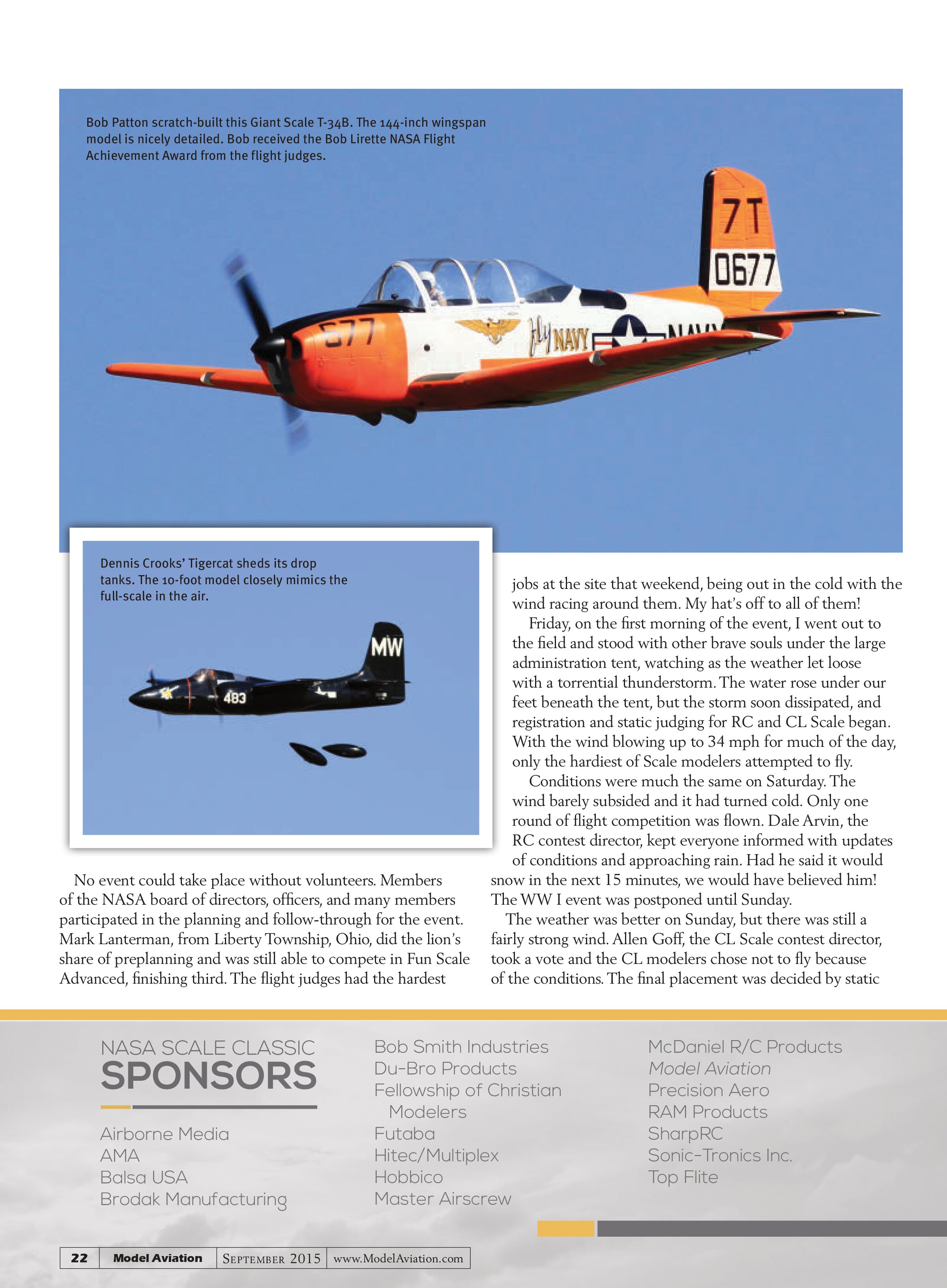
The Bob Lirette NASA Flight Achievement Award was presented to Bob Patton, who flew his T-34B in Designer Scale. The ¼-scale model weighs 115 pounds and is powered by a 3W 220cc four-cylinder engine. Bob purchases few model parts, so most were scratch-built. Painted with PPG paint, the weathering looks spot-on.
Everyone in NASA wanted to be sure to thank the sponsors listed in the sidebar.
The 2015 event will be held on September 25-27, at the Lexington Model Airplane Club field in Lexington, Kentucky. Come out and join in the fun and discover Scale modeling!
—Stan Alexander
onawing4602@att.net
SOURCES:
NASA Scale Classic
www.nasascale.org/calendar/nasascalclassic.htm
NASA
www.nasascale.org