LiPo life lessons
Michael Pilla sent me a scary battery story. He was charging a LiPo pack with the cells sitting on top of a fire-resistant bag instead of inside. He said, “I had been monitoring it when my wife called that supper was ready. As you might guess, the smoke detector soon alerted me. Two studs in the garage were on fire, and the passenger-side mirror on my car started melting. Lesson learned. It could have been worse.”
Steve Cushing had a tale to match. He accidentally set the wrong cell count on his charger, and minutes later noticed the pack had puffed to twice its normal size. A quick disconnection and relocation of the smoking battery to a safe spot prevented any further trouble.


Both of these readers shared their adventures in hopes that others would learn and avoid their mistakes. Please do likewise if you have a relevant story, suggestion, or correction. Saving a fellow modeler from injury is a nice favor, and sometimes all it takes is an email message.
Three Common Elements
Where were we? Oh yeah, battery fires. I’m no electrical expert, but it seems that the same issues keep popping up.
Many of the reports I get have the same three elements: incorrect charger settings, a vulnerable location for the charging operation, and being distracted during the charging process.
Avoid element number one by double-checking the settings on your charger every time you turn it on, especially if you use it for more than one type of battery pack. David Buxton has more experience in this area than I, and he strongly suggests that pilots retire older battery chargers and use only the new types that have a built-in integrated balancing feature. The best ones will sound an alarm and refuse to begin charging if they are incorrectly set up. I need all the help I can get, and a charger that stops me before I goof up is just the ticket.
David thinks that the reduction in battery fires these days might be partly because old chargers are being replaced by modern ones. Incidentally, he also cautions against excessively high charging current—not so much because of fire danger, but because high rates can shorten battery life.
You can foil element number two by using a fire-resistant bag and putting the battery pack inside while it charges. You can’t see the pack that way, but the statistics seem to show that this is a critical precaution. The odds are that you’ll never have a problem with your LiPo flight systems, but if you do, it is a big advantage to have the trouble contained in that bag. Of course, the bag has to be in a safe location. Setting it on a pile of old newspapers, for instance, cancels all bets.
Element number three is the toughest one to beat. Human nature is a powerful force. We get trained by our experiences. “That pack is reliable. It’s been cycled many times and never a peep. I’ve got work to do. Why waste time sitting here idly watching it charge? Hey, the phone is ringing! It’s just a few feet away, right around the corner.”
In model aviation, just as in full-scale flying, gremlins are waiting to sneak up and pull a prank. It might not happen on the first opportunity you provide or the tenth, but leaving ourselves
vulnerable gives them the chance they need to ruin our day. The best defense is to develop a good routine and stick to it. Sloppy habits might be okay in stamp collecting, but not with high-powered model aircraft.
Power in Your Hands
Tommy Mabry developed an excellent habit. He suffers from arthritis in his hands and wrists, so turning screws can be a real pain. Because he likes to avoid pain, Tommy got himself a fancy electric screwdriver and a set of bits. With a flick of a switch, the power tool does the work.
Many readers have told me that if you’re at risk of carpal tunnel syndrome, an electric screwdriver might save you a bunch of trouble. I’ve worn out a dozen of these machines, but my hands are still in good working order. Better to sacrifice some inexpensive tools than my wrist joints, right? The money I spent on power screwdrivers is nothing compared to not being in pain, or in surgery.

A Little Plate on the Side
On the subject of avoiding trouble, I see my way clear to mentioning a favorite topic: eye protection. A recent checkup left me with a fresh prescription for reading glasses. I wear these while building models, and at work for things such as deciphering the rating plates on machinery.
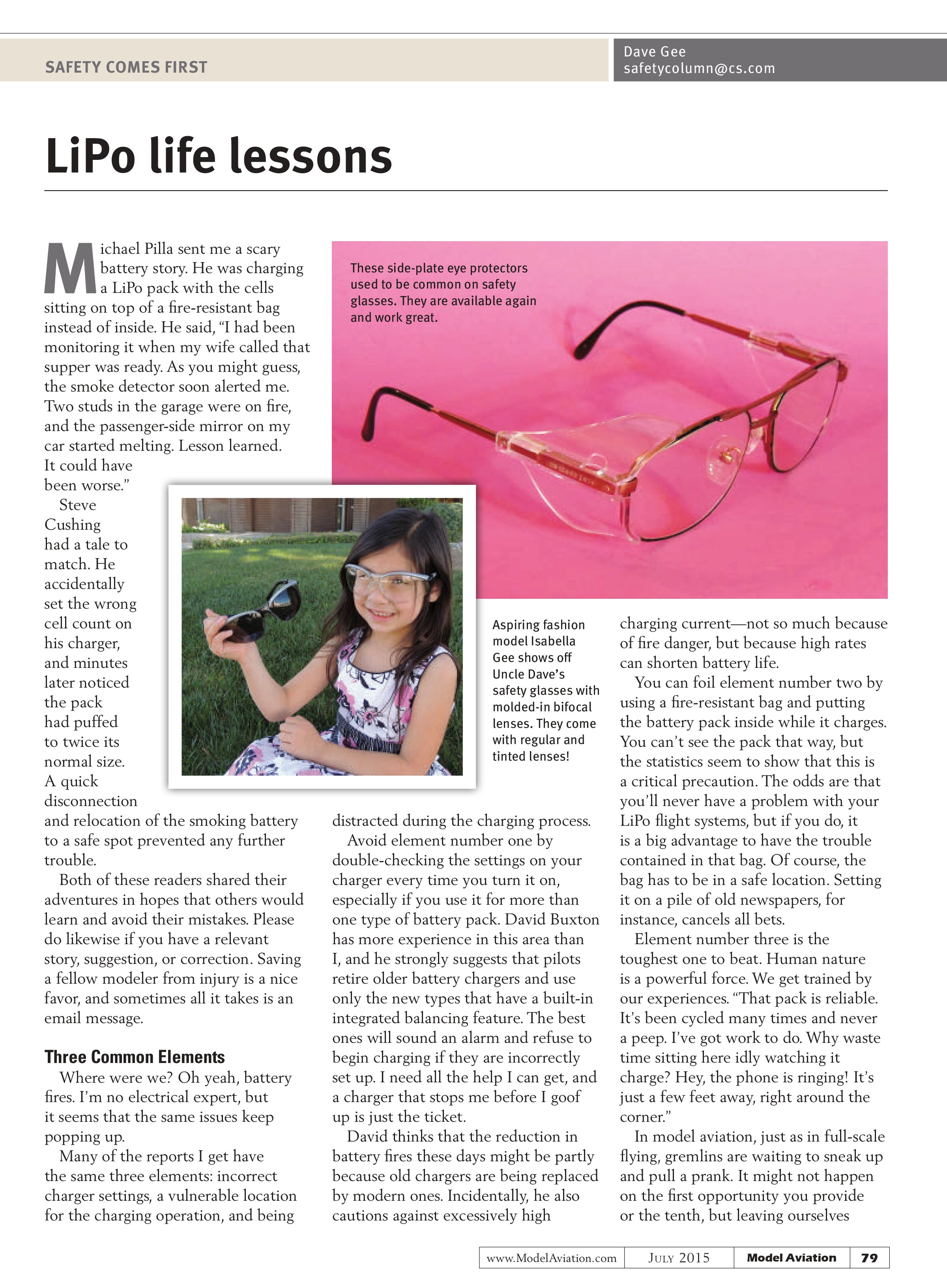
My employer reimburses part of the cost of prescription safety glasses, so I ordered a good pair of industrial-rated specs. They came with spiffy little side-protector plates that snap right on. What a great feature! I didn’t realize how handy it was to have these plates until I made a time-lapse video of myself building a small model. (The video link is in the “Sources” listing.)
I was surprised to see how much I used my power rotary tool. It sanded wood, trimmed plastic, and cut wire. How easy it would be for a fast-moving bit of material to ricochet around regular glasses and get into an eye! Safety glasses are a must for such things, and having the side plates on the frames greatly increases the protection.
At work I sometimes wear “disposable” glasses that are safety rated. They cost only a few dollars, but they last a long time before they get scratched and must be replaced. Better to damage the glasses than my eyes!
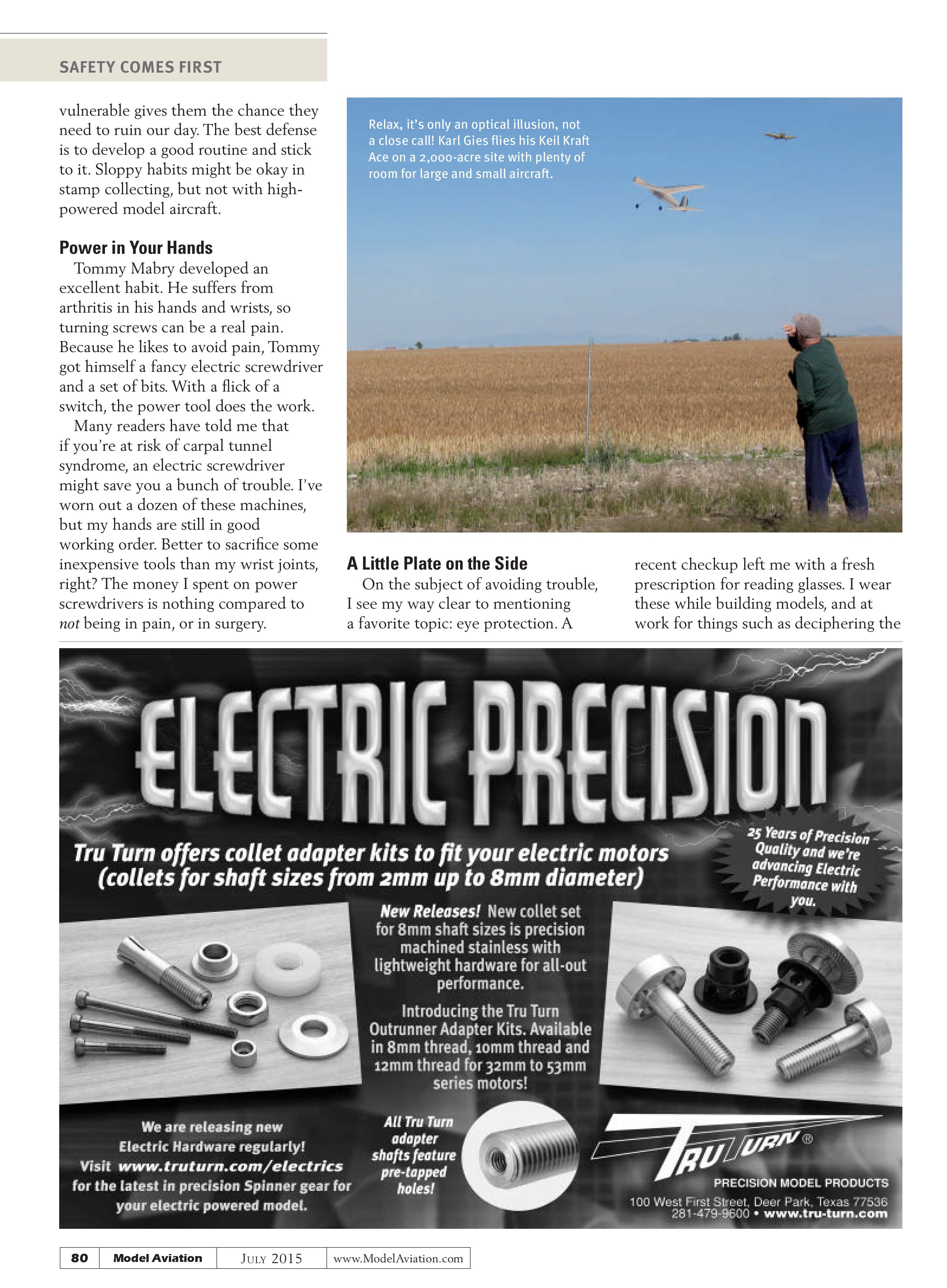
Being well past the half-century mark in age, I was delighted to find that these products now come molded with bifocal lenses. Wow, what a great idea! They range from approximately $5 to $15, depending on how fancy you want them. For good, basic eye protection when working with small tools, they just can’t be beat.
My fun-loving niece, Isabella, agreed to model the bifocal glasses in regular and tinted styles. She announced, “These are weird,” but in a few decades when her own eyes need help with small print, she might try them again.
Some might say that helping her break into print modeling is just another example of safety fashion industry nepotism. Yeah, maybe. Just try some of those glasses.
Foam Dust-Up
I recently griped about the difficulty I have when working with foam, and how the sanding dust gets everywhere and sticks to everything. I asked for helpful suggestions from more experienced builders who undoubtedly have ways to get around this problem. Ha! What came back was sympathy from other builders who also find themselves covered in foam dust.
The obvious tricks don’t work on foam dust because it behaves differently from balsa sawdust. The slightest static electricity charge makes it stick to all surfaces and people. Blowing it around merely moves it to a different inconvenient surface. Air filters are ineffective because the dust cannot be easily drawn by moving air.
You have one last chance to share your solution to this mess. Please tell me there is a slick way to deal with it, or I’m going to petition Congress to pass legislation changing the physical properties of foam sanding dust to something more practical.
SOURCES:
Time-lapse video of model construction
www.youtube.com/watch?v=KD1SiZNN074